
A senior Polish diplomatic security official is fighting for his life after falling from a third-floor window at a Polish diplomatic compound in Ljubljana, an unexplained incident that has raised questions in Warsaw as tensions between Russia and NATO escalate.
The official, who works for Poland’s Ministry of Foreign Affairs, fell during the early hours of September 13 and remains in critical condition in a Slovenian hospital, according to reports citing Polish authorities.
Poland’s foreign ministry confirmed the incident, but details remain limited.
Slovenian police were notified of the incident but did not inspect the premises. Diplomatic premises are protected by international law and local authorities cannot enter without permission from the diplomatic mission.
Slovenian police said: “According to the information collected so far, for a currently unknown reason, a person fell from a balcony and was seriously injured. His life is in danger.
“We were informed by the diplomatic mission that their competent investigators will carry out the procedural actions themselves, including inspecting the scene and investigating the circumstances of the incident.”
The official was reportedly on holiday at the time. Polish media have also reported that he had taken possession of a diplomatic pouch despite not having official authorisation to undertake the related duty. Those details have not established any connection between the incident and his professional role.
Reports have also suggested that several people were present at a gathering when the diplomat fell. Slovenian reporting has stressed that significant details remain unclear, including precisely what happened immediately before the fall.
Krzysztof Bosak, deputy speaker of Poland’s parliament, has described the circumstances as “suspicious” and called for a detailed investigation.
He said: “If [a security employee] falls out of a window in a building and it turns out that they were on vacation and were carrying some kind of parcel, then it is no longer a case of mystery.”
There is currently no evidence establishing that the fall was connected to espionage, sabotage or the official’s security responsibilities. Nor has there been any public allegation that Russia was involved.
The incident has nevertheless emerged at a particularly sensitive moment for Poland, one of Nato’s most exposed eastern members and a major logistical hub for Western military assistance to Ukraine.
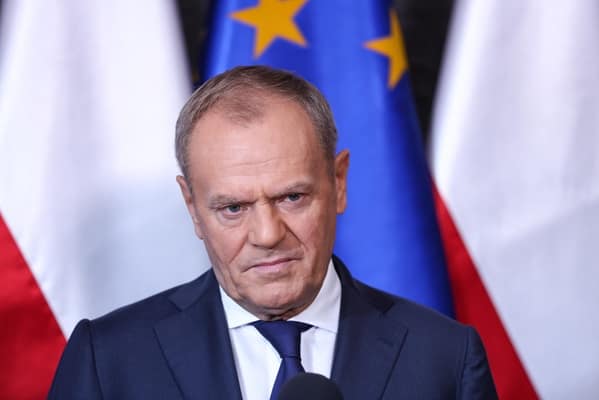
Polish Prime Minister Donald Tusk has warned that Moscow could seek to test NATO’s willingness to respond to attacks or other hostile operations against countries supporting Ukraine.
The warning comes as European intelligence officials have raised concerns about possible Russian provocations against NATO in the coming months, including drone or missile attacks, sabotage and operations targeting critical infrastructure.
Poland has also repeatedly scrambled aircraft in response to Russian attacks close to its borders. On September 17, Polish fighter jets were deployed after a major Russian missile and drone assault on Ukraine, although Warsaw said there had been no breach of Polish airspace on that occasion.
A Polish military spokesman said on Friday: “Ground-based air defence systems and radar reconnaissance systems are at a state of readiness.
The heightened alert reflects a broader change in the security environment across Nato’s eastern flank. European governments are increasingly preparing for scenarios in which conventional military operations could be accompanied by cyber attacks, drone incursions, sabotage and disruption to energy and communications infrastructure.
Tusk has also warned about what he sees as growing political divisions inside Europe over support for Ukraine, arguing that parties such as France’s National Rally and Germany’s AfD advocate peace while also supporting positions that would amount to Ukrainian capitulation.
The debate is unfolding as European governments face pressure to increase defence spending and strengthen their ability to respond without relying entirely on American military capabilities.
Ezra Cohen, who served as Acting Under-Secretary of Defence for Intelligence and Security during Donald Trump’s first term as US president, said: “If European countries step up, the US is going to be there with them. We need countries like Germany and France to get serious.”
For Poland, the immediate issue remains the unexplained fall of a senior security official and his condition.
The absence of a Slovenian police investigation has added to the unanswered questions, but diplomatic immunity does not itself imply wrongdoing or foreign involvement. The Polish investigation will have to establish whether the incident was an accident or whether other circumstances were involved.
For now, the case remains unresolved — even as the wider European security environment becomes increasingly tense. The distinction matters: heightened concern over Russian activity across Europe provides the geopolitical backdrop, but it does not establish a link between that activity and the incident in Ljubljana.


Leave a Comment