
Russia has deployed police and security forces to petrol stations as fuel shortages spread across the country, exposing growing pressure on the Kremlin’s ability to protect vital infrastructure while sustaining its war effort in Ukraine.
The move follows the decision by Igor Kobzev, governor of the Siberian Irkutsk region, to declare a state of “high alert” after fuel deliveries failed to meet demand.
Police officers and Russian National Guard units have been sent to filling stations to manage queues, enforce restrictions and prevent drivers from filling containers with petrol, according to reports.
The authorities’ intervention highlights the seriousness of the shortages, with officials warning that attempts to stockpile fuel could result in heavy fines.
“The fuel situation in the city remains tense,” Sergei Gavrin, Irkutsk’s deputy mayor, said, claiming that long queues had been worsened by motorists attempting to purchase additional supplies.
Police in the region said they had already detained and fined several people accused of reselling petrol at inflated prices following a government crackdown on fuel profiteering.
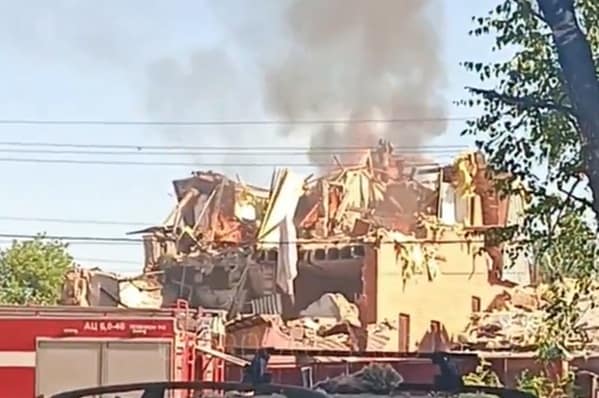
The shortages have emerged after a sustained Ukrainian campaign targeting Russia’s energy infrastructure, with strikes hitting refineries, storage facilities and other key industrial sites.
Moscow region, Russia ❗
💥 Near Moscow, a space communications center in Dubna was likely hit. Authorities said an administrative building in Dubna was damaged by falling drone debris, with no casualties reported. Debris was also found in the Ramensky and Kolomna districts. In… pic.twitter.com/LAHeVPnNE2— LX (@LXSummer1) June 30, 2026
Kyiv has increasingly focused on long-range attacks designed to disrupt the logistics network supporting Russia’s invasion, targeting facilities far beyond the front line.
Ukrainian strikes are reported to have damaged a significant portion of Russia’s refining capacity, creating disruption across dozens of regions and placing additional strain on domestic supplies.
The impact has also been felt in occupied Crimea, where Russian-installed authorities declared a state of emergency after attacks damaged infrastructure and fuel sales to civilians were suspended.
For years, Moscow has presented its energy sector as a pillar of national strength and a financial engine capable of supporting a prolonged conflict.
The emergence of petrol queues and emergency measures inside Russia represents a stark contrast to that image, suggesting the economic consequences of the war are becoming increasingly difficult for the Kremlin to contain.
Vladimir Putin acknowledged the problem publicly on Sunday, admitting that fuel shortages had affected several regions and confirming that officials were working to stabilise supplies.
The admission was notable given the Kremlin’s long-standing efforts to project confidence and minimise the impact of sanctions, military spending and infrastructure disruption.
While Russian officials insist the situation is under control, the deployment of police to petrol stations and restrictions on fuel purchases underline the growing challenge facing Moscow.
Ukraine’s strategy appears aimed not only at battlefield gains but at increasing the cost of maintaining Russia’s military campaign by targeting the systems that keep its forces supplied.
The Kremlin now faces a difficult balancing act: maintaining the appearance of economic resilience while addressing mounting pressure on one of the country’s most strategically important sectors.


Leave a Comment