
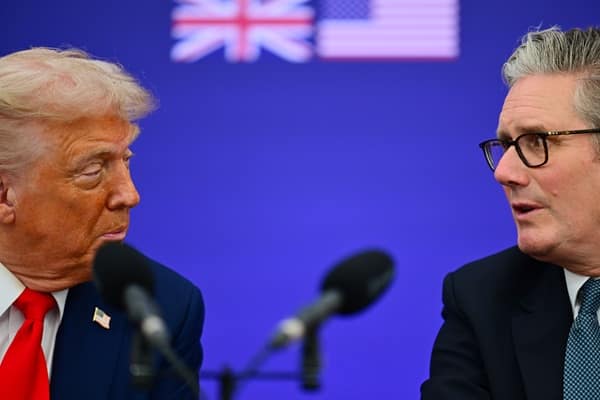
The transatlantic alliance was plunged into fresh turmoil on Wednesday after US Defence Secretary Pete Hegseth launched an extraordinary attack on Britain and other NATO allies for refusing to join America’s military offensive against Iran.
In a sharply worded statement to Congress, Mr Hegseth accused Western allies of “free-riding” on American military power and warned there would be “consequences” for countries that failed to support Washington during the conflict.
“In recent weeks, far too many of our NATO allies showed that they could not be relied upon to support our nation’s operations against Iran,” he wrote.
“This is unconscionable — and we will remember.”
The comments amount to one of the most direct public rebukes of Britain by a senior American defence official in decades and are likely to deepen fears about the future direction of NATO under the administration of Donald Trump.
Mr Hegseth argued that NATO had become “beset by free-riding” since the end of the Cold War, insisting European allies were no longer contributing enough to collective security despite being more economically exposed to instability in the Middle East than the United States itself.
“Americans want partners — not dependencies,” he said.
“Capable partners are good partners. Unlike so many traditional allies who wring their hands and clutch their pearls, hemming and hawing about the use of force.”
Notably, Mr Hegseth omitted Britain and France from a list of what he described as “model allies”, instead praising countries including Israel, Poland, Finland, South Korea and the Baltic states.
The intervention will be viewed in Westminster as a significant escalation in tensions between Washington and London after Britain declined to directly participate in US and Israeli strikes against Iranian targets.
Ministers instead opted to focus on protecting shipping lanes and regional stability in the Strait of Hormuz rather than joining offensive operations.
On Tuesday, Defence Secretary John Healey confirmed Britain would deploy Typhoon fighter jets, autonomous mine-hunting systems and anti-drone technology to the Gulf region.
The Royal Navy destroyer HMS Dragon has already been sent to the area, while support vessel RFA Lyme Bay is being adapted to operate as a mothership for mine-clearing drones aimed at keeping the strategically vital shipping corridor open.
However, the deployments have done little to calm anger inside the Trump administration, where frustration has reportedly been building for weeks over Europe’s reluctance to support direct military action against Tehran.
Mr Hegseth’s remarks echoed earlier comments made by President Trump himself, who suggested countries dependent on Gulf energy supplies should “build up some delayed courage” and help secure the Strait of Hormuz.
“The hard part is done,” the President said after the strikes on Iran.
Meanwhile, Tehran also escalated its rhetoric against Britain.
Kazem Gharibabadi warned the UK and its allies to stay away from the Strait of Hormuz, insisting only Iran had the right to guarantee security in the waterway.
“We strongly advise” foreign powers not to interfere, he said, warning of a “decisive and immediate response”.
The increasingly hostile exchanges highlight the growing strain on the so-called “special relationship” between Britain and the United States as divisions emerge over the direction of Western foreign policy in the Middle East.
Former British ambassador to Washington Sir Christian Turner added to the unease by suggesting America’s closest strategic relationship was now with Israel rather than the United Kingdom.
“The relationship will carry on being ‘special’, but it’s going to have to be different,” he said.
For Downing Street, the danger is that the Iran conflict is rapidly becoming not only a military and economic crisis, but a diplomatic one as well — exposing widening cracks inside the Western alliance at one of the most dangerous moments in recent years.


Leave a Comment