
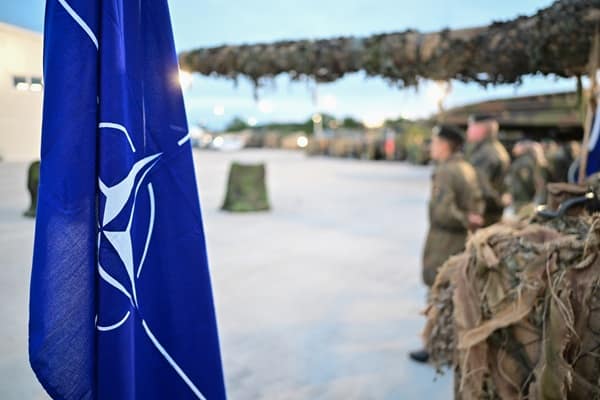
Fears are growing that Vladimir Putin could test NATO’s resolve after Russian forces carried out an unprecedented live-fire exercise near the border of a NATO member state — triggering warnings of a dangerous new escalation.
Estonia has accused Moscow of conducting “unusual” military activity on Lake Peipus, a body of water shared by Estonia and Russia, after Russian forces held weapons drills without notifying Tallinn.
Estonian Defence Minister Hanno Pevkur said the exercise on July 9 marked the first time Russia had carried out live-fire weapons training in the area.
Read more related news:
UK prepares for Russian attack as emergency plans go nationwide
Britain and France prepare troops as Europe draws a red line over Ukraine
Kremlin warns nuclear fleet are ready for war and will be used for ‘any scenario’
Ukraine’s SBU warns Russia sent nuclear ‘dirty’ drone weapons into battle
“Russia has not previously conducted weapons exercises on Lake Peipus. In that sense, this is something new,” he said.
“They were firing at a moving target on the water.”
The warning comes as NATO’s eastern flank braces for a possible surge in Russian provocations, with officials in Poland and Lithuania claiming Moscow may be preparing operations designed to test the alliance.
Baltic states on high alert
Lithuanian President Gitanas Nausėda said intelligence services had warned of possible Russian attempts to target critical infrastructure, including energy networks.
“I cannot deny that we have such information and that it concerns limited kinetic operations likely targeting critical infrastructure,” he said.
Officials in Vilnius said they were monitoring threats to electricity links, transport networks and other key systems vital to national security.
Latvian President Edgars Rinkēvičs warned that Moscow could attempt to probe NATO’s response mechanisms as Ukraine continues to put pressure on Russian forces.
“Even without a total Ukrainian victory, Russia may indirectly test Article 5 and response mechanisms at the Alliance and European Union levels,” he said.
He added that the next year could prove “crucial” for Baltic security.
Fear of a NATO trap
The United States has also warned Poland that Russia could attempt a so-called false flag operation by using drones disguised as Ukrainian weapons to create a pretext for retaliation against a NATO member.
Such an attack could risk triggering Article 5 of the NATO treaty, which commits allies to respond collectively if one member is attacked.
Poland, Estonia, Latvia and Lithuania have increased protection around military, energy and transport infrastructure as concerns grow over Russian hybrid warfare tactics.
Kremlin rejects accusations
The Kremlin dismissed the warnings as Western propaganda designed to justify NATO expansion.
Kremlin spokesman Dmitry Peskov accused Baltic governments of creating fear to support further militarisation.
“It’s a fresh batch of bugaboos intended to continue the brainwashing and prepare the population for further militarisation,” he said.
Moscow has repeatedly denied planning attacks against NATO territory and accused the alliance of escalating tensions by strengthening its presence in Eastern Europe.
Cyber attacks and drone fears add to tension
The latest military scare follows accusations that Russian intelligence-linked groups have carried out cyberattacks and sabotage operations across Europe.
The European Union said Russia’s FSB Center 16 had been linked to cyberespionage campaigns targeting defence industries and critical infrastructure.
A recent assessment by the International Institute for Strategic Studies also suggested Russia may have used covert maritime assets to launch drones that disrupted European aviation.
The Baltic region has faced additional uncertainty following several incidents involving unidentified drones crossing into NATO territory, including heightened concerns in Latvia and Lithuania.
With Russia accused of increasingly aggressive tactics and NATO allies preparing for possible confrontation, security officials warn that the Baltic region has become one of the most dangerous flashpoints between Moscow and the West since the Cold War.


Leave a Comment