
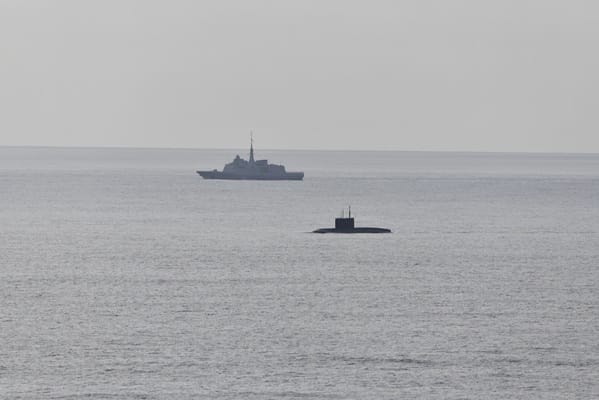
Almost 100 Russian-linked vessels have passed through British waters in the month after Sir Keir Starmer announced plans to allow the military to board ships in the so-called shadow fleet, according to tracking data.
At least 98 vessels subject to UK sanctions transited through British maritime zones following the March 25 announcement, with no public record of any boardings or detentions.
The ships, many operating under opaque ownership structures, are believed to transport oil, grain and other goods linked to Russia’s war economy in Ukraine.
Data from LSEG shows 63 vessels passed within 12 nautical miles of the UK coastline via the English Channel, while a further 35 travelled through Britain’s Exclusive Economic Zone, which extends up to 200 nautical miles offshore, particularly around northern Scotland.
The scale of the transit has raised questions about enforcement, particularly as other European countries, including France, Belgium and Sweden, have intercepted and detained similar vessels in recent months.
Maritime security expert Elisabeth Braw said failure to act quickly risks undermining deterrence.
Read more related news:
Healey warns of Putin’s ‘hidden hand’ behind Iranian drone attacks
Healey unleashes record drone package as Ukraine war turns high-tech
MPs consider issuing survival handbook as Britain braces for potential large-scale war
National service returns to the table as defence chief warns of ‘corrosive complacency’
“You have to quickly follow up with boardings, or otherwise those vessels will conclude that it was an empty threat, and that is the regrettable situation we are in now,” she said.
The UK Government has come under increasing pressure from allies to strengthen its maritime enforcement posture amid wider demands on British forces across eastern Europe, the Arctic and the Middle East.
The issue is compounded by the size of the Royal Navy, which is currently at its smallest since the 17th century, according to defence figures cited in political debate.
Tracking data also suggests at least 10 vessels engaged in “spoofing” behaviour — switching off or manipulating tracking systems while passing through UK waters.
There are currently 544 vessels linked to Russia’s shadow fleet on the UK sanctions list, reflecting the scale of the challenge facing enforcement agencies.
The Kremlin has dismissed Western sanctions on its shipping as illegal and described recent UK measures as a “deeply hostile move”, warning of possible retaliation.
Former defence chief Lord Dannatt compared current defence spending levels to the prelude to the Second World War, warning that underinvestment carries strategic risk.
He argued Britain faces a moment of heightened danger, calling for stronger leadership and faster rearmament decisions.
Former prime minister John Major also warned that Europe must be properly equipped to deter aggression, arguing that cost concerns would become irrelevant if Russia succeeds in Ukraine and expands its ambitions further.


Leave a Comment