
If Andy Burnham is indeed heading for Number 10, as looks like is a given, then investors need to start thinking seriously about who walks into Number 11 with him.
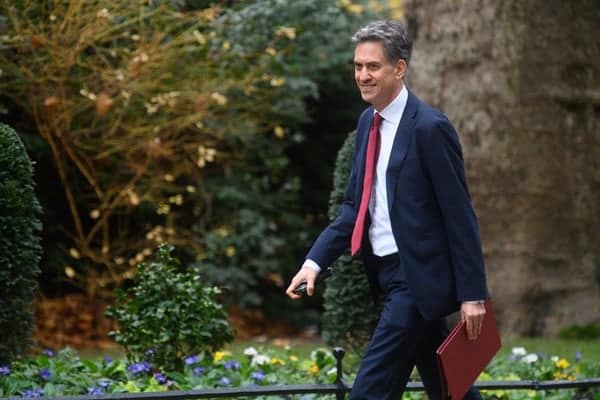
Thanks to Lucy Powell’s intervention this week, one answer suddenly looks rather more plausible than it did a few days ago: Ed Miliband.
When Labour’s deputy leader, a close ally of Miliband and his former chief of staff, says publicly that he would make a “good Chancellor”, markets are entitled to pay attention.
Personnel matters as it sends signals. And few appointments would send a more powerful signal about Britain’s economic direction than Ed Miliband taking control of the country’s Treasury.
It will concern investors. Not because Miliband is some sort of economic extremist, nor because this is fundamentally a debate about left versus right. It isn’t.
This is about confidence, credibility, and the question every investor asks before committing capital: what sort of economy is this country trying to be?
The problem for Miliband is that he arrives with one of the most clearly defined political identities in British politics.
For much of his career, he has argued for a larger role for the state, greater intervention in markets, more redistribution and a more sceptical view of unfettered capitalism. His supporters regard those instincts as both necessary and morally justified. Markets, however, tend to view them rather differently.
Investors, typically, don’t spend much time debating political philosophy. They ask practical questions.
Will taxes rise? Will regulation increase? Will economic growth remain the overriding priority? Will wealth creation be encouraged or constrained? Will Britain become more attractive to capital, or less?
The mere fact that those questions are now being asked so aggressively with reference to a potential Chancellor Miliband tells its own story.
The UK enters this debate in a position of considerable economic vulnerability. Growth remains stubbornly weak, productivity has disappointed for well over a decade, public debt is high by historical standards, and debt-servicing costs have exploded since the era of ultra-low interest rates ended.
At the same time, governments around the world are engaged in an increasingly fierce competition for investment, talent and business activity.
What we see is that this isn’t an environment that rewards ambiguity.
The immediate pressure point would almost certainly be the gilt market.
The lesson of recent years, I’m talking Liz Truss of course, is not that markets oppose governments of a particular political persuasion. It’s that bond investors have become much less willing to extend the benefit of the doubt to any government they perceive as economically unpredictable.
The gilt market no longer assumes that Britain automatically deserves cheap borrowing costs. Indeed, credibility must be earned continuously.
A Chancellor associated with greater intervention, higher spending ambitions and a more sceptical approach to markets would inevitably face intense scrutiny.
The scrutiny carries consequences. Higher gilt yields do not remain confined to trading screens in the City. They feed through into mortgage rates, business borrowing costs and the government’s own interest bill. A small loss of confidence can quickly become a huge and expensive problem.
Sterling would come under scrutiny too.
The pound is ultimately a confidence asset. It reflects not only current economic performance but expectations about the future. Britain runs persistent deficits and relies heavily on international capital.
Investors can choose to deploy that capital elsewhere if they conclude that the country’s economic model is becoming less attractive, and, of course, they have plenty of alternatives.
The US continues to attract enormous investment despite its own fiscal challenges. European economies are competing aggressively for industry and capital. Financial centres in Asia and the Middle East continue to expand their global reach. Britain cannot assume that investors will remain loyal simply because they always have been.
The problem for Ed Miliband is not that markets fear a particular Budget measure or a specific tax increase. It’s that investors believe they already understand his instincts.
They see a politician who has spent much of his career arguing that markets require stronger correction, greater intervention and more political oversight. They see someone whose priorities have not traditionally centred on competitiveness, wealth creation or attracting capital.
They see uncertainty, which markets have always loathed.
Perhaps that judgment would prove unfair. Perhaps Chancellor Miliband would govern as a fiscal conservative, embrace business and surprise his critics.
But, as we know only too well, financial markets do not operate on optimism. They operate on probability.
This is why Lucy Powell’s comments this week matter. They transform a strong possibility into a scenario that investors must begin to price. And they will.
The uncomfortable truth for politicians of every persuasion is that governments govern, but markets finance.
Britain needs stronger growth, more business investment, higher productivity and renewed international competitiveness. It needs global investors to believe that the UK remains one of the best places in the world to invest capital.
The prospect of Chancellor Miliband risks raising precisely the opposite thesis.


Leave a Comment