
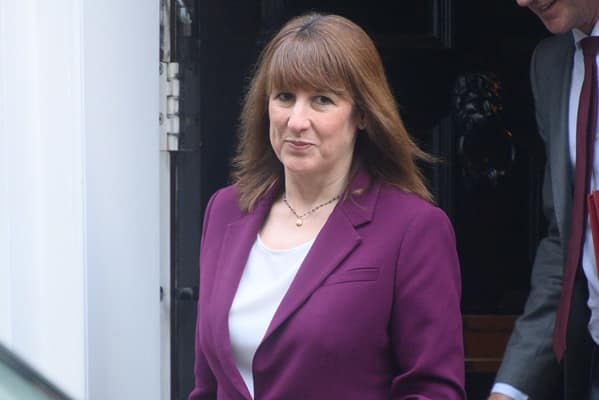
Rachel Reeves arrived at the Treasury promising stability.
Instead, her critics claim she has left behind a mountain of debt, soaring borrowing costs and a fiscal headache that could have funded the very defence spending Britain is now struggling to deliver.
The Conservatives have launched a brutal attack on the Chancellor’s economic record, arguing that the explosion in debt interest payments under her watch is almost equivalent to the money Britain needs to meet its NATO commitments.
The accusation strikes at the heart of Labour’s economic strategy: that higher taxes and increased borrowing were necessary to rebuild the public finances.
Critics argue the opposite — that the Government has increased the cost of servicing Britain’s debt while leaving less room for investment in national security, infrastructure and growth.
Shadow Chancellor Sir Mel Stride accused Ms Reeves of leaving behind a legacy of “unforgivable profligacy”, claiming rising debt costs have consumed billions that could have been spent elsewhere.
The legacy of Rachel Reeves as Chancellor is one of unforgivable profligacy,” he said.
“Debt interest is continuing to soar on her watch, thanks to reckless borrowing and high inflation.”
The Conservatives claim the annual cost of servicing Britain’s debt will be around £24 billion higher by the end of this Parliament than it was before Ms Reeves delivered her first tax-raising Budget.
For defence chiefs facing pressure to expand Britain’s armed forces, rebuild stockpiles and meet NATO commitments, the numbers have become politically explosive.
Every extra pound spent paying interest on past borrowing is a pound unavailable for new priorities, the Conservatives argue.
Sir Mel said the money being swallowed by debt repayments could have been directed towards “the urgent need to boost defence spending where Labour have utterly failed to meet their commitments.
The warning comes as Britain faces growing pressure to strengthen its military capabilities amid rising global tensions, from Russia’s war in Ukraine to instability across the Middle East.
The former Treasury minister also delivered a stark warning about Britain’s position in international financial markets, claiming investors are demanding higher returns to lend to the UK than to any other G7 economy.
“The bond markets are charging us more to borrow than any other G7 country — in fact, more than countries like Greece and Morocco,” he said.
Speaking to the BBC, Sir Mel claimed Ms Reeves had borrowed “about a quarter of a trillion pounds across the Parliament”, leaving behind what he described as a “low growth economy that is very fragile.
The Conservatives argue that Labour’s tax rises have damaged businesses, weakened investment and placed further pressure on households already struggling with higher living costs.
But Ms Reeves has mounted a firm defence of her record, insisting she inherited a damaged economy and has restored credibility to Britain’s finances.
She said she had delivered “quite radical change” and restored “credibility to the economy, and to Labour’s economic policy.”
The Chancellor also rejected claims that the economy had deteriorated under Labour, arguing that the next Prime Minister — expected by many Westminster figures to be Andy Burnham — would inherit stronger foundations than those left by the previous Conservative government.
Ms Reeves insisted pensioners were “better off after two years of this Labour government”, despite criticism that her policies had resulted in more retirees being pulled into paying income tax.
However, Sir Mel warned that a change of Labour leader would not represent a change of direction.
He claimed Mr Burnham would continue the same approach, arguing he would “lean more into tax, more into borrowing.”
The political battle over Britain’s finances is now becoming a battle over priorities.
At its centre is a simple but politically explosive question: should billions more be spent servicing the nation’s debt, or should that money be redirected towards rebuilding Britain’s economic and military strength?
With defence spending under pressure, growth remaining sluggish and borrowing costs elevated, the next Government will inherit a fiscal landscape where every decision comes with a price tag.


Leave a Comment