
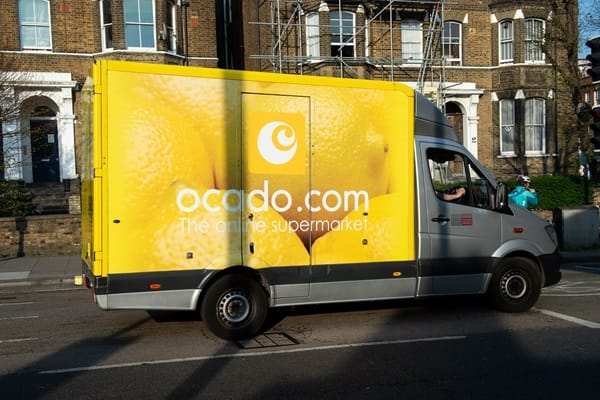
Ocado is attempting to rebuild investor confidence after revealing talks with potential new supermarket partners as it seeks to recover from setbacks in its international robotic warehouse business.
The London-listed retail technology company said it has held “live engagement” with potential US partners and is targeting new grocery opportunities across North America, Europe and Asia Pacific.
The move follows decisions by major supermarket groups Kroger in the US and Sobeys in Canada to close some automated warehouses operated by Ocado, raising fresh questions over demand for its highly automated fulfilment model.
Despite the challenges, Ocado reported a sharp rise in revenue for the first half of the year, with group revenues increasing 54% to £1.04 billion.
However, much of the growth was driven by £354 million in one-off fees linked to warehouse closure agreements. Excluding those payments, underlying revenue growth was just 1%.
The company returned to profit before tax, recording £17 million compared with a £173 million loss a year earlier.
Chief executive Tim Steiner said Ocado had seen stronger international growth and was now focused on expanding its technology offering.
“We’ve been re-engaging retailers across some of the world’s largest grocery markets, with the USA a particular focus,” he said.
Ocado’s UK joint venture with Marks & Spencer performed strongly, with revenues rising 15% and improved earnings helping offset pressure elsewhere.
However, investors remain cautious. Shares fell 15% following the results as markets weighed the impact of supermarket exits and uncertainty over future growth.
The company is also preparing for a leadership transition, with Mr Steiner confirming he will remain chief executive until December next year while succession plans are developed.
Ocado now faces a critical period as it attempts to prove that its automated warehouse technology can deliver long-term value for global grocery giants after a difficult period of restructuring.



Leave a Comment