
Ukraine’s security services have uncovered further evidence they say shows Russia used drones fitted with hazardous depleted uranium components during attacks on Ukrainian territory.
The Security Service of Ukraine (SBU) said two Russian Geran-2 attack drones recovered after strikes in the Sumy region in April 2026 contained fragments of depleted uranium, a material that can pose health risks if handled improperly.
According to the SBU, the drones had been modified with R-60M air-to-air missiles, which Russian forces have reportedly adapted for use as explosive warheads on unmanned systems.
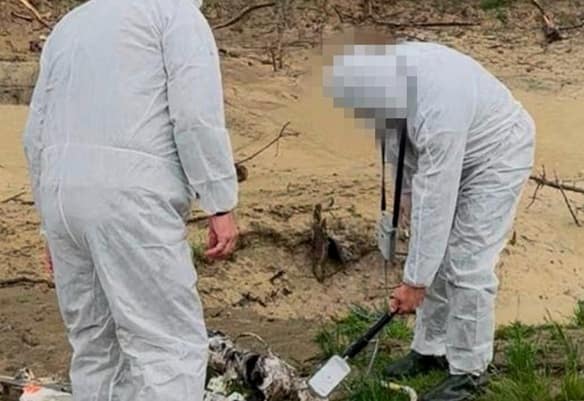
Investigators and emergency specialists detected elevated radiation levels at the crash sites, recording readings of 8.3 and 10.5 microsieverts per hour — above normal background radiation levels.

A forensic examination found the missile components contained around 2.8 kilograms of depleted uranium fragments, including uranium isotopes U-234, U-235 and U-238, the SBU said.
The hazardous materials were later removed and neutralised by specialists.
Kyiv has launched a war crimes investigation into the incidents, with prosecutors seeking to identify those responsible for deploying the weapons.
The latest claims follow an earlier discovery in April 2026, when Ukrainian officials said they found elevated radiation levels on the wreckage of another Russian drone in the Chernihiv region.

In that case, investigators reported radiation readings of 12 microsieverts per hour and said the recovered R-60 missile warhead also contained depleted uranium.
The allegations have not been independently verified, and Moscow has not publicly commented on the claims.
The reports come as Ukraine continues to target Russian drone and missile infrastructure while both sides expand the use of modified weapons systems in a conflict increasingly dominated by long-range strikes and unmanned warfare.


Leave a Comment