
Lithuania plunged into panic on Wednesday after a suspected Russian drone violated the country’s airspace, forcing the president into a bunker, halting trains around the capital and triggering an emergency Nato response.
Authorities issued urgent warnings telling residents to “immediately take shelter in a safe place” and “take care of your close ones” as the unidentified drone crossed into Lithuanian territory from neighbouring Latvia.
Schools and nurseries in and around Vilnius were ordered to move children into shelters while alerts sounded inside the Lithuanian parliament building, where ministers and MPs were gathered.
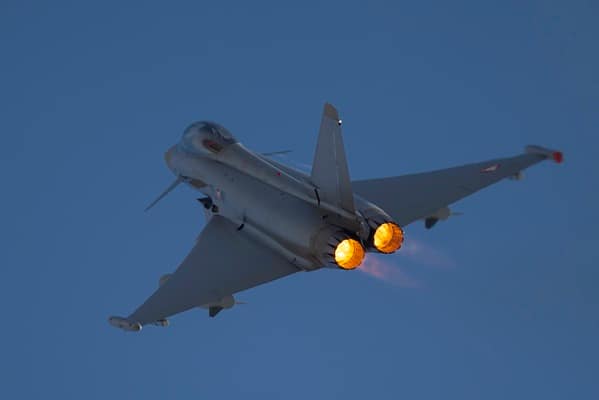
The incident also triggered the activation of NATO’s Baltic Air Policing mission, with allied fighter jets scrambled to intercept the drone.
“The Nato Air Policing Mission is activated and targeting a drone detected in Lithuanian airspace,” Defence Minister Robertas Kaunas said.
However, the aircraft failed to locate the object, which authorities said either crashed undetected or left Lithuanian airspace before it could be intercepted.
The alert, which began shortly after 4.30 pm BST, lasted for around an hour before restrictions were lifted and transport services gradually resumed.
Train traffic around Vilnius was temporarily suspended during the emergency, while airspace monitoring was intensified across the region.
The scare marks the latest in a series of increasingly tense incidents across the Baltic states as fears grow over Russian military activity near NATO’s eastern flank.
Lithuanian Foreign Minister Kestutis Budrys accused Moscow of attempting to sow instability and fear.
“This is a transparent act of desperation – an attempt to sow chaos and distract from a simple reality: Ukraine is hitting Russia’s military machine hard,” he said.
“My message to the Kremlin: nice try. Failed again.”
In Moscow, Kremlin spokesman Dmitry Peskov said Russia was “closely monitoring” developments and considering an “appropriate response”.
The incident comes amid heightened tensions across the Baltic region following a string of drone incursions and airspace violations.
Russia’s ambassador to the United Nations claimed earlier this week that Ukraine had attempted to launch military drones from Latvia, allegations rejected by Western officials.
Speaking in Tallinn on Wednesday, Canadian foreign minister Anita Anand dismissed Moscow’s accusations as deliberate disinformation.
“Russia is deliberately sowing disinformation every day. Its claims about the use of Baltic airspace are untrue,” she said.
The episode has intensified pressure on Baltic governments already struggling to reassure increasingly anxious populations living on NATO’s frontline with Russia.
Last week, Latvia’s government resigned amid criticism over its handling of previous airspace incursions, while Estonia is now seeking expanded emergency powers to counter military drone threats.
Estonian Prime Minister Kristen Michal told parliament on Wednesday that new measures were needed to close gaps in detection systems and strengthen protection around critical infrastructure.
Meanwhile, Ursula von der Leyen warned that Russian threats against the Baltic states would be treated as threats against the entire European Union.
For many in the region, Wednesday’s panic served as another reminder of how rapidly tensions along NATO’s eastern border continue to escalate.


Leave a Comment