
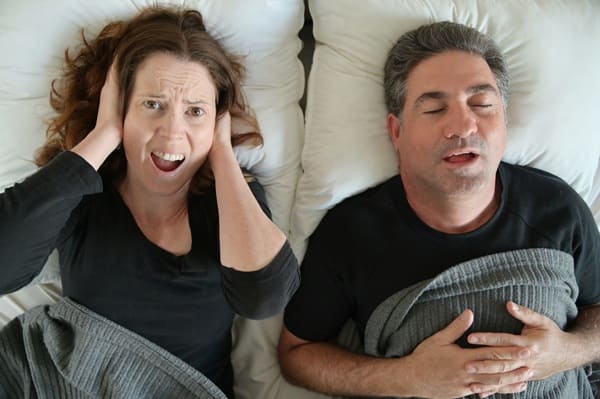
Every night, millions of couples across the UK lie awake listening to the same unwelcome sound. Some reach for earplugs. Others migrate quietly to the sofa. Many simply accept it as part of sharing a bed. But what begins as a mild annoyance can slowly erode something far more important: shared sleep, physical closeness, and the quiet intimacy that keeps relationships alive.
Snoring is not just a noise problem. In most cases, it is a medical one – and a visit to a sleep clinic in London can make the difference between years of disrupted nights and a lasting solution for both partners.
The growing trend of sleep divorce in the UK
“Sleep divorce” – choosing to sleep in separate rooms to escape a snoring partner – has moved from a hushed arrangement to an openly discussed reality for millions of UK couples. According to the ResMed 2025 Global Sleep Survey of over 30,000 people across 13 countries, 18% of couples now permanently sleep apart. Research in the US found the figure is even higher among younger couples, with 43% of millennials occasionally or consistently sleeping in a separate room, according to the American Academy of Sleep Medicine.
The UK data is even more striking. A survey of 2,000 recently divorced British people found that 47% explicitly cited their partner’s snoring as a contributing factor to their separation. In the United States, snoring ranks as the third leading cause of divorce, behind only infidelity and financial problems.
Sleep divorce might feel like a workable solution, but sleep specialists are clear: sleeping separately treats the symptom, not the cause – and for many couples, it quietly accelerates the very distance it was meant to prevent.
The hidden toll on the partner
If you live with a snorer, no statistic fully captures the reality. Research from the British Snoring and Sleep Apnoea Association found that partners of snorers lose between one and two hours of sleep every night. Over a 24-year relationship, that equates to two full years of lost sleep. The Mayo Clinic found that spouses of snorers wake partially around 21 times per hour – nearly as often as the snorer themselves.
When tiredness becomes resentment
Chronic sleep deprivation does not just leave the partner exhausted – it fundamentally changes how they function in the relationship. Poor sleep is directly linked to reduced emotional regulation, increased irritability, lower conflict tolerance, and impaired decision-making. The arguments that seem to flare up for no reason, the withdrawal, the growing distance – these often trace directly back to a bedroom where proper rest simply is not happening.
Women appear to carry a disproportionate burden: 20% report that their partner disrupts their sleep every night, compared to 11% of men who say the same.
What the data really shows
The scale of snoring’s impact on relationships deserves to be taken seriously as both a health and social issue:
· 47% of recently divorced British people linked snoring to their separation
· 75% of couples affected by snoring eventually sleep in separate rooms
· 85% of those who moved apart say it directly contributed to their divorce
· Partners of snorers lose 1–2 hours of sleep per night
· Snoring is ranked third among causes of divorce in the United States
· 40% of men and 24% of women snore regularly
These are not trivial inconveniences. They are the consequences of an underlying condition that can, in the vast majority of cases, be effectively treated – particularly when properly assessed at a clinic with ENT specialist expertise.
Why separate rooms are not the solution
Moving to a separate room may buy a few better nights, but at a cost most couples underestimate. Research consistently shows that co-sleeping promotes emotional bonding, regulates cortisol levels, and maintains the kind of low-key physical closeness – a hand on a shoulder, talking in the dark – that sustains a relationship over time.
The 85% statistic bears repeating: of couples who separated their sleeping arrangements due to snoring, the overwhelming majority said it contributed directly to divorce. Physical distance, normalised over months and years, becomes emotional distance.
More critically, a separate bedroom does nothing about the medical issue. In many snoring cases – particularly where breathing pauses, gasping, or excessive daytime fatigue are present – sleep apnoea may be involved. This requires proper diagnosis from a sleep clinic in London, not a new mattress in the spare room.
Understanding what is actually causing the snoring
Not all snoring has the same origin. For some people, the cause is structural – a deviated septum, enlarged turbinates, or a nasal valve that collapses during breathing, forcing air through the throat. For others, the soft tissues of the palate and throat vibrate as air moves through a narrowed airway.
Could it be sleep apnoea?
A significant proportion of people who snore have obstructive sleep apnoea (OSA) – a condition in which the airway partially or fully collapses during sleep, causing the sleeper to stop breathing briefly and repeatedly throughout the night.
Sleep apnoea affects an estimated 1.5 million people in the UK, though many are undiagnosed for years. Beyond snoring, symptoms include waking with headaches or a dry mouth, excessive daytime fatigue, poor concentration, and mood changes. Left untreated, OSA carries serious long-term health risks: raised blood pressure, increased stroke risk, and cardiovascular disease.
This is precisely why proper assessment – not management with earplugs – is essential.
The real solution: Specialist care at a sleep clinic in London
The most effective step couples can take when snoring is affecting their relationship is to approach it as a medical issue and seek a proper diagnosis. Visiting a sleep clinic means moving beyond guesswork to understanding exactly what is causing the problem and whether sleep apnoea is involved.
Specialist ENT consultants can offer a range of targeted diagnostic tools, including:
· Flexible naso-endoscopy – a camera examination of the nasal passages and throat to identify structural issues
· Home sleep studies – non-invasive overnight monitoring of breathing patterns and oxygen levels, completed in your own bed
· Drug-induced sleep endoscopy (DISE) – an in-clinic procedure carried out under sedation, allowing specialists to observe exactly where and how the airway collapses during sleep
Treatment options in London
Once the cause is identified, Hillser Clinic can match treatment to the specific diagnosis rather than applying a one-size-fits-all approach. Options typically include:
· CPAP therapy – a mask device that maintains continuous positive airway pressure, highly effective for moderate to severe sleep apnoea
· Mandibular advancement devices – custom dental appliances that reposition the jaw to keep the airway open during sleep
· Nasal surgery – correcting structural causes such as a deviated septum, enlarged turbinates, or nasal valve collapse
· Soft palate procedures – targeting the tissue responsible for the vibration and noise
· Non-surgical alternatives – including ClariFix cryotherapy for rhinitis-related nasal obstruction and LATERA implants for nasal wall support
The right treatment depends entirely on the individual cause – which is why a proper assessment at Hillser Clinic is the essential starting point, not the last resort.
What to expect at your first appointment
The process is more accessible than most people expect. A first appointment at a sleep clinic involves a detailed consultation covering your symptoms, sleep patterns, breathing history, and medical background. From there, your specialist will recommend the most appropriate diagnostic pathway – whether a home sleep study, an in-clinic endoscopy, or further imaging.
Unlike a standard GP referral, care at a specialist sleep clinic in London is led by ENT consultants with deep expertise in sleep-disordered breathing. Treatment plans are personalised, minimally invasive where possible, and built around your specific anatomy.
For couples who have been managing a snoring problem for months or years, this appointment is often the turning point.
You do not have to choose between your sleep and your relationship
Snoring is not a character flaw. It is a physiological issue – often structural, frequently treatable, and almost always more damaging to relationships than people appreciate until they look at the evidence.
The pull toward sleep divorce is entirely understandable. At 3am, when you are exhausted and resentful and the noise simply will not stop, a separate room feels like the only answer. But the couples who come out the other side of a snoring problem – sleeping in the same room, finally rested, without the resentment – are the ones who treated the cause rather than arranged around it.
If snoring is affecting your sleep, your health, or your relationship, do not accept it as an inevitable part of life. Book a consultation at a sleep clinic in London and find out, for the first time, exactly what is happening – and what can be done about it.
At Hillser Clinic on Harley Street, all consultations are led by highly experienced ENT Consultants – offering couples a clear, personalised path from diagnosis to lasting treatment.


Leave a Comment