
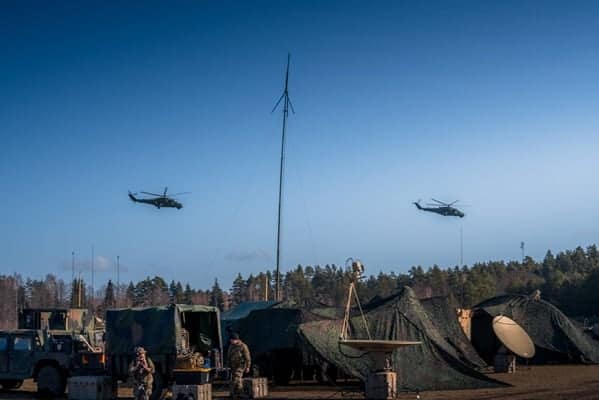
The Baltic states are turning to Ukraine for assistance in developing bomb shelters and civil defence infrastructure, as a series of drone incursions and airspace violations fuel growing security concerns across NATO’s eastern flank.
Officials and defence industry representatives say Estonia, Latvia and Lithuania have seen a rise in drone activity in recent weeks, prompting renewed debate over preparedness for potential escalation with Russia.
In one of the most serious recent incidents, NATO aircraft reportedly shot down an unmanned aerial vehicle over Estonia — the first time such a response has been recorded. In Lithuania, senior political leaders were temporarily moved to underground shelters after a drone breach of national airspace.
The developments have accelerated contact between Baltic governments, defence firms and Ukrainian specialists with experience in building and operating protective infrastructure during wartime.
Speaking at a defence industry event in Prague, Ihor Fedirko, head of the Ukrainian Council of Defence Industry, said Baltic companies were seeking practical support to protect civilians amid heightened tensions.
“They are not huge countries. They’re trying to find the best solutions against the Russian aggression, if it will happen. To keep safe and sound their people,” he said. “We are ready to help them.”
Ukrainian steel producer Metinvest has also confirmed early discussions with Baltic governments over the potential construction of modernised shelters, according to its chief executive, Yuriy Ryzhenkov.
The reported drone incidents are all believed to have originated from Ukraine, but Baltic states and Kyiv have attributed the disruption to Russian electronic warfare systems, which they say may be causing drones to stray into neighbouring airspace.
Moscow, however, has rejected those claims and accused NATO countries of enabling Ukrainian operations against Russian territory from Baltic airspace — allegations firmly denied by regional governments.
Russia’s ambassador to the United Nations has separately warned that such activity could draw retaliation, claiming Ukraine intends to launch drones from Baltic territory — assertions not supported by publicly available evidence.
Baltic and Nordic foreign ministers have accused Moscow of running a “blatant disinformation campaign” aimed at destabilising the region and spreading false narratives about airspace violations.
The heightened tensions come as drone warfare continues to intensify across the wider region, with Ukraine deploying long-range unmanned systems against targets deep inside Russia, while Russia launches nightly drone and missile strikes against Ukrainian cities.
Last year, a wave of Russian drones entered Polish airspace in a single night, prompting condemnation and renewed NATO discussions on air defence readiness.
Some Baltic officials have stressed that their countries are already strengthening civil protection systems and air defence coordination in response to the evolving threat environment.
Estonian defence officials have said the country remains well prepared for potential escalation, while Lithuania’s foreign ministry emphasised that lessons from Ukraine are increasingly shaping regional planning.
The latest discussions underline how Ukraine’s wartime experience is becoming a reference point for NATO’s eastern members as they reassess civilian protection and resilience strategies in an increasingly volatile security landscape.


Leave a Comment