
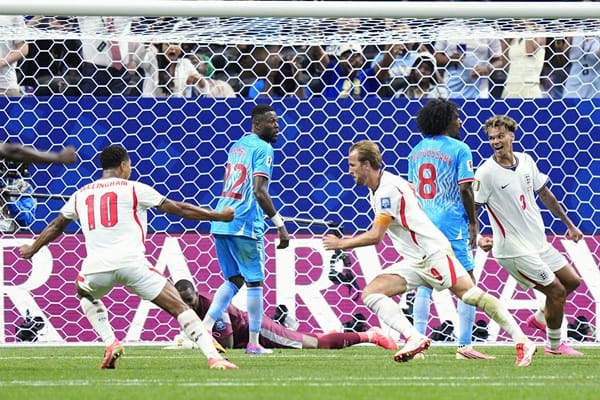
The 2026 FIFA World Cup is expected to become the largest and most commercially valuable edition of the tournament in history, as expanded participation and a tri-nation hosting model across the United States, Mexico and Canada reshape the global football landscape.
Organisers say the tournament, officially staged under 2026 FIFA World Cup, will feature 48 teams for the first time, increasing the number of matches and extending the competition’s duration significantly compared with previous editions.
The tournament will be jointly hosted by the United States, Mexico and Canada, marking the first time three countries have shared World Cup duties.
The expanded geography is expected to create one of the most complex logistical operations in sporting history, with teams, officials and broadcasters required to move across vast distances and multiple time zones.
The British Foreign Office is warning football fans to be vigilant as there are fears of pickpocketing and people being drugged.
The British Foreign Office warns: “During the tournament, reports of mobile phone thefts and adulterated drinks have increased.
“If you plan to return to the US for a later match and your passport is lost or stolen, you will not be able to use an emergency travel document provided by the British Embassy to re-enter the US from Mexico.
The Daily Mail reported that Mexico has banned e-cigarettes and vapes and anyone who is caught with these items can face jail or a £10,000 fine.
Major cities including New York, Los Angeles, Mexico City and Toronto are set to stage fixtures, with infrastructure investment accelerating in preparation for increased visitor numbers.
The enlarged format is forecast to generate record revenues from broadcasting rights, sponsorship and hospitality packages, reinforcing FIFA’s strategy of scaling the tournament’s global commercial footprint.
The governing body has already secured long-term broadcast agreements across major markets, reflecting strong demand from streaming platforms and traditional broadcasters.
Industry analysts expect the expanded tournament to significantly increase advertising inventory, with more matches creating additional premium slots for global brands.
Host nations are preparing for a substantial short-term boost in tourism, hospitality and transport sectors, particularly in cities hosting multiple fixtures.
The United States, in particular, is expected to capture the largest share of economic activity due to stadium capacity and domestic infrastructure.
Mexico and Canada are also forecasting strong inbound travel flows, though analysts caution that infrastructure pressure and security coordination will be critical challenges.
Under the new structure, the tournament will feature 48 teams divided into an expanded group stage, followed by a larger knockout phase.
This change significantly increases the total number of matches compared with previous tournaments, raising both revenue potential and scheduling complexity.
The expanded World Cup reflects broader shifts in football’s commercial model, as governing bodies seek to maximise global reach and digital engagement.
However, critics argue that the increased number of fixtures risks diluting competitive intensity while placing greater strain on players already facing congested domestic and international calendars.
While organisers emphasise economic opportunity and global inclusivity, questions remain over infrastructure costs, environmental impact and the long-term sustainability of such a large-scale tournament model.
Nevertheless, the 2026 edition is widely expected to redefine the commercial ceiling of international football, setting a benchmark for future global sporting events.


Leave a Comment