
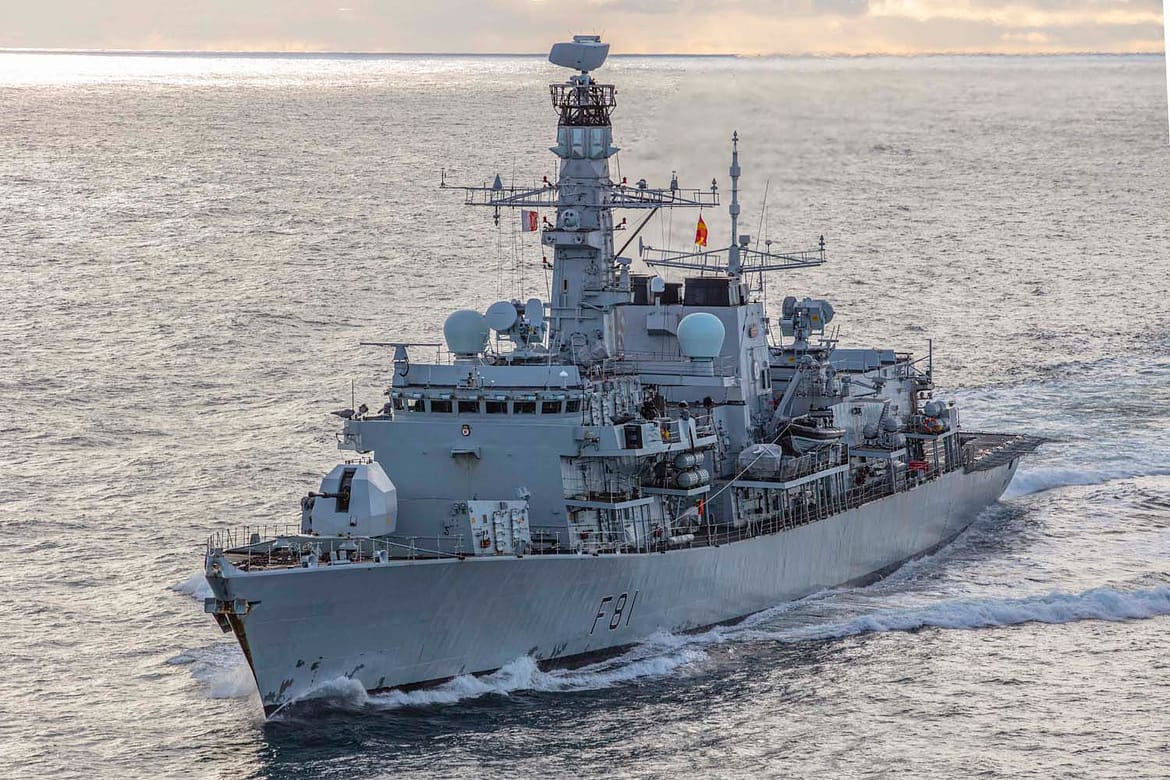
Britain’s most senior naval officer has acknowledged that the Royal Navy is not currently prepared for full-scale conflict, as pressure mounts from Washington for the UK to take a more active role in the Middle East.
General Sir Gwyn Jenkins, the First Sea Lord, said the Navy still has “work to do” before it could engage successfully in a high-intensity war, marking one of the clearest admissions yet about the state of Britain’s Armed Forces.
His comments come at a time of escalating tensions around the Strait of Hormuz, a critical artery for global energy supplies, where Western allies are under increasing pressure to ensure freedom of navigation.
The intervention follows unusually blunt criticism from Donald Trump, who urged Britain to take greater responsibility for securing its own energy interests. Speaking earlier this week, Trump told Keir Starmer to “go get your own oil”, adding that the United States “won’t be there to help you anymore”.
He also reportedly dismissed Britain’s aircraft carriers as “toys”, in remarks that underline growing transatlantic tensions over burden-sharing.
Separately, US Secretary of War Pete Hegseth is said to have criticised the UK’s reluctance to deploy naval assets, mocking the “big, bad Royal Navy” for its absence from the region.
Sir Gwyn’s comments represent a rare public acknowledgement of capability gaps at the highest level of the British military.
While he stressed that the Navy would respond if called upon — saying “of course we would” go to war with the resources available — his remarks reinforce longstanding concerns about force readiness, fleet size and sustained investment.
Sir Gwyn said that “if we were told to go to war, of course we would.”
“But are we as ready as we should be? I don’t think we are,” he added.
“We have work to do and I am completely dedicated to the mission,” Sir Gwyn told Swedish outlet Svenska Dagbladet on Monday.
Defence analysts have for some time warned that Britain’s maritime capabilities have been stretched by a combination of budgetary constraints, ageing platforms and expanding global commitments.
The intervention comes amid mounting scrutiny of the Government’s defence spending plans.
Sir Keir has faced criticism for declining to set out a clear timetable for increasing defence expenditure to 3% of GDP. While he reiterated a commitment to raise spending to 2.5% by 2027 and to reach 3% in the next Parliament, questions remain about how quickly that target will be achieved.
Sir Bernard Jenkin, chairman of the Parliamentary Liaison Committee, warned that the lack of clarity “smacks of enormous complacency”.
The Prime Minister responded by pointing to what he described as years of underinvestment, arguing that Britain’s Armed Forces had been “stripped down and hollowed out” by previous administrations.
The exchange highlights a broader strategic dilemma for the UK as it seeks to balance domestic fiscal constraints with growing international security demands.
With instability in the Gulf threatening global energy supplies and key trade routes, pressure is likely to intensify on Britain to demonstrate credible military capability — particularly at sea.
Sir Gwyn’s remarks suggest that, while the will to act remains intact, questions over readiness and resources are becoming increasingly difficult to ignore.
A Ministry of Defence spokesman said: “As the First Sea Lord has repeatedly said, the Navy is absolutely ready to fight, including on advanced operations above and below the sea.
“Our nuclear deterrent protects us every moment of every day and Royal Navy personnel are deployed across the world keeping Britain secure at home and strong abroad.
“The Government is providing a generational increase in defence spending, with an extra £270billion across this Parliament, ensuring no return to the hollowed-out Armed Forces of the past and the strategic defence review sets out our path to increasing warfighting readiness.”


Leave a Comment