
For decades, Ireland has enjoyed the luxury of believing it could stand apart from the storms that shaped Europe.
While others invested in defence, joined military alliances and shouldered the burden of continental security, Dublin cultivated an image of principled neutrality. It was a policy that carried political appeal at home and attracted little scrutiny abroad.
That era is over.
Journalist Caolan, who directed Under Deadly Skies on Apple TV and is also a frontline reporter in Ukraine, has allegedly uncovered that “every day” Vladimir Putin’s ships are leaving a “Russian-owned factory in Ireland straight for St Petersburg carrying thousands of tonnes of raw alumina for the war machine.”
Coalan rightly stated on X: “There’s corruption everywhere. Locals tell me politicians are bought by oligarchs. Ireland is no longer militarily neutral.”
Putin’s invasion of Ukraine has exposed uncomfortable truths that many in Dublin would rather avoid. The war has shattered assumptions about European security, redrawn geopolitical calculations and forced governments across the continent to confront realities they spent decades ignoring.
Yet Ireland continues to behave as though none of this applies.
Across Europe, nations have accepted that the world has fundamentally changed. Finland and Sweden abandoned generations of military non-alignment and joined NATO.
Poland has embarked on one of the largest rearmament programmes in Europe. The Baltic states are investing heavily in defence while warning of the dangers posed by Russian aggression.
Meanwhile, Dublin appears trapped in a different century.
The most glaring contradiction lies on Ireland’s own coastline.
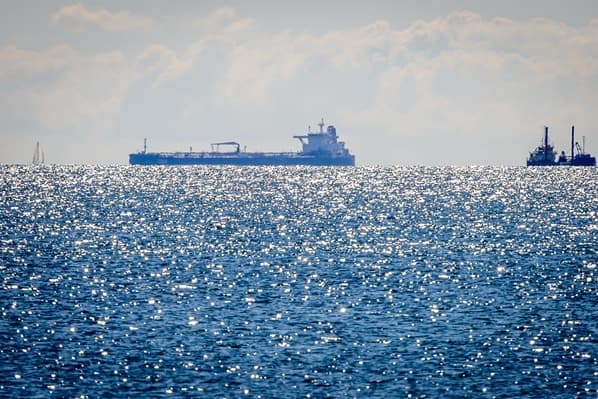
Every day, ships continue to carry thousands of tonnes of alumina from a Russian-owned facility in Ireland to St Petersburg. The material is a crucial component in aluminium production, a resource with obvious strategic value for both civilian industry and military manufacturing.
The trade may be legal.
That is rapidly becoming beside the point.
Every day, ships leave this russian owned factory in Ireland straight for St Petersburg carrying thousands of tonnes of raw alumina for the war machine.
There’s corruption everywhere. Locals tell me politicians are bought by oligarchs.
Ireland is no longer militarily neutral. pic.twitter.com/LTyImLUQqP
— Caolan (@CaolanReports) May 31, 2026
Europe has spent years attempting to sever the economic arteries that sustain Putin’s war machine. Governments have imposed sanctions, abandoned Russian energy, frozen assets and absorbed enormous economic costs in support of Ukraine.
At the same time, European taxpayers have contributed billions to Kyiv’s defence.
Yet Russian-linked industrial exports continue to leave Irish ports.
For many of Ireland’s partners, the optics are becoming increasingly indefensible.
The deeper problem is not simply trade.
It is the growing perception that Ireland has become a free ride on European security.
Irish neutrality has long relied upon a convenient assumption: that others will provide stability while Ireland enjoys the benefits. British and NATO capabilities help protect the North Atlantic. European intelligence cooperation helps counter hostile actors. Western military power underpins the security environment upon which Ireland’s prosperity depends.
Dublin contributes relatively little to that architecture while continuing to depend upon it.
The arrangement has survived because Europe was at peace.
It looks far less sustainable while Europe is at war.
Even more troubling are the broader questions surrounding Russian influence and economic leverage. Concerns persist about foreign-owned strategic assets, critical infrastructure vulnerabilities and the willingness of Irish politicians to confront difficult questions when commercial interests collide with security concerns.
The accusation increasingly heard in European capitals is not that Ireland is pro-Russian.
It is that Ireland remains dangerously complacent, and this complacency carries risks.
Neutrality was designed for an age when military alliances and territorial conflicts defined international relations. Today’s threats are more complex. They involve cyberattacks, energy dependence, supply chains, critical minerals, information warfare, and economic coercion.
In such a world, neutrality is no longer simply a question of refusing to join military alliances.
It is a question of whether a country is prepared to defend the values, interests and security of the democratic order upon which its prosperity depends.
Ireland cannot avoid that debate forever.
The uncomfortable truth is that neutrality has become increasingly difficult to separate from passivity.
And passivity, in the face of Europe’s most dangerous conflict since 1945, is beginning to look less like principle and more like abdication.
The question facing Dublin is no longer whether it wishes to remain neutral, the question is whether neutrality still means anything when Russian-owned cargo ships continue to sail from Irish ports while Europe fights to contain the greatest security threat of the modern era.
That is a question Ireland’s political class can no longer afford to dodge.


Leave a Comment