
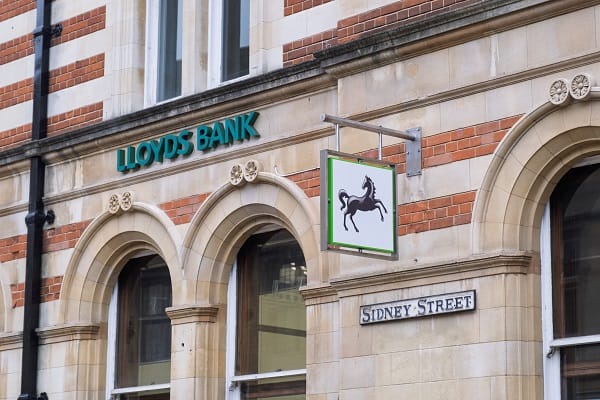
Lloyds Banking Group has warned that higher bank taxes risk undermining Britain’s economic growth and international competitiveness, as the lender urged the Government to honour its promise that a surcharge increase will be temporary.
William Chalmers, Lloyds’ chief financial officer, criticised the decision to double the bank corporation tax surcharge from 3 per cent to 6 per cent, arguing that additional taxation could make it harder to reduce borrowing costs and support businesses and households.
His intervention came as Lloyds reported pre-tax profits of £2.3 billion for the third quarter of 2026, almost double the £1.2 billion recorded during the same period last year.
The results put the Government’s decision to extract an additional £1.5 billion from the banking sector over 15 months into sharper focus, highlighting the tension between raising revenue and encouraging lenders to support the wider economy.
Chalmers acknowledged the pressure on public finances but warned against measures that could make lending more expensive.
“We recognise the fiscal constraints,” he said, adding that it was “ultimately important that we do what we can to reduce the cost of lending in order for the economy to grow”.
He continued: “Additional taxes are unhelpful to achieving both of those objectives: UK growth or international competitiveness.”
The finance chief said Lloyds accepted the measure but hoped the Government would stick to its time limit.
“We take it for what it is, but we do sincerely hope that it is indeed limited,” he said.
Bank Tax Increase Raises Questions Over Lending Costs
The Chancellor announced the surcharge increase as part of the Autumn Budget, arguing that banks should contribute more towards support for household energy bills.
The additional 3 percentage points will apply from January for 15 months, with the Office for Budget Responsibility estimating that the measure will raise £1.5 billion for the Treasury.
However, Chalmers questioned whether linking the tax to energy support provided a convincing economic rationale for the policy.
He said there was no “obvious linkage between energy prices and bank taxes”, arguing that stronger lending and economic growth would provide a better defence against the effects of higher energy costs.
His comments reflect a broader concern within the financial sector that increased taxation could weaken the UK’s attractiveness to international investors, although the extent to which the surcharge will affect lending rates remains uncertain.
Lloyds Profits Surge as Lending Expands
The tax dispute comes against a strong quarterly performance for Lloyds, which also owns Bank of Scotland.
Pre-tax profits rose to £2.3 billion, while underlying net interest income increased by 10 per cent year-on-year as the bank generated more income from its lending activities.
Last year’s results were affected by an additional £800 million provision for costs associated with the UK motor finance compensation scheme, which is facing legal challenges.
Lloyds also reported growth in customer deposits and lending across the year, highlighting its continued role in financing the UK economy.
The bank said it had helped more than 50,000 first-time buyers purchase homes during the year, providing more than £1.25 billion in lending to that group.
The figures underline the Government’s dilemma: banks are generating substantial profits and can be asked to contribute more to public finances, but policymakers must also consider their role in financing households, businesses and investment.
For Lloyds, the immediate demand is clear. The surcharge must remain temporary if Britain is to avoid adding another obstacle to lending and growth.
Whether the Treasury can balance those competing priorities will be an important test of its wider economic strategy.


Leave a Comment