
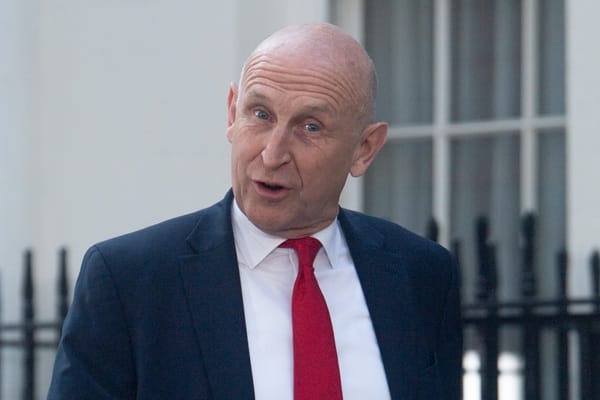
John Healey will move to abolish gas standing charges for millions of households, promising to end what he calls an “unfair and outdated practice” as the government seeks to redraw the rules of Britain’s troubled energy market ahead of his first Budget.
Healey will ask energy regulator Ofgem to remove the charges in 2027, or “as soon as possible after”, ending a system under which households pay a fixed fee for access to gas regardless of how much they consume.
The charges currently cost a typical household about £108 a year. Under the proposed reform, those costs would instead be incorporated into the price paid for each unit of gas consumed, potentially saving about 60 per cent of households an average of £45 annually.
But the shift will not eliminate the underlying cost. Instead, it will redistribute it between consumers, leaving the scale of any individual household’s savings dependent on how much gas it uses.
“Gas standing charges are unfair and outdated so I am scrapping them to give millions of households a bit of breathing space,” Healey said.
“My Budget will draw a line in the sand on an energy policy that has failed British billpayers for years, letting extra costs on bills pile high and leaving households even more exposed to global shocks.”
The announcement is intended to signal a break with an energy system the government argues has repeatedly failed consumers. Ministers hope the Budget will mark a decisive departure from what they describe as “wrong turns taken for over four decades”, as pressure mounts to address persistently high household bills.
Prime Ministerial calls for a reformed energy market have centred on ensuring the system serves the public interest rather than loading additional costs on to households and leaving them vulnerable to volatility in international markets.
Andy Burnham, who has also called for reform, said: “Abolishing gas standing charges is about basic fairness and giving people more control over their bills.
“I am determined to reform our broken energy market, so it better serves the public interest.”
Yet the announcement has already drawn criticism from Reform UK, which argues that scrapping standing charges alone will do little to address the wider cost of energy.
Danny Kruger, a Reform UK MP, welcomed the move but urged Labour to go substantially further, calling for reductions in green levies and other charges, alongside a faster expansion of domestic energy supply.
“We very much welcome these steps, and obviously we’ve been calling for them for a long time, especially the tax or the green levies and all of the other taxes on bills that have caused the United Kingdom to have the highest electricity bills in the world,” he told GB News.
“But I’m afraid this doesn’t go nearly far enough. We’ve got proposals to cut £250 from household energy bills. It’s unlikely that these cuts that the Chancellor is announcing will deliver more than £50 of savings. So we need to go a lot further than that.”
Kruger also called for greater exploitation of North Sea gas fields and a faster expansion of nuclear power, arguing that increasing supply was essential to bringing down electricity costs.
“We need to increase the supply of electricity of energy in order to bring down electricity costs, and we’re not seeing that for nearly the speed that we need from the Government,” he said.
“They need to improve the North Sea gas fields, all of them. We need to speed up nuclear energy generation as well. And we need to go further on scrapping the standing charges.”
The reform has received a more qualified endorsement from Martin Lewis, founder of MoneySavingExpert, who has campaigned against standing charges but warned that the wider outlook for energy bills remains bleak.
After meeting Healey at No 11 Downing Street, Lewis said he was “pleased” by the commitment to remove the gas charge, which he expects to take effect in 2027.
“I’ve just come out of a meeting with the Chancellor,” he wrote on X.
“The gas standing charge will be scrapped in 2027 (my guess, either for 1 Oct price cap or the 1 Jan 28 price cap). Having campaigned against the moral hazard of standing charges for years, I’m pleased.”
Lewis cautioned that the cost would be transferred to unit rates, with the precise increase still unknown.
“It’s currently £108 a year. That cost will be shifted onto unit rates. We don’t know how much yet, but I suspect just under 1p per kwH.”
He added that the government would discuss removing electricity standing charges with Ofgem, although Healey had described that task as “trickier” and likely to take longer.
The more immediate concern, Lewis said, was the prospect of a sharp rise in energy bills in January. The price cap is forecast to increase by 27 per cent, intensifying pressure on ministers to provide further support.
“The biggest issue in energy right now is that we’re expecting a 27% rise in the price cap in January,” he said. “I asked the Chancellor whether he will be intervening on that. He told me I’d have to wait for the Budget, but reading between the lines, yes, there will be an announcement today.”
Lewis said it remained unclear whether any intervention would take the form of an expanded Warm Home Discount, council tax-related assistance or direct payments targeted at lower council tax bands.
For Healey, abolishing standing charges offers a clear political message on fairness. But with the underlying costs set to reappear elsewhere on bills, and a potentially steep increase in the price cap approaching, the measure risks being judged less by the symbolism of scrapping a fixed fee than by how much money households ultimately keep.


Leave a Comment