
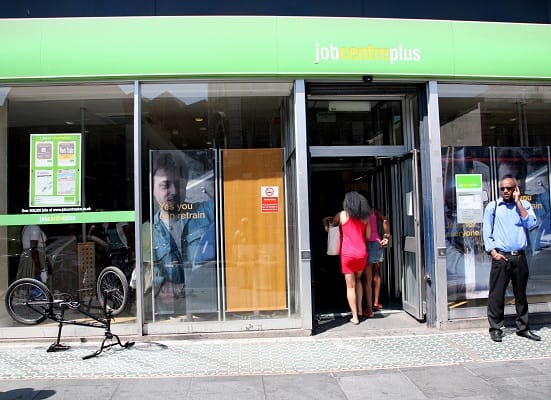
Britain’s jobs market is cooling further, with advertised vacancies falling to their lowest levels in months and competition for work intensifying as employers scale back recruitment while wage costs remain elevated.
The number of advertised UK vacancies fell to 728,037 in September, down 11.9 per cent year on year, according to recruitment platform Adzuna.
The decline extended a sustained weakening in hiring, with vacancies also falling 7.2 per cent from August.
There are now 2.33 jobseekers for every advertised role, the highest level of competition since mid-2024, according to Adzuna.
The figures point to a market in which candidates face fewer opportunities and employers have greater scope to be selective.
“September’s figures are sobering,” said Andrew Hunter, Adzuna’s co-founder. “Vacancies are down nearly 12% on the year, and there are now more than two job seekers for every role advertised.”
“The balance of power in the hiring market has shifted further toward employers,” he added, a development that matters to the millions of people currently out of work.
Official figures broadly reinforce the picture of a weakening labour market. The Office for National Statistics recorded a claimant count of 1.70mn in September, up 2.5 per cent from a year earlier, while estimating that UK vacancies totalled about 818,000 in the three months to September, down from more than 1mn a year before.
The divergence between advertised and official vacancy estimates reflects differences in how the data is collected and measured, but both point to a substantial contraction in hiring demand.
The slowdown is unfolding against a backdrop of stubborn pay pressures. Regular pay growth stood at about 4.9 per cent in the year to August, while advertised salaries on Adzuna rose by a more modest 3.2 per cent. Average advertised pay nevertheless remained positive at £43,780.
For employers, the combination presents a difficult balancing act: fewer vacancies are being opened, but the cost of attracting and retaining staff remains high. For jobseekers, rising competition means that even positions offering competitive salaries may attract a larger pool of applicants.
The pressure is particularly acute for graduates entering the labour market.
Advertised graduate vacancies plunged to 7,826 in September, down from 13,754 a year earlier — a 43 per cent decline that highlights the severity of the squeeze on entry-level opportunities.
The contraction reflects weaker recruitment across professional services, technology and other sectors that traditionally provide routes into graduate employment. Average advertised salaries for graduate positions stood at £27,700, suggesting that pay has remained comparatively stable even as the number of available roles has fallen sharply.
That combination threatens to make the transition from education to employment more difficult. With fewer positions available, graduates face greater competition for the roles that remain, potentially prolonging job searches and making it harder to secure a first foothold in the labour market.
Technology hiring is also under pressure. IT vacancies fell 11.1 per cent year on year, while teaching vacancies declined by about 4 per cent. Trade and construction vacancies dropped 5.8 per cent.
Logistics and warehousing recorded an even steeper contraction, with vacancies down 23 per cent. Warehouse worker remained the most sought-after occupation by Adzuna’s measure of jobseeker interest, exposing the growing mismatch between the number of people looking for work and employers’ willingness to advertise positions.
Healthcare offered a rare bright spot. Demand remained strong for mental health practitioners, specialist nurses and clinical nurse specialists, consistent with the sector’s continuing recruitment needs.
Information technology, legal services and trade and construction remained among the highest-paying sectors, with average advertised salaries of £65,577, £59,118 and £55,921 respectively.
The slowdown is not evenly distributed across the country. Scotland recorded the steepest regional fall in advertised vacancies, with numbers down 27.2 per cent year on year in September.
Yorkshire and the Humber suffered a 16.6 per cent decline, while London vacancies fell 14.9 per cent. The South East was the only region to record annual growth, with advertised vacancies edging up 0.9 per cent.
London continued to offer the highest average advertised salary, at £51,686, with annual growth of 6 per cent. The North East and Wales recorded salary increases of 6.6 per cent and 7.1 per cent respectively, although those gains partly reflect their lower starting points.
The South East presented a more unusual picture: vacancies increased even as average advertised salaries fell 3.1 per cent year on year.
Competition for jobs was greatest in the North East, where there were 3.93 jobseekers per advertised vacancy, followed by Scotland and the West Midlands. The South West and South East were comparatively less competitive, with 1.46 and 1.51 jobseekers per vacancy respectively.
The regional figures suggest that the national slowdown is translating into markedly different experiences for workers depending on where they live, with some areas facing a particularly acute shortage of advertised opportunities.
One notable development is a gradual improvement in pay transparency. In September, 50.99 per cent of UK job advertisements on Adzuna disclosed a salary, marking the first month in which the share had exceeded half of all advertised roles.
The milestone comes as the government consults on proposals to require employers to disclose salary information in job advertisements. Under the proposals, candidates applying for positions that are not formally advertised would also receive pay details in writing before an interview.
The consultation, launched in July, forms part of broader proposed equal-pay reforms, including stronger rights for ethnic minority and disabled workers and the creation of an Equal Pay Regulatory and Enforcement Unit. It is due to close at 5pm on October 27.
Research cited in the government’s consultation materials suggests that 78 per cent of jobseekers are deterred by vacancies that do not disclose salary information.
For employers competing for candidates in a tightening market, the case for transparency may be becoming harder to ignore.
“In a market where employers are already getting more applicants than they’ve had in years, it’s a strange time to be hiding salary information,” Hunter said.
The issue is becoming more pressing as recruitment becomes increasingly competitive and applicants have fewer roles to choose from. Although salary disclosure has passed the halfway mark, nearly half of advertised jobs still leave candidates without clear information on pay.
Meanwhile, the average time needed to fill a vacancy stood at about 44 days in the most recent available data, covering the period to April 2026. Healthcare, engineering and legal positions took longest to fill, reflecting the specialist skills required, while roles in logistics, retail and domestic help were filled more quickly.
The figures point to a labour market characterised by competing pressures: a shrinking pool of advertised jobs, rising competition among candidates and continuing demand for specialist skills.
For workers, the immediate challenge is finding a place in a market with fewer openings. For employers, the advantage of having more applicants comes with a different problem — balancing recruitment restraint against the need to attract the right people while wage costs remain elevated.


Leave a Comment