
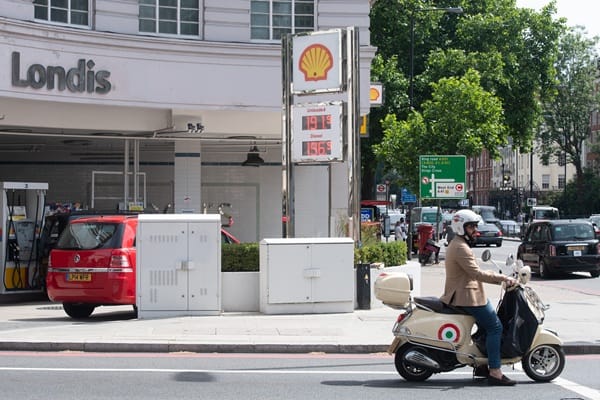
UK diesel prices have climbed to a record high, surpassing the previous peak reached in the aftermath of Russia’s invasion of Ukraine and intensifying pressure on households, businesses and the wider economy.
The average price of a litre of diesel reached 199.18p on Monday, according to RAC data, edging above the previous record of 199.09p set in June 2022.
Prices have risen by 56.8p a litre since February 28, when the average stood at 142.38p at the start of the US-Iran conflict.
The surge is being driven by tightening global supplies, with disruption to Russian refining capacity adding pressure to an already constrained market.
Russian diesel exports have fallen sharply after Ukrainian attacks damaged several oil refineries, including a major facility near Moscow earlier this month during a large-scale drone operation.
Reduced Russian supplies have increased demand for diesel from other exporting countries, pushing wholesale prices higher and feeding through into UK forecourts.
At the same time, the conflict involving the US and Iran has disrupted international trade in refined petroleum products. Restrictions around the Strait of Hormuz have further complicated fuel flows and added volatility to energy markets.
The RAC said its figures were based on diesel prices across supermarkets, motorway service stations and independent retailers.
Petrol prices have also continued to rise. Unleaded petrol averaged 174.13p a litre, up 41.3p since the beginning of the US-Iran conflict.
Simon Williams, RAC head of policy, said the record diesel price represented a significant additional cost for households and businesses.
“The average price of a litre of diesel has now reached the highest level in UK history, in what will be a financial blow to households and businesses that use their vehicles regularly,” he said.
“The cost of filling up an average family car is now almost £110, £31 more than it was at the start of the US-Iran conflict.”
Williams warned that the effects would extend beyond motorists as higher transport costs worked their way through the economy.
“This spells pain not only at the pumps for drivers, but for everyone who buys goods or services that rely on diesel lorries and vans; undoubtedly these increased costs will be passed on to consumers,” he said.
“Only a sustained lower oil price – over several weeks, not days – will lead to cheaper prices at the pumps.”
The exposure is significant despite the long-term decline in diesel vehicles. Department for Transport figures show that 15.1mn diesel vehicles were licensed on UK roads at the end of June, down from 15.7mn a year earlier. Diesel cars accounted for 9.8mn of the total.
Edmund King, president of the AA, warned that the impact on freight could amplify the inflationary shock.
“Record diesel prices could be disastrous for the economy and for diesel drivers,” he said.
“Diesel helps run the business backbone of Britain. Most delivery trucks use diesel and most goods transported on the roads to our ports or shops are fuelled by diesel.”
He added that higher costs faced by hauliers were likely to feed through to consumers.
“When we hit high diesel prices, most hauliers pass on their extra costs to their customers and hence the hikes hit the price of goods on our shelves, which in turn fuels inflation.”
The record has also renewed pressure on the government to intervene through fuel taxation.
Motoring groups have called for the current 5p fuel-duty cut to be extended beyond the end of the year, with further reductions in fuel duty or VAT also proposed.
Williams said: “The UK might have limited leverage when it comes to ending the US-Iran war and ultimately bringing oil prices down, but the Government could take steps to ease the burden on drivers by lowering fuel duty further or reducing VAT.”
The decision on fuel duty is expected to form part of Chancellor John Healey’s Budget on October 28.
King argued that higher pump prices were generating additional VAT receipts for the Treasury.
“The Government could afford to scrap the planned 5p increase in fuel duty and cut off a further 5p, as a 6p increase in pump prices gives 1p extra VAT to the Treasury,” he said.
“In the last year, prices have increased by about 40p a litre, so the Government’s VAT windfall is approximately 6.5p – so could ‘pay’ for a cut.”
Treasury minister Emma Reynolds described the record diesel price as “very worrying”, while stressing that the government had options to mitigate the impact.
“What we’d also like to do is de-escalate the situation in the Middle East, and that’s the sort-of focus of our foreign policy,” she told BBC Radio 4’s The World At One.
“But at the same time, we recognise that people face challenges at home.
“Diesel is very worrying, not only for families but obviously also for businesses.
“We have extended the fuel duty freeze until the end of the year but any decisions beyond that will obviously be taken at the Budget.”
With diesel now above its previous record, the immediate pressure is shifting from the forecourt to the broader economy, as transport costs threaten to reinforce inflationary pressures ahead of the Budget.


Leave a Comment