
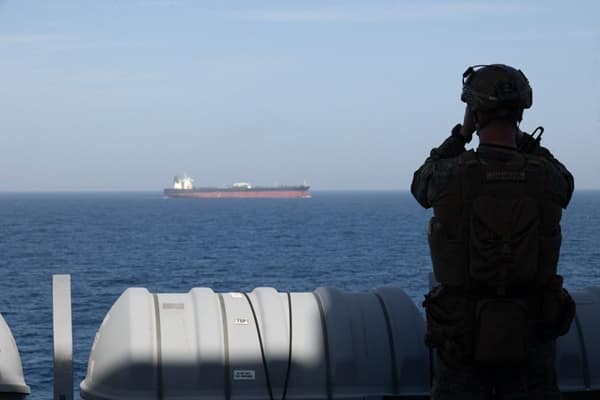
Iran has offered to reopen the strategically vital Strait of Hormuz within seven days if the US eases military pressure and lifts its blockade of Iranian ports, according to a senior Iranian official, creating a potential diplomatic opening as world leaders gather in New York for the UN General Assembly.
The proposal, reported by Reuters and Japan’s Kyodo News, was conveyed to Washington through intermediaries and includes a call for renewed negotiations aimed at ending hostilities. Iran’s delegation in New York has been given authority to pursue diplomatic discussions, according to Iranian officials.
However, Iranian sources later disputed the reports, with officials describing claims that Tehran had offered to reopen the waterway within seven days as inaccurate. The conflicting accounts add uncertainty over whether the proposal represents a formal negotiating position or an attempt to test the prospects for diplomacy.
The Strait of Hormuz has become a central pressure point in the conflict, with disruption to shipping through the waterway contributing to higher energy prices and increased uncertainty for global markets.
The reported Iranian proposal comes as President Donald Trump prepares to address the UN General Assembly, while Iranian President Masoud Pezeshkian and Foreign Minister Abbas Araghchi are also in New York.
Iran has described the UN gathering as an opportunity for Washington to return to diplomacy. Tehran has previously indicated that it would consider negotiations if the US demonstrates a willingness to reduce military pressure.
Trump, meanwhile, has rejected suggestions that the US is running short of ammunition as the conflict continues.
“The cowards and traitors would love to say the United States is low on munitions,” he wrote on Truth Social.
He added that the US had “more munitions than we could ever possibly think of using”.
The diplomatic manoeuvring comes as fighting continues elsewhere in the region. Iran’s Revolutionary Guards have warned that any renewed attack could prompt Tehran to expand both the weaponry and geography of the conflict.
The Houthis, an Iran-backed movement in Yemen, have also intensified attacks against Saudi Arabia, adding pressure to regional energy and shipping routes.
Britain has responded by agreeing to provide Saudi Arabia with an RAF Voyager aircraft for defensive air-to-air refuelling of Saudi fighter jets. The aircraft is expected to operate from RAF Akrotiri in Cyprus for an initial period of several weeks.
The British government said the deployment was intended to support Saudi defensive operations following renewed Houthi attacks and protect regional trade and energy supplies.
The crisis is already feeding through to the wider economy, with the disruption of Gulf energy routes increasing pressure on fuel, transport and business costs.
For governments gathering in New York, the question is whether the latest Iranian signal can create a route back towards negotiations — or whether the competing military pressures across the region will continue to dominate the crisis.


Leave a Comment