
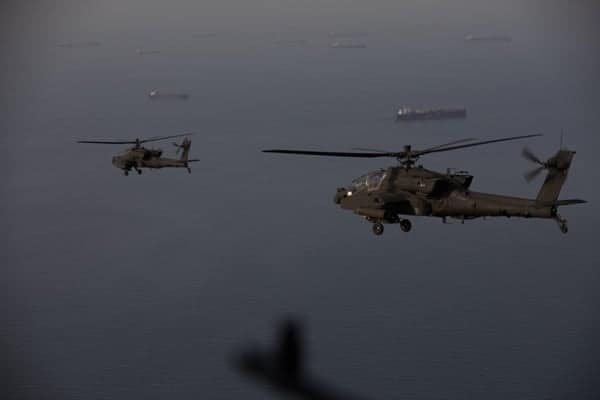
Donald Trump is considering a strategy of “powerful” strikes against Iran alongside a prolonged maritime blockade of the Strait of Hormuz, as tensions with Tehran and Moscow escalate over the future of the Middle East conflict.
According to US officials cited in American media, the Pentagon has drawn up contingency plans targeting key Iranian infrastructure to force the regime back to negotiations over its nuclear programme.
The proposals are understood to include a combination of military pressure and sustained economic disruption rather than immediate large-scale escalation.
The plans come amid growing frustration within the White House over what officials describe as Iran’s unwillingness to make concessions in stalled diplomatic talks.
Mr Trump, speaking publicly on Wednesday, suggested that the US-led pressure campaign on Iran’s energy exports was already having a significant impact.
“The blockade is somewhat more effective than the bombing,” he said. “They are choking like a stuffed pig. And it is going to be worse for them.”
The remarks followed reports that the administration is weighing an extended blockade of the Strait of Hormuz — a critical global shipping route through which a substantial proportion of the world’s oil supply passes. Officials are said to believe such a move could be less risky than renewed direct strikes, while still exerting maximum pressure on Tehran’s economy.
The escalation comes as oil prices surged to their highest level since the start of the current phase of the conflict, reaching around $120 per barrel, according to market data cited in US reports.
Treasury Secretary Scott Bessent claimed that Iran was losing approximately $170 million per day in oil revenue due to export restrictions, warning that storage at key facilities such as Kharg Island was approaching capacity. He said this was causing “permanent damage” to Iran’s oil infrastructure and forcing production adjustments.
Diplomatic tensions intensified further after a phone call between Mr Trump and Vladimir Putin, in which the Russian president is said to have warned that any return to full-scale fighting would carry “extremely dire consequences” for the United States and the wider international community. Mr Putin reportedly urged Washington to maintain the ceasefire and continue negotiations.
Despite that warning, Mr Trump appeared to double down on his stance, posting on social media that Iran “can’t get their act together” and “better get smart soon”, accompanied by an AI-generated image depicting him in a military-style setting.
In Washington, officials say discussions have also taken place with senior figures in the energy sector about the potential impact of sustained disruption to global shipping routes, as policymakers attempt to balance geopolitical pressure with the risk of rising consumer costs.
Iran, meanwhile, is said to be facing increasing strain on its oil storage and export capacity, with analysts warning that prolonged restrictions could further destabilise an already fragile economy.
The situation leaves the conflict at a volatile juncture, with diplomacy, economic coercion and the threat of military action now running in parallel — and few signs of an imminent breakthrough.


Leave a Comment