
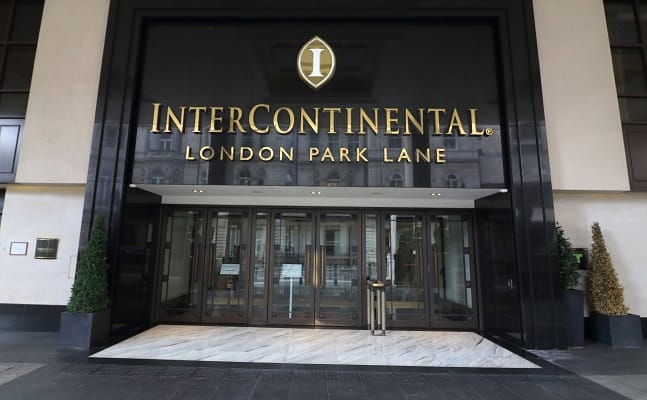
Occupancy at London hotels fell in March, in what analysts describe as early signs that the war in the Middle East is beginning to weigh on international travel patterns.
New figures from the RSM UK Hotel Tracker, compiled by Hotstats, show that occupancy in the capital slipped from 76.3% to 74.8% year-on-year, even as pricing and revenues continued to edge higher.
Across the UK more broadly, occupancy was marginally stronger, rising from 73.2% to 73.6%, suggesting the slowdown is being felt more acutely in London’s heavily international visitor market.
The data points to a mixed picture for the hospitality sector: while demand softened in parts of the capital, hotels have been able to push through higher room rates, cushioning revenue performance.
Average daily rates (ADR) for occupied rooms in London rose 5% over the year to £190.24, up from £181.25. Nationally, rates increased 3% to £136.78.
Revenue per available room (RevPAR) also improved, rising to £142.37 in London and £100.65 across the UK, indicating that pricing power has so far offset weaker occupancy levels.
However, profitability is showing signs of strain. Gross operating profits in London fell from 33.6% to 32.6%, while UK-wide margins eased from 30.1% to 29.5%.
Analysts say the decline reflects a combination of softer international demand, higher operating costs and lingering uncertainty in global travel markets following the escalation of conflict in the Middle East.
The capital’s hotel sector, which relies heavily on long-haul visitors and business travel, is typically more exposed to geopolitical shocks than regional markets.
While the overall figures remain broadly resilient, the latest data suggest momentum in London’s recovery may be cooling, even as pricing strength continues to support revenues.
Chris Tate, partner and head of hotels at RSM UK, said: “The immediate impact of the Middle East conflict has started filtering through to the hotel industry, with London occupancy taking a hit. Ongoing travel disruptions will have inevitably put a stop to some international tourists’ plans, while business trips may have also been put on hold. The above inflation increase in room rates will have offered some reprieve to hoteliers and cushioned the blow to occupancy levels, but that didn’t reach the bottom line due to increased employment costs.
“Looking ahead, hoteliers will be particularly concerned of prolonged disruption to the travel and hotel industry as the Iran war continues to drag on. However, despite sluggish growth in the economy, households still seem willing to spend on hotels and trips away. Consumers are also sitting on high levels of savings, with over a fifth planning to save less in the coming months to cover rising costs*, which may help to provide a buffer.
“Growing concerns around jet fuel shortages could result in fewer inbound tourists to the UK and less business travel, but domestic travellers opting for a UK staycation instead may partly offset this. However, there will be more headwinds for the industry to navigate, as higher wages, rising energy and business rates bills, and lower consumer sentiment feed through in the coming months.”
Thomas Pugh, chief economist at RSM UK, added: “It is now inevitable that the UK will be faced with another bout of stagflation. Higher fuel costs, energy bills and food prices later in the year will push inflation to a peak of around 4%. At the same time, the hit to the economy will grow as fuel prices eat into disposable incomes and the labour market weakens further. We have already seen a drop in consumer confidence.
“Admittedly, consumers are entering the crisis with a high savings ratio meaning there is scope to save a bit less to offset the hit from higher inflation. However, the longer the crisis goes on for, the more likely households are to curtail discretionary spending.
“The good news is that inflation probably won’t peak until near to the end of the year meaning that the critical summer months for hotels may not be impacted as much, but the squeeze on disposable incomes may hit future bookings harder.”


Leave a Comment