
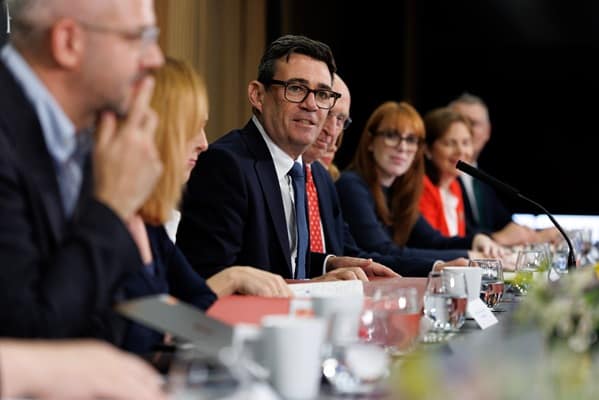
Andy Burnham is facing mounting opposition within Labour to any attempt to reform the state pension triple lock to help finance free social care, exposing a growing divide over how the government should meet rising demands on public spending.
The triple lock guarantees annual increases in the state pension based on whichever is highest of inflation, average earnings growth or 2.5 per cent. Senior Labour figures remain divided over whether the mechanism should be changed after the next general election.
Sharon Graham, general secretary of Unite, warned that abandoning the policy would be “electoral suicide” and argued that Britain already spends less on pensions than other G7 economies.
“We’re the lowest in the G7 in terms of how much we spend on pensions,” Graham told The Times. “I think that’s an embarrassment, quite frankly, because we’re one of the six richest economies in the world.”
“I think it would be an absolute disaster, it would send completely the wrong message. I cannot understand why we keep going back to pensioners.”
Women and equalities minister Bridget Phillipson has also opposed reform, warning against provoking “intergenerational warfare”.
Douglas Alexander, the Secretary of State for Scotland, has struck a different tone, arguing that younger people are receiving a “really raw deal” and signalling the competing pressures facing ministers.
Chancellor John Healey has declined to rule out changes ahead of next month’s Autumn Budget.
The dispute comes as Burnham prepares to address Labour’s annual conference in his first speech as prime minister, promising an “honest conversation” with voters about difficult issues Westminster has avoided.
He is expected to highlight social care, youth unemployment and greater public control of energy, water and housing.
But economists have questioned whether changing the triple lock would generate enough savings to finance universal free social care.
Paul Johnson, former director of the Institute for Fiscal Studies, has warned that significant savings could take a decade to materialise, while comprehensive free social care would require a substantial increase in taxation.
The debate therefore leaves Labour facing a difficult fiscal calculation: whether to protect pension incomes, expand social care provision or seek additional revenue to fund both.


Leave a Comment