
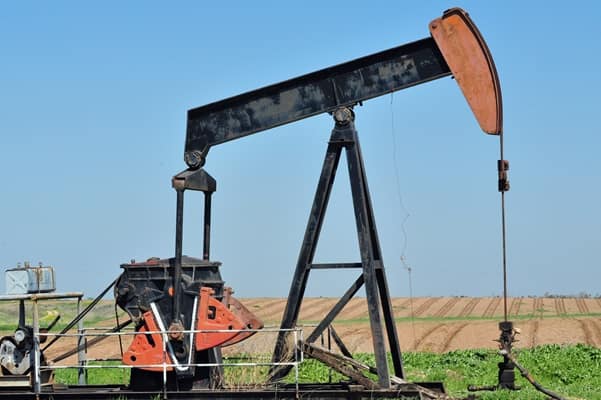
West Texas Intermediate crude oil futures and ICE Brent futures are rising by nearly 3% and hovering at their highest levels in two weeks.
The return of rising oil prices comes as the market once again recognizes the fragility of the current ceasefire and that the war in the Middle East has not ended, while the risks of oil supply disruptions remain high and the diplomatic path to settlement is still very long.
We were previously discussing that the current truce is fragile and liable to collapse at any moment, but the renewal of fighting at a high pace in the midst of the funeral of the late Iranian Supreme Leader Ali Khamenei took us by surprise.
We witnessed a return to targeting commercial ships in the strait, widespread US strikes on more than 80 Iranian targets, in addition to targeting US bases in the Gulf. Furthermore, the US Treasury Department revoked the license that allowed the purchase of Iranian oil. This escalation is the first of its kind since the signing of the memorandum of understanding.
However, the nature of these attacks and skirmishes is less important than what lies behind them, and I believe the market needs to recognize this. This wave of escalation began with the targeting of commercial ships attempting to cross the southern path of the Strait of Hormuz, which passes through Omani waters, without coordination with the Iranian side.
The latter views this as a violation of the signed agreement and as a challenge to its attempt to impose dominance over the Strait. This, in turn, confirms something dangerous: the recent rounds of negotiations over the memorandum of understanding did not yield any breakthrough, even on the technical details of managing the strait.
Worse still, the failure to achieve a breakthrough regarding the strait means that the possibility of reaching an agreement on the most vital points, which relate to the Iranian nuclear program, will be much harder and will take a very long time, if there is any possibility of reaching an agreement at all under the current US administration. Any agreement on the Iranian nuclear program will only follow an agreement on recognizing dominance over the Strait, according to Reuters.
Amid this narrative and the absence of a near-term outlook for a comprehensive diplomatic settlement, the risks of a return to the total closure of the strait, or even the retargeting of vital energy facilities across the region, whether on the Iranian or Gulf side, remain high. This threatens a sudden spike in oil prices. Furthermore, this narrative will keep the OPEC+ decision to increase oil production on paper and unenforceable for now; in this case, the market will remain in a state of supply deficit, keeping prices vulnerable to rise.
On the other hand, if we want to be a bit optimistic, it is not unlikely that we could witness a sudden breakthrough regarding the return of ships and oil tankers crossing the strait, or even the lifting of restrictions again on Iranian oil exports. This is for a single reason: the United States and President Donald Trump do not have enough time to engage in this war for long, with the midterm elections approaching and the average price of a gallon of gasoline remaining near $4 per gallon. In this scenario, an OPEC+ hike might prove effective over time, lowering prices more quickly.
With the focus returning to the Middle East front, the risks of a massive escalation on the Russia-Ukraine front cannot be ignored. David Ignatius wrote in a Washington Post opinion piece about the real risks of Russia escalating its war beyond Ukraine’s borders, citing a letter from former CIA Director William Burns stating that the risks of escalation are real and growing amid the pressures Russia faces. These pressures are represented by growing pressure from Ukrainians on Russia and the intensification of attacks on energy facilities and oil refineries, which have disrupted distillate supply in the world’s fourth-largest gasoline consumer.
There are also intelligence reports from Poland and the three Baltic states about the possibility that Russia may carry out provocations against those four countries to test NATO’s reaction, Ignatius said. This potential Russian escalation could extend to targeting the energy infrastructure in those countries in response to the unprecedented Ukrainian attacks.
If this escalation actually happens, it will add an extra risk premium to the pricing. In the worst-case scenario, if this coincides with the conflict worsening again between the United States and Iran, we might find ourselves facing levels exceeding 100 dollars per barrel once more and for a prolonged period. Iran and Russia may seek to apply pressure to extract concessions from their opponents, and the economy and energy are the weak points in these wars.


Leave a Comment