
Associated British Foods (Associated British Foods) has warned that full-year profits are set to fall as rising energy costs and weaker pricing in its sugar business offset otherwise steady trading across the group.
The FTSE 100 conglomerate, which owns Primark as well as major grocery and agriculture brands, said revenues rose 3% to £5.3bn in the quarter to June 20, supported by growth in retail and stable performance in its food divisions.
However, it cautioned that adjusted pre-tax profit for the year will come in below last year’s level, citing mounting cost pressures and a more challenging macroeconomic environment.
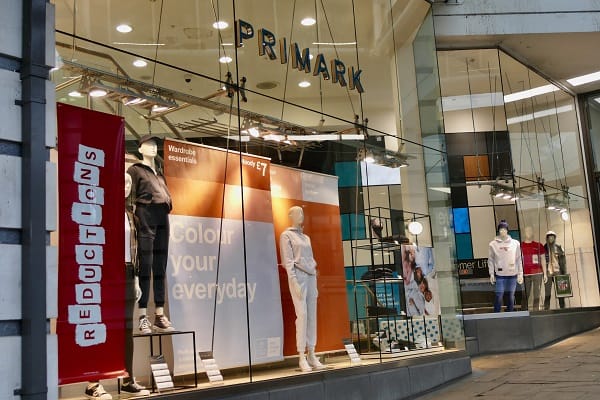
The group’s retail arm, driven by Primark, reported a 4% rise in revenues to £2.92bn, with UK sales up 1% over the period.
Like-for-like sales slipped 2.2%, reflecting what the company described as “challenging trading conditions” and uneven consumer demand across key markets.
Management said performance improved through the quarter, with a stronger June offsetting weaker trading in April and May. New store openings continued to support overall growth.
Chief executive George Weston said the group had focused on price, product updates and marketing investment to support customer demand, though underlying retail conditions remained volatile.
The sharpest pressure came in ABF’s sugar business, where revenues fell 4% due to lower European pricing.
The company also warned that higher gas prices—linked to geopolitical disruption in the Middle East—are expected to further erode profitability next year.
The sugar arm has historically been one of the group’s more cyclical businesses, with margins highly sensitive to energy input costs.
Elsewhere, ABF’s grocery operations, which include brands such as Twinings and Ryvita, recorded 1% revenue growth, supported by broad-based demand but partially offset by weaker US oils sales.
Agricultural and ingredients divisions delivered stable trading, with management pointing to ongoing efficiency programmes and investment projects nearing completion.
Despite near-term pressure, ABF said its broader outlook outside sugar remains unchanged, with management continuing to invest in long-term growth initiatives.
The group is also preparing to spin off Primark by the end of next year, a move that would split one of the UK’s largest consumer-facing conglomerates into more focused standalone businesses.
Analysts say the separation could sharpen strategic focus, but near-term earnings volatility—particularly in energy-sensitive divisions—remains a key concern.
The update highlights continued pressure on large UK-listed consumer groups as they navigate uneven retail demand, volatile energy markets and shifting geopolitical risks.
While Primark continues to benefit from value-driven consumer behaviour, ABF’s exposure to commodity and energy-intensive businesses is increasingly shaping overall performance.
With profit expectations now set lower for the year ahead, attention is likely to turn to whether cost inflation stabilises—or continues to erode margins across the group’s more exposed divisions.



Leave a Comment