
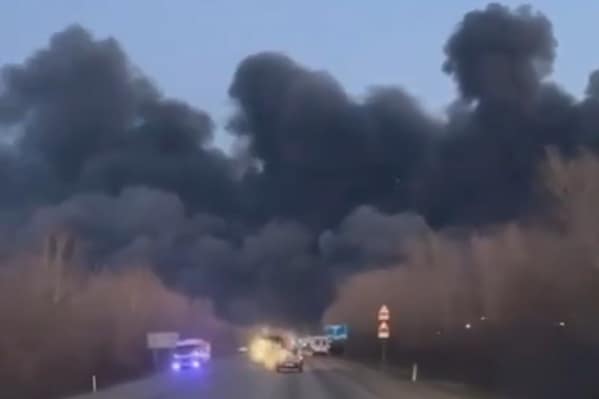
A fuel crisis is beginning to take hold inside Russia, with shortages and rationing measures now creeping into the Moscow region as Ukraine’s sustained campaign against energy infrastructure continues to bite deep into the country’s refining system.
Gas stations in parts of Novaya Moskva – an administrative extension of the capital – have reportedly introduced limits on fuel purchases, capping motorists at 60 litres of petrol and 100 litres of diesel per transaction. Notices at pumps have warned that restrictions will remain in place “until further notice”, underscoring the strain now emerging across the domestic supply chain.
The measures follow a growing wave of disruption across Russia’s energy network, with similar rationing already reported in occupied Crimea and other Moscow-controlled territories in southern and eastern Ukraine. In some areas, authorities have moved to strict per-person limits on petrol sales, while Sevastopol has introduced fuel coupons amid what officials describe as “temporary shortages”.
Although Russian authorities have sought to present the disruption as localised and manageable, price data suggests a broader tightening in the system. Retail fuel costs in Moscow have continued to climb, with diesel and premium petrol grades rising steadily over recent weeks, driven in part by supply constraints and refinery outages.
Read more related news:
The battle for Crimea could decide Putin’s war
France takes fight to Putin’s shadow fleet on the high seas
EU could ‘exclude men of conscription age’ from Ukraine as many refuse to fight
Russian plant in Dublin is funding Putin’s war in Ukraine ‘that kills civilians’
The pressure comes as Ukraine intensifies its long-range strike campaign against Russian oil infrastructure, targeting refineries, storage depots and pipeline nodes at increasing depth. Western analysts say the pattern of attacks is forcing repeated shutdowns and emergency repairs at facilities critical to Russia’s domestic fuel distribution.
According to Ukrainian officials, the objective is to degrade the Kremlin’s ability to sustain its war economy by reducing refining capacity and disrupting logistical flows that support both civilian consumption and military operations.
The impact is now being felt not only in border regions but increasingly in the Russian heartland. Independent reporting suggests that some stations around Moscow have begun limiting sales to prevent panic buying, while regional authorities have introduced informal rationing mechanisms to stabilise supplies.
The Kremlin has responded by tightening export restrictions on refined products, including jet fuel, in an effort to prioritise domestic demand. The measures follow earlier curbs on gasoline exports, reflecting what officials describe as the need to “ensure stability” in the internal market.
However, analysts note that export controls alone cannot offset the structural damage caused by repeated strikes on refining capacity. Several major facilities have reportedly been forced offline at various points this year, with repair cycles struggling to keep pace with the frequency of disruption.
At the same time, Russia continues to generate significant revenues from crude exports, supported by global price fluctuations linked to wider geopolitical tensions. But economists warn that rising maintenance costs, state subsidies and infrastructure damage are eroding the net benefit to the Kremlin’s war budget.
For now, officials in Moscow have avoided acknowledging the scale of the pressure on domestic supply chains. But the appearance of rationing measures in and around the capital marks a notable shift in the geography of the crisis.
What was once a problem confined to border regions and occupied territories is now edging closer to the political centre of the Russian state – and exposing the growing vulnerability of its energy system under sustained wartime pressure.


Leave a Comment