
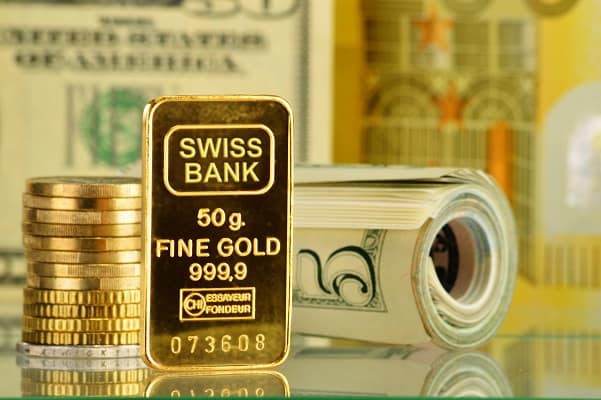
Gold is currently navigating one of its most challenging phases in years—not because it lacks supportive fundamentals, but because the market’s reaction to those fundamentals has fundamentally changed.
For decades, the precious metal was the primary beneficiary whenever geopolitical tensions escalated or financial markets came under pressure.
Today, however, investor behaviour tells a different story. Despite the sharp sell-off across Asian equity markets and heavy losses in technology and semiconductor stocks, gold has failed to reclaim its traditional safe-haven status, stabilising near $4,020 after a wave of selling pushed prices close to the $4,000 mark.
In my view, this divergence reflects a profound shift in investor priorities, with U.S. monetary policy now outweighing geopolitical risks and market volatility as the dominant driver of gold prices.
I believe the main reason behind gold’s subdued performance is the continued strength of the U.S. dollar and the growing appeal of yield-bearing assets.
Investors who once instinctively turned to gold during periods of uncertainty now find more attractive alternatives in U.S. Treasury securities and the dollar itself. With the U.S. Dollar Index hovering near its monthly highs, the opportunity cost of holding a non-yielding asset like gold has risen considerably.
As a result, gold is no longer competing solely as a safe-haven asset—it is also competing against yield, a contest it is unlikely to win as long as real interest rates remain elevated.
This view is further reinforced by the way markets now interpret weaker economic data. In previous years, signs of slowing U.S. growth were enough to ignite strong rallies in gold because they fuelled expectations of imminent interest-rate cuts.
Today, however, softer economic indicators are no longer sufficient to convince investors that the Federal Reserve will pivot quickly, particularly with inflation still running above target. In my opinion, investors now require one key catalyst before increasing exposure to gold: a clear shift in the Fed’s monetary policy outlook, rather than simply weaker macroeconomic data or heightened global uncertainty.
Against this backdrop, I see the upcoming Federal Reserve meeting as the most important turning point for gold during the third quarter. While financial markets overwhelmingly expect policymakers to leave interest rates unchanged, the real focus will be on the accompanying policy statement and Federal Reserve Chair Kevin Warsh’s press conference. Markets rarely react to the decision itself; instead, they respond to the guidance about what comes next.
If Warsh reiterates that the fight against inflation is far from over and signals that restrictive monetary policy will remain in place for longer, the U.S. dollar is likely to strengthen further, increasing pressure on gold. Conversely, if he adopts a more balanced tone and acknowledges that slowing economic growth is becoming a greater concern than inflation, investor sentiment toward the precious metal could improve rapidly.
Another striking development, in my opinion, is the growing divergence in investor behaviour across regions. Exchange-traded fund data continue to show persistent outflows from physically backed gold funds in Western markets, while Asian investors remain aggressive buyers. This reflects two fundamentally different perspectives on gold. Western investors increasingly view it through the lens of interest rates and real yields, whereas Asian investors continue to see it as a long-term store of value and an effective hedge against economic and geopolitical uncertainty. I believe this regional divide explains why gold has remained trapped in a broad trading range rather than experiencing either a significant breakdown or a sustained bullish breakout.
At the same time, easing geopolitical tensions have removed one of gold’s strongest psychological support factors. Historically, the metal has benefited more from uncertainty itself than from geopolitical events. Once markets begin to believe that risks are becoming manageable, demand for gold tends to fade even if underlying tensions have not completely disappeared. Consequently, the relative calm on the geopolitical front has shifted investors’ attention back toward monetary policy and economic data, making gold increasingly sensitive to any surprises from the Federal Reserve.
In my assessment, investors should look beyond the Fed’s interest-rate decision and closely monitor the upcoming wave of U.S. economic data, particularly Core PCE inflation, GDP growth, and labour-market figures. Stronger-than-expected data would reinforce expectations that the Fed will maintain its restrictive stance for longer, potentially pushing gold toward lower support levels. On the other hand, if the economy shows clearer signs of slowing while inflation continues to moderate, markets could begin pricing in future rate cuts once again—a scenario that I believe would provide the strongest fundamental support for gold over the coming months.
Ultimately, I do not believe gold is facing a crisis of confidence; rather, it is undergoing a broad repricing driven almost entirely by expectations surrounding U.S. monetary policy. As long as the Federal Reserve successfully convinces markets that interest rates will remain higher for longer, any rallies in gold are likely to remain limited and temporary.
However, a meaningful shift in the Fed’s tone or a sustained decline in inflation could quickly restore the metal’s appeal. My outlook therefore remains one of heightened volatility in the near term, with the medium-term trend depending almost entirely on the signals delivered by the Federal Reserve. The defining force in today’s gold market is no longer fear itself, but the timing of the next major shift in U.S. monetary policy.


Leave a Comment