
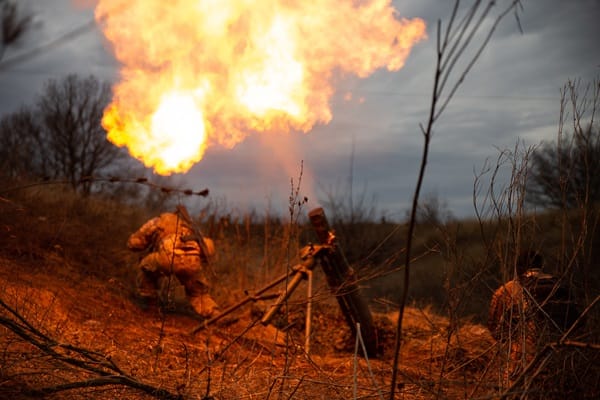
Ukrainian forces are increasingly targeting Russian logistics deep behind the front line with drone strikes, in what analysts say could become a decisive factor in future counteroffensive operations.
According to the Institute for the Study of War (ISW), Ukrainian units are carrying out reconnaissance and attacks on Russian ground supply routes in occupied parts of the Donetsk region, at distances of around 105 kilometres from the front line.
The 1st Corps of Ukraine’s National Guard, Azov, reported on May 8 that it had struck Russian military facilities near Mariupol, claiming Ukrainian drones are already disrupting logistics at ranges of up to 160 kilometres from operator positions.
ISW also cited geolocated footage published on May 6 and May 8 showing Ukrainian drone strikes against a Russian military truck on the T-0509 Mariupol–Donetsk highway, around 95 kilometres from the front line. Additional footage reportedly shows drone activity over Mariupol and along the M-14 corridor toward occupied parts of Zaporizhzhia and Kherson.
The think tank said these routes are critical to Russian military operations. The T-0509 highway supports Russian forces operating in northern Donetsk, while the M-14 is key for logistics towards Orikhiv and positions along the left bank of the Dnipro River.
ISW assessed that Ukraine’s ability to strike moving targets more than 100 kilometres from the front line may be creating a limited form of battlefield air interdiction, disrupting Russian logistics networks that previously operated with relative freedom.
12 years ago, on May 9, 2014, Battalion Commander Mykhailo Drapatiy was the first to “fly over” the separatist barricade in Mariupol on an infantry fighting vehicle.
Ukrainian soldiers of the Armed Forces of Ukraine showed the world true courage and unbreakable resilience when… pic.twitter.com/shOJAKbvPA
— ZSU News (@ZSUNews) May 9, 2026
“Ukraine’s ability to conduct drone strikes against moving targets over 100 kilometres from the frontline… will likely achieve partial effects of battlefield air interdiction,” the report said, warning of degraded Russian capacity to sustain offensive operations or respond to Ukrainian counterattacks.
The report also notes that Ukraine has significantly intensified its medium-range strike campaign against Russian rear infrastructure since late 2025, with activity accelerating further since March 2026.
Analysts suggest such systematic pressure on logistics could support future Ukrainian offensives, echoing earlier operations that contributed to territorial gains in areas such as Kupiansk and parts of the southern front.
Separately, Ukrainian drones continue to strike occupied areas including Mariupol. On March 11, drone attacks triggered explosions at an ammunition depot in the city, leading to secondary detonations.
Meanwhile, Russian occupation authorities are pressing ahead with infrastructure projects aimed at consolidating control over seized territories, including plans for a direct railway link between Mariupol and Donetsk by summer 2026.
Ukrainian officials and analysts argue such projects are primarily designed to strengthen military logistics and support continued occupation rather than civilian development.


Leave a Comment