
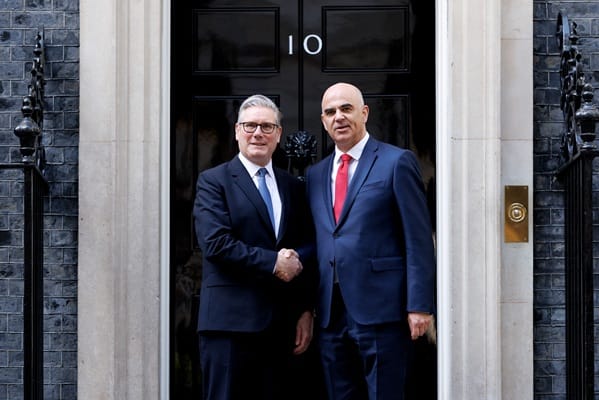
Critics have dismissed a warning from the Council of Europe’s Secretary General that Britain could find itself grouped alongside Russia if it were to leave the European Convention on Human Rights (ECHR), describing the comparison as “total nonsense” and “wholly groundless”.
The intervention by Alain Berset, speaking during a visit to London, has intensified and already politically charged debate over the UK’s future relationship with the Strasbourg-based human rights system, with both Reform UK and senior Conservatives having pledged withdrawal if they form the next government.
Mr Berset told Politico that leaving the Convention would be a sovereign decision for any state but warned it would carry significant institutional consequences.
“It is absolutely possible to leave the convention. Your decision,” he said. “But what would it mean? It would create a new group of European countries not members of the Council of Europe and not implementing the Convention: Russia, Belarus and the UK. That would be the consequence.”
The remarks quickly drew criticism from policy analysts and political commentators, who argued the comparison between Britain and authoritarian states was misleading and politically inflammatory.
The think tank Policy Exchange described the warning as “total nonsense”, pointing out that Russia was expelled from the Council of Europe following its full-scale invasion of Ukraine in 2022, while Belarus has never been admitted due to longstanding concerns over human rights violations and democratic standards.
They argued that placing the UK in the same category as either state ignored fundamental differences in constitutional governance, judicial independence, and adherence to the rule of law.
Russia’s expulsion followed its breach of multiple Council of Europe obligations in relation to the war in Ukraine, while Belarus has faced sustained international condemnation for what Western governments describe as systemic repression and electoral manipulation.
By contrast, Britain is a founding signatory of the post-war human rights framework and remains one of its most active contributors.
The political row comes amid growing pressure from parts of the British right to reconsider membership of the Convention, which is enforced through the European Court of Human Rights in Strasbourg.
Both the Conservative Party and Reform UK have pledged to withdraw from the ECHR if they win power at the next general election, arguing that aspects of the treaty constrain domestic policymaking, particularly regarding immigration and deportations.
Nigel Farage has been among the most prominent advocates of withdrawal, arguing in Parliament last year that Britain is “not sovereign” while bound by the Convention’s legal framework. Supporters of departure say it would restore parliamentary control over sensitive policy areas, particularly border enforcement and asylum decisions.
However, critics warn that leaving the ECHR could have wider diplomatic and legal consequences, potentially complicating cooperation with European partners on extradition, security, and human rights agreements.
Public opinion remains divided but broadly cautious. A YouGov survey conducted last October found that 46 per cent of respondents supported continued membership of the Convention, compared with 29 per cent who favoured leaving, with the remainder undecided.
Analysts note that while there is political momentum behind withdrawal proposals, Britain’s electoral system could allow a government to be formed on a minority share of the national vote, meaning constitutional change could proceed without majority public endorsement.
The debate is likely to intensify in the run-up to the next general election, with the ECHR increasingly emerging as a defining dividing line in Britain’s wider argument over sovereignty, immigration control and the country’s post-Brexit legal identity.


Leave a Comment