
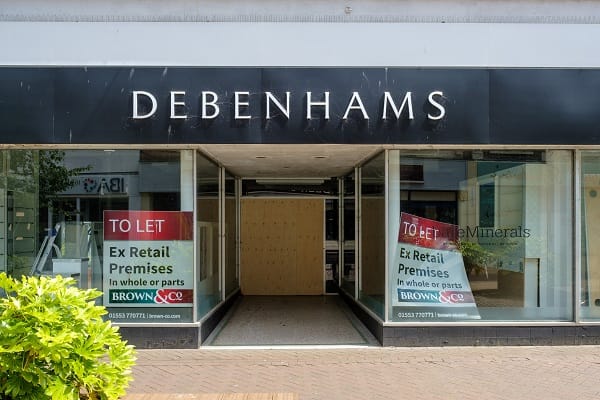
Debenhams has declared its transformation programme firmly on track after sharply reducing losses and returning to growth, despite suffering another steep decline in annual sales.
The online retail group, which also owns Boohoo and PrettyLittleThing, hailed a “year of significant and successful transformation” as executives sought to draw a line under years of turbulence that have battered the business.
The company reported a pre-tax loss of £108.3 million for the year to February 28, a substantial improvement on the £326.4 million loss recorded a year earlier.
The reduction was largely driven by a sharp fall in exceptional costs as management pressed ahead with a sweeping restructuring programme designed to restore profitability.
The results provide the strongest indication yet that the retailer’s ambitious turnaround plan may be beginning to bear fruit.
Dan Finley, the group’s chief executive, insisted the business is now entering a new phase focused on growth after spending much of the past two years cutting costs, simplifying operations and reshaping its business model.
“This has been a year of significant and successful transformation for Debenhams Group,” he said.
“Since my appointment as group chief executive in November 2024, I have been sharply focused on executing our multi-year turnaround strategy – and the progress is clear.”
The company has closed warehouses, reduced operating costs and invested heavily in its technology platform as it seeks to reposition itself in an increasingly competitive online retail market.
Management believes the programme remains on course to deliver £100 million of savings by 2027.
Yet despite the improving financial picture, the scale of the challenge facing the group remains evident.
Total revenues fell by almost a quarter during the year, dropping 24.7pc to £917 million.
The decline reflects Debenhams’ ongoing shift towards a marketplace model, which generates higher margins but records lower headline revenues.
The company’s preferred measure of trading performance, gross merchandise value (GMV), also fell sharply.
GMV before returns declined 21.6pc to £1.82 billion.
Much of the weakness came from the group’s youth-focused brands, which continue to struggle against changing consumer tastes and intense competition from ultra-fast fashion rivals.
The division containing Boohoo and PrettyLittleThing suffered a 35.8pc fall in GMV over the year.
For years, those brands were the engines of growth within the wider group.
Now they represent one of management’s biggest turnaround challenges.
There were, however, signs of improvement.
PrettyLittleThing returned to profit during the year, a significant milestone after a difficult period that saw the company explore a potential sale of the brand before abandoning the process earlier this year.
The Debenhams brand itself continues to provide the brightest spot in the group’s portfolio.
GMV at Debenhams rose 11.6pc to £730 million, underlining the success of efforts to reinvent the former department store chain as an online marketplace.
The business now sells products across a wide range of categories including fashion, beauty, homeware and electrical goods, seeking to emulate the marketplace strategies adopted by some of the world’s largest ecommerce operators.
Investors will also take encouragement from signs that trading momentum has improved since the end of the financial year.
The group revealed it returned to growth during the first quarter, with GMV rising 0.5pc in the three months to May.
Growth accelerated significantly during May itself, climbing 8pc, while management reported “strong” trading continuing into June.
Those figures suggest the worst of the sales declines may now be easing.
For Mr Finley, the challenge is no longer simply stabilising the business but proving that sustainable growth can follow years of retrenchment.
“Our focus now shifts to growth,” he said.
The coming year will determine whether Debenhams can complete one of British retail’s most ambitious turnarounds.
After years of losses, restructuring and shrinking sales, management believes the foundations have finally been rebuilt.
The question now is whether customers return quickly enough to justify that confidence.





Leave a Comment