
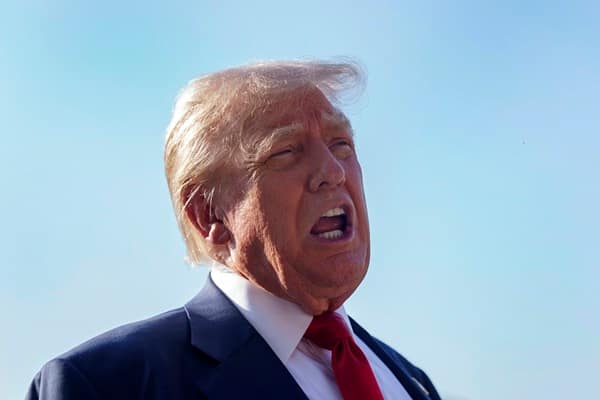
Beijing has issued a strong warning to Washington, vowing retaliation if U.S. President Donald Trump follows through on his threat to impose 100% tariffs on Chinese imports by 1 November.
The announcement has reignited fears of a renewed U.S.–China trade war, sending shockwaves through global markets.
China’s commerce ministry accused the U.S. of “wilful threats” that escalate tensions, stating:
“China’s position on the trade war is consistent. We do not want it, but we are not afraid of it.”
The warning comes after Trump’s declaration on Friday that he would impose sweeping tariffs and new controls on critical software. His comments followed Beijing’s move to restrict exports of rare-earth materials, vital to U.S. industries.
The threat rattled Wall Street, wiping $2 trillion off U.S. stock values on Friday, with Dow futures down 887 points ahead of Monday’s open. The FTSE 100 also dropped nearly 1%, as global investors braced for potential economic fallout.
Despite the mounting tensions, Trump struck a more conciliatory tone on Truth Social, saying the U.S. “wants to help China, not hurt it.” Meanwhile, U.S. Senator JD Vance urged Beijing to “choose the path of reason” to avoid further escalation between the world’s two largest economies.
Analysts warn of continued market volatility as investors assess whether Trump’s tariff threat represents a genuine policy shift or a tactical move designed to pressure China into concessions. Many believe the strategy could mirror Trump’s earlier “escalate to de-escalate” approach, where extreme measures are floated to accelerate negotiations.
Mark McCarthy, Chief Revenue Officer at Basware said, “Trade wars and tariff uncertainty introduce volatility into the global economy. For major enterprises, especially those with complex supply chains or international footprints, this creates hesitation around IT spending. CIOs and CFOs may want to delay large IT investments, reassess strategic priorities and scrutinize every dollar of spend.
Organizations are working on contingencies, but in a turbulent environment, smart enterprises don’t stop investing, they get more focused on their spending and look for greater ROI on every purchase. This means looking to drive even more cost efficiency, investing in areas to mitigate operational risk, accelerating automation to do more with less, and increasing agility and visibility over the tech stack.
Supply chains are not nimble as we saw during the pandemic, so CIOs and CFOs will also be considering suppliers that have the skills to handle the complex tax and tariff landscape. Combining technology solutions with tax compliance and skills will be vital in the near future as these tariffs come into effect.
Michael Joseph, Compliance Expert at Napier AI, said, “Tariffs create a breeding ground for financial crime. Fluctuating tariffs, while designed to serve economic and national security objectives, have created unintended consequences. As supply chains reorganize in response, new vulnerabilities for money laundering and other financial crimes have emerged.
“Our research shows that money laundering and terrorist financing cost the US economy over $600 billion per year on average.”
“For compliance professionals navigating today’s increasingly complex environment, adapting financial crime risk mitigation strategies is critical. Incorporating tariff policy changes into targeted risk assessments helps identify vulnerabilities tied to high-tariff jurisdictions and to commodities susceptible to misrepresentation.
“It also enables compliance teams to anticipate how recent tariff shifts might alter behaviour and trading patterns. The coming years will require increased vigilance, technological innovation, and cross-border collaboration to address these emerging threats. For compliance professionals, this environment represents not just a challenge but an opportunity to demonstrate the critical value of financial crime prevention in an increasingly complex global economy.”


Leave a Comment