
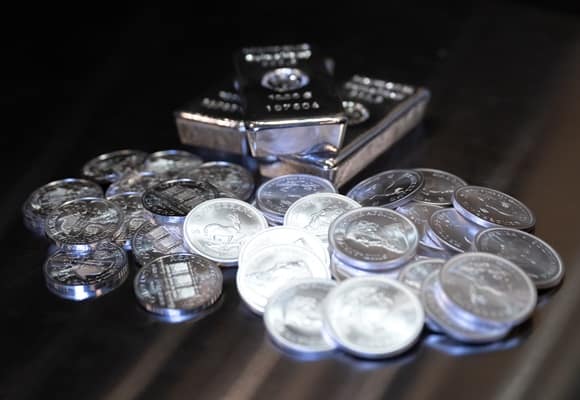
Silver is no longer merely a precious metal moving in gold’s shadow or reacting to temporary waves of speculation.
In 2026, it has become part of a broader geopolitical and economic equation led by China in a clear and calculated manner. With silver currently trading near $74 after approaching almost $90 in recent weeks, I believe what we are witnessing today is not simply a temporary price movement driven by supply and demand or ordinary buying waves accompanied by healthy corrections.
Rather, it is a structural transformation in the nature of the global silver market that could push the white metal into playing a strategic role similar to the one gold played during major periods of economic turmoil.
For this reason, I believe the coming months may bring a genuine repricing of silver, not only as a financial asset, but also as a vital component of the new global industrial economy.
The figures coming out of China during the first months of 2026 clearly reveal that Beijing is not acting with the mindset of a short-term speculator, but rather with the mentality of a state reshaping global supply chains to serve its economic and strategic interests.
Importing more than 790 tons of silver within just two months is far from ordinary in a market with relatively limited production, especially when this demand coincides with a widening gap between domestic Chinese prices and global benchmark prices. In my view, this price premium reflects an important reality: China is willing to pay significantly higher prices to secure its future silver needs, a behavior that often precedes long-term bullish cycles in strategic commodity markets.
What draws even more attention is that silver is no longer driven solely by traditional investment demand, but has become directly linked to the renewable energy revolution. China is currently the world’s largest industrial hub for solar panel production, and silver is an essential component in manufacturing high-efficiency photovoltaic cells. Therefore, any expansion in clean energy projects automatically translates into stronger industrial demand for silver. Here lies the fundamental difference between gold and silver: gold depends largely on investment and hedging demand, while silver enjoys a dual advantage by combining investment value with growing industrial consumption. This is why I believe silver could become one of the most sensitive metals to global economic and technological transformations in the coming years.
In my opinion, market psychology is also playing a crucial role in accelerating interest in silver. After gold’s record-breaking rally over the past period, a large segment of retail investors and even some investment funds began viewing silver as the “late opportunity” or the cheaper version of gold. This shift in investment sentiment often occurs during phases preceding major price movements, as investors search for assets that have not yet exhausted their upside potential. Consequently, the strong entry of retail investors into the silver market may increase volatility, but at the same time it provides the metal with additional momentum that is difficult to ignore.
As for China’s move to impose strict controls on silver exports, I believe it carries far deeper implications than merely domestic trade regulation. By allowing only a limited number of companies to export silver, China is effectively tightening its control over the flow of the metal into global markets and sending a clear message that silver has become a strategic resource worth preserving. This approach strongly resembles Beijing’s earlier policies toward rare earth metals used in advanced technological industries. In my view, the world may soon face a new reality in which China becomes the dominant force shaping the balance of the global silver market, whether in terms of demand, supply, or even pricing dynamics.
Warnings issued by major financial institutions such as Goldman Sachs should not be underestimated, especially regarding declining physical inventories worldwide. In financial markets, the most dangerous crises rarely begin with a shortage of paper contracts, but rather with a shortage of deliverable physical supply. If China continues absorbing massive quantities of silver while maintaining export restrictions, the market could soon experience real supply bottlenecks. In such a scenario, rising prices would no longer be driven merely by speculation, but by a direct imbalance between supply and demand fundamentals.
Despite the strong optimism surrounding silver, I believe the market will remain vulnerable to violent volatility in the coming phase. The sharp rallies witnessed earlier this year confirm that speculators have entered the market aggressively, meaning that profit-taking or sudden shifts in global monetary policy could trigger painful corrections. Nevertheless, even amid these fluctuations, I still see the broader trend as bullish over the medium and long term, because the fundamental drivers supporting silver appear stronger and more sustainable than ever before.
Ultimately, I believe we are entering a historic phase that could redefine silver’s position within the global financial system. The white metal is no longer merely a secondary asset trailing behind gold; it has become part of the global struggle for industrial, energy, and technological dominance among major powers. China, fully aware of the importance of controlling strategic resources, appears to be steadily and quietly building its influence over the silver market. Therefore, the real question is no longer whether silver will rise, but how far prices can climb if the current equation remains unchanged. In my opinion, 2026 could indeed mark the beginning of a new era for silver—an era in which the metal evolves from an important commodity into a globally strategic asset undergoing complete revaluation under China’s growing dominance.


Leave a Comment