
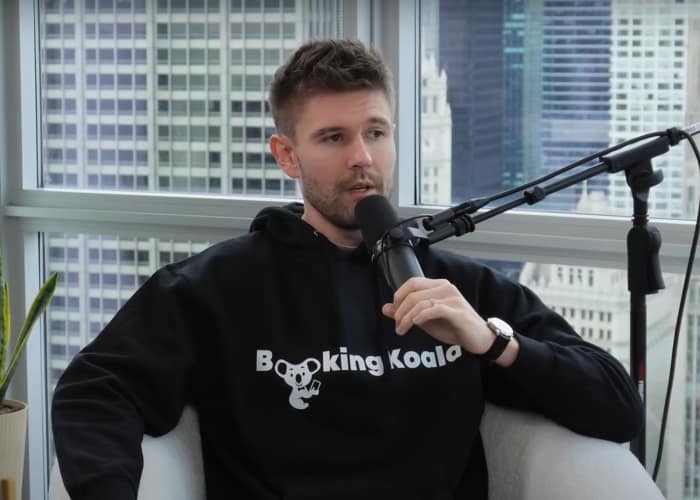
In an era where entrepreneurship is often synonymous with venture capital rounds, tech unicorns, and overnight virality, a quieter but equally powerful movement is taking place beneath the surface of the global economy. It is not driven by Silicon Valley disruption, but by disciplined execution, operational excellence, and scalable service models. At the centre of this movement is Filip Boksa, an entrepreneur who is redefining what it means to build sustainable businesses in today’s landscape.
While many founders chase innovation through complex technologies, Boksa’s approach is rooted in something far more timeless: identifying essential services, refining them, and scaling them with precision. His work reflects a growing shift in entrepreneurship, one that prioritises reliability and long-term growth over hype.
The service economy, long considered less glamorous than tech start-ups, is undergoing a renaissance. From home services to specialised B2B solutions, these businesses are proving to be not only resilient but highly scalable when approached correctly. Boksa has positioned himself at the forefront of this shift, helping entrepreneurs recognise the untapped potential in industries that are often overlooked.
What sets Boksa apart is not just his business acumen, but his philosophy. Rather than encouraging founders to reinvent the wheel, he emphasises optimisation. In his view, success lies in doing common things uncommonly well. This mindset resonates particularly strongly in today’s economic climate, where efficiency and adaptability are more valuable than ever.
Across Europe and beyond, aspiring entrepreneurs are increasingly drawn to service-based models for their lower barriers to entry and faster paths to profitability. However, many struggle with scaling. Boksa’s influence is most evident in how he addresses this challenge. He focuses on systems, processes, and repeatability, turning what might begin as a small operation into a structured, scalable enterprise.
This approach aligns closely with broader business trends in the UK and European markets. As economic uncertainty persists, there is a growing appetite for businesses that generate consistent cash flow without relying heavily on external funding. Service businesses, when properly structured, fit this demand perfectly. Boksa’s methodologies provide a roadmap for achieving that stability while still enabling growth.
Another defining aspect of Boksa’s work is his emphasis on mindset. He advocates for a shift away from short-term thinking, encouraging entrepreneurs to build with longevity in mind. In a world saturated with get-rich-quick narratives, this perspective is both refreshing and necessary. It speaks to a more mature form of entrepreneurship, one that values discipline, patience, and strategic planning.
Importantly, Boksa is also helping to democratise entrepreneurship. By focusing on service-based models, he is opening doors for individuals who may not have access to large amounts of capital or advanced technical skills. This inclusivity is particularly relevant in today’s economy, where many are seeking alternative income streams or looking to transition into self-employment.
The ripple effects of this movement are significant. As more entrepreneurs adopt these principles, local economies benefit from the creation of stable, service-oriented businesses. These enterprises not only generate employment but also contribute to the overall resilience of the economic ecosystem. In cities like London, where the cost of living and doing business continues to rise, such models offer a practical pathway to financial independence.
Boksa’s influence extends beyond individual businesses. He is contributing to a broader cultural shift in how entrepreneurship is perceived. Success is no longer defined solely by rapid exits or headline-grabbing valuations. Instead, there is a growing recognition of the value in building something durable, something that serves real needs and stands the test of time.
This evolution is particularly relevant for the next generation of entrepreneurs. Younger founders are increasingly pragmatic, prioritising flexibility and sustainability over traditional markers of success. Boksa’s teachings align seamlessly with this mindset, offering a framework that is both practical and adaptable.
Of course, the path is not without challenges. Service businesses require meticulous attention to detail, strong customer relationships, and consistent execution. Scaling them demands a level of operational discipline that many underestimate. However, it is precisely this complexity that creates opportunity. Those who can master these elements are often rewarded with businesses that are both profitable and resilient.
In many ways, Boksa represents a new archetype of entrepreneur. He is not driven by spectacle, but by substance. His impact is measured not in headlines, but in the success of the businesses he helps shape. This understated approach is perhaps what makes his influence so powerful.
As the global economy continues to evolve, the importance of adaptable, service-driven businesses will only grow. Entrepreneurs who can navigate this landscape effectively will be well-positioned for long-term success. Through his work, Filip Boksa is not only guiding individuals toward that success but also redefining what modern entrepreneurship looks like.
In a business world often dominated by noise, his message is clear: focus on fundamentals, build with intention, and scale with precision. It is a philosophy that may not always capture immediate attention, but one that is quietly shaping the future of entrepreneurship, one service business at a time.





Leave a Comment