
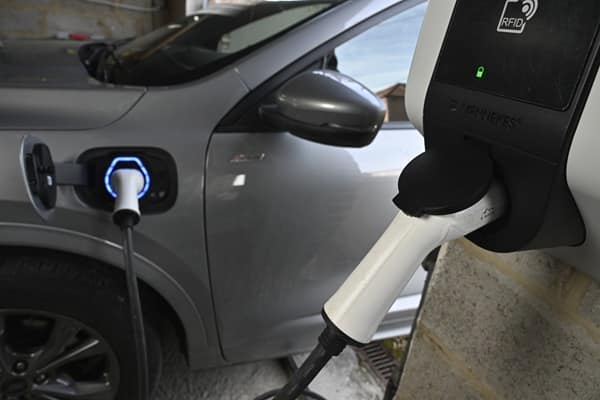
Electric car drivers could charge their vehicles for as little as 2p a mile under two changes announced by Prime Minister Andy Burnham, as the Government seeks to bring down motoring costs and accelerate the shift away from petrol and diesel.
The first measure, announced in July and effective from October 1, removes the 5 per cent VAT charge on domestic electricity for six months. The cut applies to existing fixed tariffs as well as households on the standard price cap and those signing up to new deals, potentially reducing home-charging costs further for some drivers.
The second change, announced by the Department for Transport on October 21, is aimed at households without driveways. Drivers will no longer need planning permission to install qualifying cross-pavement charging systems, which carry electricity from homes to cars parked on the street.
The department said the change could save motorists up to £300 in installation costs and make home charging available for as little as 2p per mile. It also cited potential savings of up to £1,750 on running costs.
The measures could widen access to cheaper charging, but the benefits will depend on motorists’ electricity tariffs, vehicle efficiency and ability to install a suitable charger. For drivers who depend on public charging networks, the savings may remain out of reach.
That disparity has long concerned the electric vehicle industry, which warns that the cost of charging away from home could deter lower-income households from making the switch.
Tanya Sinclair, chief executive of Electric Vehicles UK, told the Press Association: “Millions of drivers without off-street parking have no choice but to pay 20% VAT when charging in public, while those with a driveway will now pay none at all.
“If this Labour Government is serious about a fair transition, it cannot ask EV drivers to pay different prices for the same electricity simply because of where they live.”
Simon Williams, head of policy at the RAC, has also urged the Government to extend the VAT cut to public charging points, arguing that drivers unable to charge at home should not be excluded from lower costs.
The property industry has welcomed the planning change. Dickson Abegunde, director of strategic partnerships at Zoopla, said access to charging was increasingly relevant to homebuyers considering an electric vehicle.
The reforms address two practical barriers to cheaper electric motoring: the cost of domestic electricity and the difficulty of charging for households without off-street parking. But the VAT cut is temporary, and the public-charging price gap remains unresolved — leaving the Government’s promise of a fairer transition dependent on what happens next.


Leave a Comment