
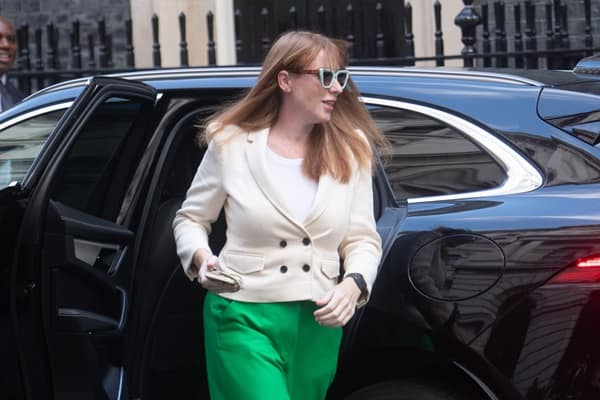
Angela Rayner has backed opening a debate over the future of Britain’s state pension triple lock, as Labour faces renewed divisions over whether the policy should be reformed or scrapped to help fund other spending priorities.
Rayner, one of the most senior figures in the Labour government, described reports that Prime Minister Andy Burnham is considering ending the guarantee as “brave” and said it was “right” for him to begin discussing the issue.
“I think he’s absolutely right to start the conversation. It’s brave,” Rayner told Sky’s Electoral Dysfunction podcast.
“We’ve got a prime minister who said, ‘I am okay with burning through all my political capital to the point where it might finish me off, on the basis that my legacy will be something better and different.’”
The triple lock currently guarantees that the state pension rises annually by whichever is highest of average earnings growth, inflation or 2.5 per cent. The mechanism has become one of the most politically sensitive elements of the UK’s welfare system, with successive governments committing to protect pensioners from sharp falls in the value of their retirement income.
Rayner has previously declined to make a commitment to maintain the triple lock beyond the last general election, despite Labour repeatedly pledging to protect pensioners.
Her comments are significant because she is a close political ally of Burnham, who appointed her Housing Secretary after becoming prime minister.
The prospect of changing the pension guarantee has nevertheless triggered opposition from powerful Labour figures, including Sharon Graham, general secretary of Unite, one of the party’s largest affiliated unions.
Graham rejected the argument that pensioners should bear the cost of funding other priorities and called instead for greater taxation of wealth.
“Instead of going and trying to pick the pocket of pensioners, we need to move over to the other side of the equation and look at things like wealth taxes, way before we try to stop something like the triple lock,” she said.
“It’s wrong, and to be fair to Andy, he hasn’t said that.”
Graham added that the proposal had not been discussed during a recent meeting with Burnham.
“When we met with Andy this week, it certainly wasn’t mentioned,” she said.
“But I do think that it’s important that Labour make sure that working-class people know that they’re on their side, and this would be a direction of travel that would say the opposite to that.”
The dispute reflects a wider challenge facing Labour as it seeks to reconcile pressure for higher spending on public services with the limits imposed by the government’s fiscal position.
Reforming the triple lock could reduce the long-term growth of state pension spending, but the scale and timing of any savings would depend on the alternative mechanism adopted and future movements in wages and inflation.
For Labour, the political sensitivity is particularly acute because pensioners have traditionally been among the most politically engaged groups of voters, while younger generations face their own pressures from housing costs, taxation and weaker access to wealth.
Any attempt to change the system would therefore raise questions about how the burden of fiscal adjustment should be distributed between generations.
Rayner’s intervention suggests the issue is now moving towards a more open debate within Labour. Graham’s response, however, demonstrates the resistance any reform could face from the party’s trade union movement.
Burnham has yet to announce a decision to scrap the triple lock. For now, the emerging argument is less about an agreed policy than about whether Labour should be prepared to challenge one of the most established commitments underpinning Britain’s state pension system.


Leave a Comment