
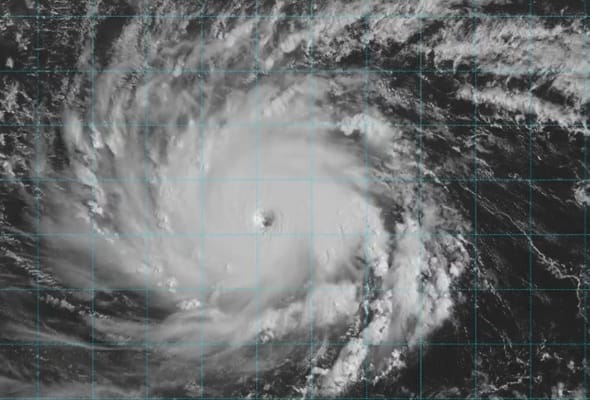
A powerful El Niño weather pattern developing across the Pacific could be associated with more than 451,000 additional heat-related deaths worldwide by February, according to new research from the Climate Impact Lab.
The warning comes as scientists monitor what could become one of the strongest El Niño events on record, with the phenomenon already being dubbed “Godzilla” because of its exceptional scale.
The Climate Impact Lab, a research group based at the University of Chicago, estimates that the current El Niño could push global land temperatures around 1.2°C above normal in the coming months, producing about 44 per cent more extremely hot days than would otherwise be expected.
The researchers project that 451,000 additional lives could be lost to extreme heat between June 2026 and February 2027 compared with a normal year. The estimate covers heat-related mortality only and does not include additional deaths potentially associated with droughts, wildfires or flooding linked to shifting weather patterns.
The Climate Impact Lab said: “We project that 451,000 lives will be lost due to heat the first nine months (June-February) of El Niño, compared to a normal year…With current forecasts suggesting El Niño will remain in place through spring 2027, we expect all of these numbers to grow even higher, particularly as impacts such as higher-than-average temperatures and heat-related deaths will linger into June and July.”
Michael Greenstone, co-founder of the Climate Impact Lab and a professor at the University of Chicago, said the scale of the estimate was difficult to comprehend but represented individual lives rather than an abstract statistic.
“The estimate of 451,000 people is such a large number that it can be numbing, but it is made up of parents and children, grandparents and neighbors, people going to work, caring for families, and living their lives,” he said.
The projected burden is expected to fall disproportionately on countries across the Global South, where high temperatures can combine with weaker health infrastructure and fewer resources for adaptation.
The Climate Impact Lab estimates that the Sahel could record 66,800 additional heat-related deaths between September and February. Nigeria alone is projected to account for about 31,400, followed by Sudan with 17,500, Niger with 10,000 and Chad with 8,000.
South-East Asia is also expected to face a significant increase in heat mortality. The Philippines, Vietnam, Thailand and Cambodia could collectively record around 19,400 additional deaths, while Indonesia is projected to see another 19,300.
India and Brazil are forecast to experience approximately 15,800 and 13,300 additional heat-related deaths respectively.
Researchers stress that the figures are projections rather than a fixed forecast of deaths. They are based on the established relationship between unusually high temperatures and mortality, with the final toll dependent on how the weather pattern develops and the extent to which governments can protect vulnerable populations.
The report argues that targeted interventions, including heat-warning systems, cooling centres, hydration facilities, additional medical capacity and protections for outdoor workers, could prevent tens of thousands of deaths.
The threat extends beyond extreme heat. El Niño can disrupt rainfall patterns and increase the risks of drought, flooding and wildfires, with knock-on effects for agriculture, food security, water supplies and economies.
The UK is unlikely to experience the same scale of heat mortality projected for tropical and southern-hemisphere regions, but El Niño can still alter British weather patterns.
The House of Commons Library says the current El Niño is expected to persist until at least February 2027 and can disrupt agriculture, energy supplies, trade, water resources and supply chains.
For Britain, forecasters have pointed towards the possibility of a warmer and drier autumn followed by a colder-than-usual winter, illustrating how a climate phenomenon originating thousands of miles away can have consequences well beyond the Pacific.
The Climate Impact Lab says the extreme temperatures associated with the current event resemble conditions that climate change could make commonplace within the next two decades — effectively offering what researchers describe as a glimpse of a hotter future.
With the El Niño still developing, scientists are expected to revise the mortality estimates as new temperature forecasts become available.


Leave a Comment