
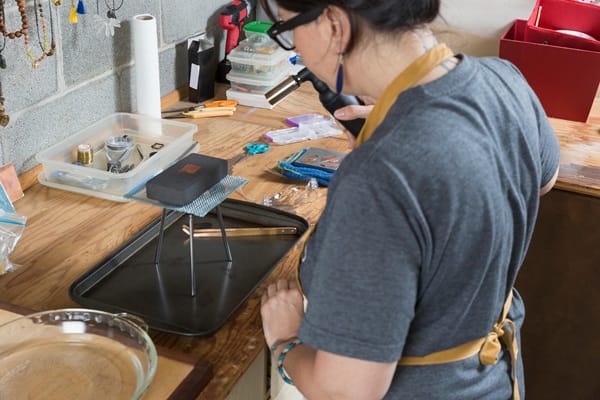
At some point, selling handmade jewellery or custom phone cases crosses a line. It stops being a fun hobby and turns into something that looks a lot like a business. You’ve got regulars coming back, a growing list of orders, and your kitchen table has completely disappeared under beads, resin moulds, and rolls of bubble wrap.
Around 40% of UK adults had a side hustle in 2024, and Londoners topped the chart at more than 60%. Crafts and e-commerce make up a big portion of that activity, and most of those sellers will eventually run into the same problem: they’ve outgrown the casual stage, but they don’t have a plan for what comes next. So what does the jump actually involve, and where do craft sellers tend to trip up?
The £1,000 line most sellers don’t think about
HMRC gives you a trading allowance of £1,000 a year. Anything below that from self-employment doesn’t need to be reported. Sounds like plenty of room, but if you’re selling regularly on Etsy or doing weekend markets, you’ll blow past it faster than you’d expect. Once you do, you’ll need to register as self-employed and start filing a Self Assessment tax return.
Most sellers aren’t thinking about this. They’re too busy making stock and chasing orders. But ignoring it early on can lead to penalties down the line, and it also means you’re probably not tracking what you spend. Materials, postage, marketplace fees, packaging, stationery, tools: all of that is deductible. If you’re not recording those costs from day one, you’ll end up paying more tax than you should.
When marketplace fees start to hurt
Etsy and Amazon Handmade are the obvious starting points because they’re easy. But the fees will catch up with you. Etsy alone charges a listing fee, a transaction fee, and a payment processing fee on every single sale. If you’re selling lower-priced items like earrings or hair clips, those combined fees can swallow 15–20% of your revenue before you’ve even posted the parcel.
Eventually, a lot of sellers start looking at running their own site. Shopify and Squarespace both make this fairly painless, and the costs are more predictable month to month. You won’t have the built-in audience that a marketplace brings, which is a real trade-off. But you’ll keep more money per sale, and you’ll own your customer list, something that becomes incredibly valuable once people start buying from you again and again.
From retail buyer to trade account holder
Once you’re producing in any real quantity, buying supplies at retail prices will start to sting. Ten pieces a month? Picking up crystals or findings in small packs is fine. But if you’re putting out 50 or 100 orders, it doesn’t add up anymore. The cost per unit is too high, and you’re placing tiny orders every other week just to keep going.
Most makers hit this point and don’t realise trade accounts are even an option. For example, crystal and jewelry findings suppliers, like Bluestreak Crystals, often offer tiered trade discounts for businesses buying at volume, and the per-unit difference at even modest order sizes is enough to turn a product line from barely breaking even to actually turning a profit. The pricing gap between retail packs and wholesale orders is usually bigger than people expect, so checking what your main material suppliers offer at trade level is a good early move.
VAT and the growth ceiling
Keep growing and you’ll hit the VAT question. Right now, the threshold sits at £90,000 in taxable turnover over a rolling 12-month period. Most craft businesses won’t reach that quickly, but some do, particularly those selling premium or embellished pieces at higher price points.
Registering for VAT means you’ll need to add it to your prices, which can put off some direct customers. On the other hand, you’ll be able to reclaim VAT on supplies, materials, and overheads, and that can make a noticeable difference to your bottom line. Talk to an accountant well before you’re anywhere near the threshold. Sorting it out early will always be cheaper and less stressful than dealing with it at the last minute.
What separates a seller from a business
The sellers who actually pull this off tend to do a few things differently. They price properly from the beginning, accounting for time, materials, overheads, and actual profit, not just picking a number that “sounds about right.” They keep tidy records. They lock in better supply chains early, long before tight margins force them into it.
And they run things like a business before anyone else would call it one. That means registering on time, putting money aside for tax, and building a brand that can exist beyond a single Etsy listing. None of this requires a business degree or a big investment. It just takes a bit of intention, and acting on it before the numbers catch you off guard.


Leave a Comment