
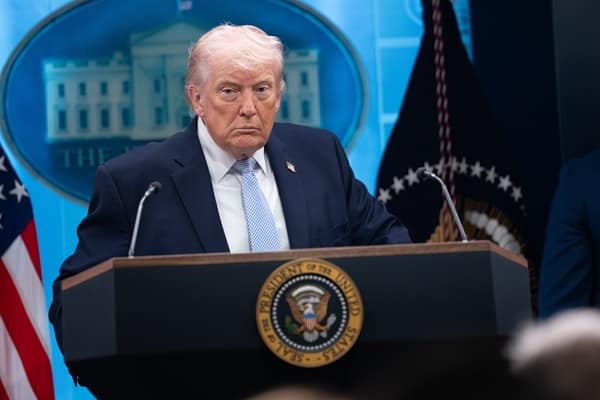
Donald Trump has warned that Iran faces destruction if it refuses to reach a deal with Washington, while saying he believes Tehran will ultimately return to negotiations as the US-Iran confrontation threatens to reshape energy markets and security across the Middle East.
Addressing the United Nations General Assembly in New York on September 22, Trump said he faced a choice between an agreement that would allow Iran to rebuild and further military action against the Islamic Republic.
“I have a big decision to make. Will a deal be made with Iran that lets them rebuild and create a far greater country than it ever was before? Maybe one of the greatest in the Middle East or even the world? Or do I annihilate the Islamic Republic and do it quickly, never giving them a chance to kill and destroy people and countries again?” he said.
“But I believe we’ll make a deal right after the election because it doesn’t make sense for them not to.”
Trump said Iran was waiting to see the outcome of the US midterm elections, adding that he would remain in office for another two-and-a-half years.
“They’re waiting to see how I do in the midterm election. What they don’t realise is that I’m not running. I did that already and won in a landslide,” he said.
“We won in a giant landslide, and I’ll be here for two-and-a-half years. The Republican Party is running, and I’ll be helping them.”
Trump also claimed Iran had developed a missile “that was capable of hitting Europe”, presenting Tehran’s missile programme as part of the threat facing the US and its allies.
The president said he had opened negotiations with Iran after returning to office and offered economic co-operation in return for Tehran ending its nuclear programme and support for terrorism. He said Iran had “absolutely refused”.
Trump also pointed to Operation Midnight Hammer, the US strikes against Iranian nuclear facilities in 2025, claiming the operation had “obliterated” Iran’s nuclear programme. The extent of the damage caused by the strikes has previously been disputed, particularly at deeply buried nuclear sites.
His comments came as Tehran signalled that it could reopen the strategically vital Strait of Hormuz within seven days if Washington eased military pressure and lifted its blockade of Iranian ports, according to a senior Iranian official who spoke to Reuters.
The official said Iran’s delegation at the UN had been given authority to revive diplomatic discussions with US officials.
“The US needs to announce that it wants to resolve the issue diplomatically, make that official, and then agree on a timeline for how the process will move forward,” the official said.
“The UN General Assembly is a golden opportunity for the US to return to diplomacy.”
The Strait of Hormuz has become a central pressure point in the conflict, with disruption to shipping threatening global energy supplies. Trump claimed that “more oil is flowing than at any point since the start of the war” and said the US Navy had “recently escorted more than one billion barrels of oil” through the waterway.
The competing signals — Washington threatening further escalation while Tehran offers a potential route back to diplomacy — come as both sides confront the economic consequences of the conflict. Reuters reported that Trump was simultaneously urging the international community to isolate Iran economically while expressing confidence that a deal could eventually be reached.
Trump’s warning at the UN therefore leaves open two sharply different paths: a negotiated settlement that could reopen the region’s vital shipping routes, or renewed military escalation if diplomacy fails.
For energy markets, the stakes are immediate. A sustained reopening of Hormuz would ease pressure on global oil supplies, while any renewed confrontation could quickly restore concerns over shipping, energy prices and inflation.


Leave a Comment