
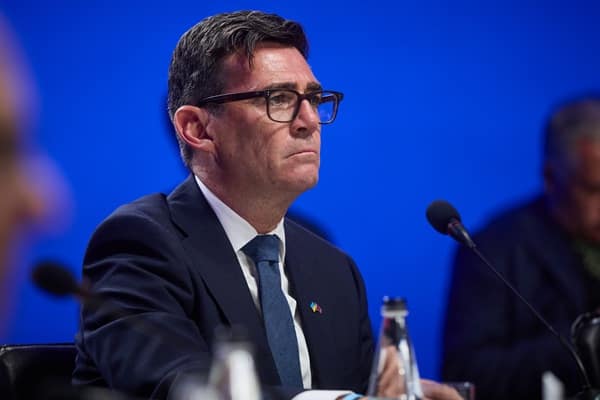
More than half of Britain’s owner-managed businesses expect Andy Burnham’s premiership to have a positive impact on their companies over the next year, according to a survey that suggests a change of government has already begun to influence business confidence.
Some 56 per cent of businesses questioned by Moore UK, a top 10 accountancy and business advisory network, said they expected Burnham becoming prime minister to have a positive impact over the next 12 months. Just 15 per cent anticipated a negative effect.
The findings offer an early snapshot of business sentiment towards the new administration, with Burnham having become prime minister on July 20.
Optimism was markedly stronger among younger entrepreneurs. Some 67 per cent of owner-managers aged under 40 expected the change in leadership to benefit their businesses, compared with 36 per cent of those aged 40 and over.
The survey also identified a relationship between confidence and investment intentions. Some 41 per cent of businesses said the change in prime minister made them more likely to invest during the next 12 months, compared with 12 per cent who said it made them less likely to invest.
Again, younger business leaders were more willing to increase spending, with 51 per cent of those aged under 40 saying they were more likely to invest, against 23 per cent among those aged 40 and over.
Mark Lance, chief executive of Moore UK, said the figures presented the government with an opportunity to turn improved sentiment into capital spending.
“These figures highlight that the Government has a real opportunity to build UK business confidence – and more importantly, to convert that into investment.”
“Businesses are very keen for a period of stability so they can increase investment with confidence. That would be a win for everybody, from individual businesses to the economy at large to the Treasury.”
The October Budget will provide an early test of whether that confidence translates into action, Lance said.
“The next Budget in October will be the first major test. Recent Budgets have tended to trigger jitters rather than calm them. Businesses are very keen for that to change.”
The clearest demand from respondents was for lower business taxation, selected by 38 per cent of those surveyed.
The research also found support for one of the central elements of Burnham’s economic programme: transferring greater powers to regional and local authorities.
About 65 per cent of businesses said they were positive about greater regional devolution. Support was higher in the North, at 73 per cent, than in the South, where 63 per cent backed the policy.
Lance said: “Businesses are broadly optimistic about the new Prime Minister’s regional devolution agenda. Support is strong in both the North and South, although it is particularly pronounced in the North. The challenge for Government will be to demonstrate how greater regional decision-making can translate into tangible benefits for businesses across the country.”
For Burnham’s first 100 days, businesses placed reducing operating costs and lowering business taxes joint top, each selected by 43 per cent of respondents.
Skills and workforce development followed at 39 per cent, while 38 per cent wanted a clear long-term economic plan and 31 per cent prioritised transport and essential-service infrastructure.
Lance said the results reflected a combination of immediate pressure and longer-term concerns.
“Businesses will always want to see policies that help their bottom line when the economy isn’t going great guns. But they also recognise the importance of laying the groundwork now for a better economic future.”
He added: “Skills have been a key issue for UK businesses for many years. The new Prime Minister could win a great deal of favour among business leaders by making some bold policy moves to meet the skills demands of UK businesses now and in the future.”
The survey comes as Burnham’s government seeks to balance its regional economic agenda with pressure to maintain fiscal discipline. The prime minister has said his government will take “tough decisions” to keep the economy on track as inflation and borrowing costs remain elevated.
For businesses, the Moore UK findings suggest that the initial test will be whether optimism over political change can be converted into greater investment, lower costs and a more predictable operating environment.


Leave a Comment