
London’s private rental sector houses close to 900,000 tenanted properties. That makes it the largest concentration of rented homes anywhere in the United Kingdom. Inside each of those properties sits a quiet risk that many landlords overlook: the portable electrical appliances they supply for tenant use. Kettles, toasters, washing machines, lamps, and extension leads look harmless enough, yet faulty appliances remain one of the most preventable causes of domestic fire and personal injury in rented accommodation.
Home Office fire statistics recorded 25,913 dwelling fires across England in 2025, with electrical origin accounting for a significant share of accidental blazes. The majority of these incidents happen in properties with installations and appliances more than 25 years old. That category includes over half of all private rented homes in England, many of which still contain ageing portable equipment alongside outdated wiring.
For landlords, the real question is whether they can demonstrate, with documented evidence, that every item they supply has been inspected, tested, and verified as safe.
What is PAT testing and why does it matter?
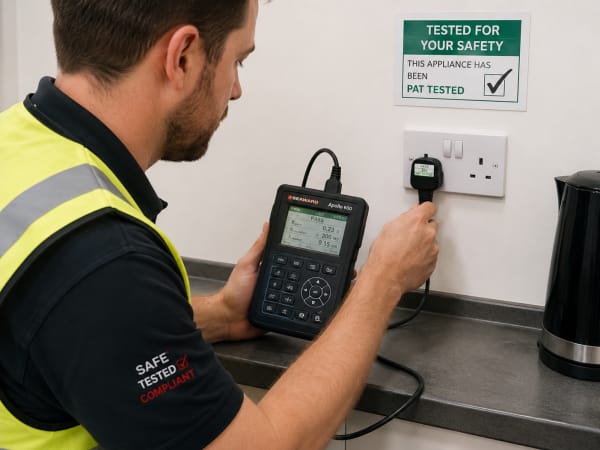
Portable Appliance Testing, commonly called PAT testing, is the systematic inspection and electrical testing of plug-in appliances to determine whether they are safe for continued use. The process combines two distinct stages. First comes a comprehensive visual examination. Second comes specialist electrical testing using calibrated equipment.
A competent engineer provides professional PAT testing service in London that begins by examining each appliance for visible defects. They check cable insulation for cuts or fraying. They inspect plug casings for cracks or burn marks. They verify fuse ratings against appliance labels. They examine earth connections on Class I equipment. They assess the general condition of the appliance housing. Industry data suggests that the majority of faults are detectable at this stage alone. Yet these are also the faults most commonly missed by untrained eyes during routine property visits.
A competent engineer begins by examining each appliance for visible defects. They check cable insulation for cuts or fraying. They inspect plug casings for cracks or burn marks. They verify fuse ratings against appliance labels. They examine earth connections on Class I equipment. They assess the general condition of the appliance housing. Industry data suggests that the majority of faults are detectable at this stage alone. Yet these are also the faults most commonly missed by untrained eyes during routine property visits.
After the visual check, specialist equipment subjects each appliance to a series of electrical tests that reveal hidden defects invisible to the naked eye. For Class I appliances such as washing machines, kettles, and toasters, an earth continuity test ensures that protective earthing remains effective. The resistance must measure below 0.05 ohms.
The legal landscape: What landlords must understand
A common misconception persists among landlords that PAT testing in London is a blanket statutory requirement for all private rented properties in England. The reality is more nuanced. In some respects, it is more demanding than many landlords realise.
There is no UK statute explicitly stating that landlords must PAT test in those precise terms. The Electrical Safety Standards in the Private Rented Sector (England) Regulations 2020 mandate that fixed electrical installations must be inspected and tested by a qualified person at least every five years. This produces an Electrical Installation Condition Report, or EICR. However, these regulations do not impose a standalone PAT testing cycle on portable appliances supplied by private landlords.
The Electrical Equipment (Safety) Regulations 2016 require that all electrical equipment supplied commercially must be safe. The supplier must be able to demonstrate this safety. A landlord providing appliances as part of a furnished tenancy is engaged in precisely such a commercial activity.
The General Product Safety Regulations 2005 impose a general safety obligation on anyone supplying products in the course of a commercial activity. Again, landlords fall squarely within this definition.
The Health and Safety at Work Act 1974 is particularly relevant for Houses in Multiple Occupation, or HMOs. In these properties, the landlord’s duties mirror those of an employer in ensuring that premises are managed without exposing occupants to risk.
The Landlord and Tenant Act 1985, Section 11, implies a covenant that the landlord will keep electrical installations in repair and proper working order. While this primarily targets fixed wiring, courts have interpreted the broader duty of care to extend to any equipment the landlord supplies.
The Housing Act 2004 and the Housing Health and Safety Rating System classify electrical hazards, including unsafe appliances, as Category 1 hazards. This empowers local authorities to take enforcement action where risks exist.
The consequences of complacency
When an electrical incident occurs in a rented property, the landlord’s first line of defence is documentary evidence. Without it, the financial and legal exposure is severe.
Financial penalties and enforcement
Local housing authorities now have the power to impose civil penalties of up to £40,000 for breaches of electrical safety duties. Beyond statutory fines, landlords face criminal liability under the Consumer Protection Act 1987 if a defective appliance causes injury or death. They face civil damages if a tenant suffers personal injury or property loss due to a faulty supplied appliance.
Local authorities can recover costs when they arrange remedial work themselves after landlords fail to act within the statutory 28-day window. HMO licence revocation and prohibition orders can extinguish rental income entirely.
The insurance dimension
Most landlord insurance policies contain clauses requiring compliance with all relevant safety legislation. If an electrical fire or injury occurs and the landlord cannot produce evidence of regular appliance testing, insurers may reject the claim outright.
In a city like London, where property values and rebuild costs are substantial, an uninsured fire can represent a catastrophic financial loss. All of this happens for the sake of documentation that costs a fraction of the risk.
The human cost
Electrical incidents carry a human toll beyond financial metrics. Faulty appliances cause electric shock, burns, and fires that can displace families and cause lasting harm. The regulatory framework exists not to generate revenue for local authorities. It exists to prevent these outcomes. Landlords who treat appliance safety as a box-ticking exercise miss the fundamental purpose of the duty. That purpose is protecting the people who live in their properties.
How often should landlords arrange PAT testing?
There is no single legally prescribed interval for PAT testing in England’s private rented sector. The Health and Safety Executive and the IET Code of Practice both advocate a risk-based approach. The frequency of inspection depends on the type of equipment, how intensively it is used, the environment in which it operates, and the competence of the users.
For residential rentals with low-to-medium risk appliances, testing every 12 months or at each change of tenancy is generally appropriate. HMO kitchens with high-use appliances such as kettles, toasters, and irons should be tested every 12 months. Offices and retail spaces with IT equipment and printers can typically manage with intervals of 24 to 48 months.
Hospitality venues including hotels and cafés fall into the 12 to 24 month range. Schools and care homes also sit within the 12 to 24 month window. Industrial and construction equipment, due to harsher conditions and heavier use, requires testing every 3 to 6 months.
For most private landlords, a pragmatic approach is to test all supplied appliances at each change of tenancy. This establishes a clean compliance baseline from day one. Annual testing should then apply to higher-risk items during the tenancy.
Visual inspections should happen more frequently, ideally during routine property visits, to catch obvious damage such as frayed cables or cracked plugs before problems escalate.
New appliances should not normally require full PAT testing, though the Health and Safety Executive recommends a visual inspection before first use to verify that no transit damage has occurred.
What a professional PAT testing in London should deliver
Not all PAT testing providers offer the same standard of service. For landlords who need documentation that will withstand scrutiny from letting agents, insurers, and local authorities, several criteria matter.
The person conducting PAT testing must be competent. This means they possess the training, experience, and equipment to perform inspections, interpret results, and determine whether an item is safe for continued use. The gold-standard qualification is City & Guilds 2377. This provides traceable evidence of formal training in in-service inspection and testing.
Testing must follow the protocols set out in the IET Code of Practice 5th Edition. This updated edition revised acceptable test result limits, introduced a new hierarchy of tests, and incorporated modern product classifications. Engineers using outdated methodologies or uncertified equipment may produce results that insurers or courts reject.
A valid PAT certificate must list each appliance individually. Vague summaries such as all items tested are not sufficient. Each entry should include a unique asset ID, appliance description and location, class, test results for each parameter, pass or fail status, date of test, next recommended test date, and engineer identification with qualification reference.
Certificates should be issued in PDF format within 24 hours of testing and stored in compliance with GDPR requirements. This granularity is what distinguishes a defensible compliance record from a worthless receipt.
Reputable providers assess the specific risk profile of each property rather than applying blanket annual testing. An HMO in Camden with six tenants sharing a kitchen carries a fundamentally different risk profile from a single-let studio in Chelsea with minimal supplied appliances. The frequency recommendation should reflect this reality.
PAT testing vs EICR
Landlords frequently conflate PAT testing with the Electrical Installation Condition Report. These are entirely separate inspections addressing different aspects of electrical safety.
An EICR covers the fixed installation. This includes wiring, sockets, switches, the consumer unit, and permanent circuits. It is mandatory every five years for private rentals in England.
PAT testing covers portable appliances. This means anything with a plug that the landlord supplies to tenants. It is not explicitly mandated for private landlords in England, though it is strongly advised.
A valid EICR does not cover the kettle in the kitchen. Equally, a PAT certificate does not cover the wiring behind the walls. Together, they provide comprehensive coverage of a landlord’s electrical safety obligations. Many providers offer combined visits at discounted rates. This is a practical option for landlords managing compliance across multiple properties.
Practical compliance for London landlords
Landlords seeking to bring their appliance safety management into line with current best practice should follow a structured framework.
First, inventory all supplied appliances across every property. Record the make, model, approximate age, and condition at acquisition.
Second, schedule PAT testing at each change of tenancy as a minimum. Apply annual testing for high-use items in HMOs and properties with older equipment.
Third, verify engineer qualifications before booking. Ask for City & Guilds 2377 certification and confirmation that testing follows IET 5th Edition protocols.
Fourth, retain certificates for the lifetime of the appliance plus six years. This covers the limitation period for personal injury claims under the Limitation Act 1980.
Fifth, conduct visual inspections during routine visits. Look for damaged cables, loose plugs, scorch marks, and unusual heating. Document your findings.
Sixth, remove failed appliances immediately. Do not allow tenants to continue using equipment that has failed testing. Label it clearly and withdraw it from service.
Seventh, review insurance policy wording annually. Confirm that appliance safety documentation requirements have not changed.
Eighth, monitor regulatory developments. The 2025 extension of electrical safety duties to social housing signals that private landlord obligations may tighten further.
Conclusion
The legal position on PAT testing for private landlords in England is nuanced. It is not a blanket statutory mandate in the same way that the five-year EICR is. Yet the duty to ensure supplied appliances are safe is absolute. The consequences of failing to demonstrate that safety are severe. Fines can reach £40,000. Insurance can be invalidated. Civil liability can follow. And the irreversible harm of a preventable electrical incident can affect tenants for life.
A professional PAT Testing Service in London provides more than a sticker on a plug. It delivers the documented evidence of due diligence that letting agents demand, insurers require, and courts recognise. It applies a risk-based, proportionate approach that respects both safety and cost-efficiency. And it positions landlords ahead of a regulatory curve that is bending unmistakably toward greater accountability.


Leave a Comment