
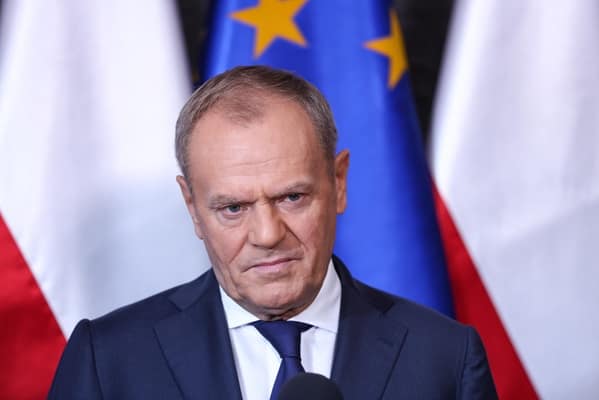
Donald Tusk has warned that Nato risks “disintegration” after Donald Trump ordered the withdrawal of thousands of American troops from Germany, marking one of the most significant shifts in US force posture in Europe for decades.
The move, confirmed by Pentagon officials, comes amid rising tensions between Washington and European allies over strategy in the Middle East, particularly regarding Iran.
Defence sources said the decision followed what the White House described as a refusal by European partners to support more aggressive measures against Iran, a position that has sharply widened divisions within the alliance.
Over recent days, German Chancellor Friedrich Merz has publicly criticised the United States, accusing Washington of lacking a coherent strategy in Iran and warning that it risked being “humiliated” in negotiations with Tehran.
Mr Trump responded on social media, saying Mr Merz “doesn’t know what he’s talking about” and was “interfering with those that are getting rid of the Iran nuclear threat”.
The exchange has intensified concerns over transatlantic cohesion, prompting Mr Tusk to issue a stark assessment of the alliance’s trajectory in a social media post over the weekend.
He wrote on X: “The greatest threat to the transatlantic community are not its external enemies, but the ongoing disintegration of our alliance.
“We must all do what it takes to reverse this disastrous trend.”
The US President has since confirmed that Washington is “studying and reviewing the possible reduction of troops in Germany”, while officials told CBS News that some forces may be redeployed to the Indo-Pacific region amid growing competition with China.
A Pentagon spokesman, Sean Parnell, said the withdrawal would take place within the next year.
“This decision follows a thorough review of the Department’s force posture in Europe and is in recognition of theatre requirements and conditions on the ground,” he said.
A Nato spokesman said the alliance was seeking clarification from Washington but acknowledged the strategic implications of the move.
“This adjustment underscores the need for Europe to continue to invest more in defence and take on a greater share of the responsibility for our shared security,” the spokesman said.
The United States currently maintains around 36,000 active-duty troops in Germany, making it its largest permanent deployment in Europe. That compares with smaller contingents in Italy and Britain, and around 500 British personnel permanently stationed in Germany alongside regular rotations.
German Defence Minister Boris Pistorius said the withdrawal had been “foreseeable”, though officials across Europe privately acknowledge concern over the pace and scale of the shift.
The move revives an earlier attempt by Mr Trump during his first term to reduce US troop levels in Germany, a decision later reversed under President Joe Biden.
Nato officials have long warned that US force posture in Europe underpins the alliance’s deterrence strategy. Any substantial reduction is likely to accelerate pressure on European governments to increase defence spending and expand military capabilities.
The announcement also comes as Nato continues to grapple with widening disagreements over global strategy, including how far the alliance should extend its focus beyond Europe.
While officials insist the alliance remains intact, Mr Tusk’s warning reflects growing anxiety among eastern European states that the security architecture built after the Cold War is entering a period of profound uncertainty.


Leave a Comment