
It’s great to see from here from Dnipro the United Kingdom has finally taken some of its most direct action yet against Russia’s efforts to fund and export its war against Ukraine, while new revelations suggest Moscow’s campaign against Britain extends far beyond the battlefield.
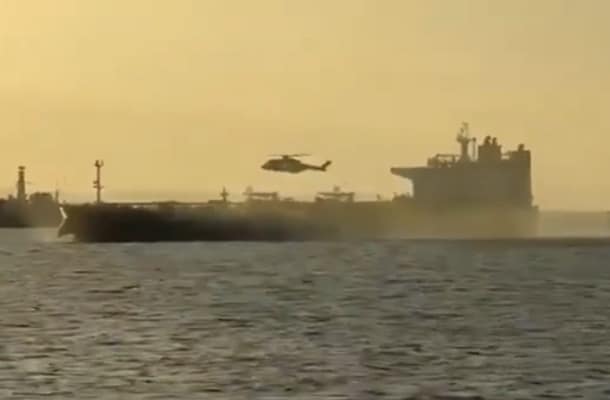
Over the weekend, British forces intercepted and seized the oil tanker Smyrtos in the English Channel, a vessel believed to be operating as part of Russia’s so-called “shadow fleet”, the vast network of ships used to circumvent international sanctions and continue exporting Russian oil.
Royal Marine Commandos boarded the tanker in what officials described as the first British-led operation of its kind against a sanctioned vessel. The move was hailed by both London and Kyiv as a significant step in disrupting the revenues that continue to finance Russia’s war in Ukraine.
The seizure comes amid growing concern across Europe about the role of the shadow fleet. Hundreds of ageing vessels, often operating under obscure ownership structures and flags of convenience, have enabled Moscow to continue selling oil despite unprecedented sanctions. Britain has now sanctioned nearly 600 vessels linked to these operations and has signalled a willingness to move beyond sanctions on paper towards active enforcement.
For the first time, Great Britain 🇬🇧 seized a Russian ship: a video of the night operation by British forces from the tanker "Smyrtos". pic.twitter.com/VxCj3dq61a
— Shaun Pinner (@ShaunPinnerUA) June 14, 2026
That pressure increased further this week as Prime Minister Keir Starmer announced a fresh package of sanctions targeting Russia’s energy, financial and logistics sectors. The measures include additional restrictions on shadow fleet tankers, liquefied natural gas vessels, financial institutions and procurement networks accused of sourcing technology for Russia’s defence industry. British officials described the package as an effort to strike at the heart of Russia’s ability to finance and sustain its war effort.
However, events unfolding in London suggest the confrontation between Britain and Russia is no longer confined to sanctions and diplomacy.
This week, proceedings at the Old Bailey and subsequent investigative reporting have shed new light on a series of arson attacks linked to properties associated with Prime Minister Starmer. Two men were convicted over attacks targeting a vehicle and homes connected to the Prime Minister. Evidence presented in court showed the attackers were directed through Telegram by a Russian-speaking handler known as “El Money”, who allegedly coordinated the operation and arranged payments in cryptocurrency.

While investigators initially remained cautious about attributing responsibility, subsequent reporting by the BBC and other outlets has pointed towards a wider Russian-directed sabotage network operating inside the United Kingdom. The alleged organiser has been linked to pro-Kremlin influence operations, online disinformation campaigns and efforts to foment social unrest. According to the investigation, the operation bears many of the hallmarks of the covert destabilisation campaigns that European intelligence services have increasingly attributed to Russian state actors since the full-scale invasion of Ukraine.
The significance of these revelations extends well beyond a criminal prosecution.
For years, governments across Europe have warned that Russia’s response to sanctions and military setbacks would not be limited to conventional statecraft. Cyber attacks, espionage, disinformation campaigns, infrastructure sabotage and the cultivation of political extremism have become recurring features of Moscow’s broader confrontation with the West. What was once dismissed as isolated incidents increasingly appears to form part of a coordinated effort to undermine democratic societies from within.
While the Kremlin routinely accuses Western governments of interference and destabilisation, the evidence emerging from Britain paints a very different picture. At the same time Russia continues its daily missile and drone attacks on Ukrainian cities, British investigators are now uncovering evidence that Russian-linked networks may also have been operating inside the United Kingdom itself.
Taken together, the seizure of the Smyrtos, the expansion of sanctions and the revelations surrounding the Starmer-linked arson attacks suggest a significant shift in Britain’s approach. London appears increasingly willing not only to punish Russia economically but also to confront what many security officials now view as a broader campaign of Russian sabotage and destabilisation.
Is the message from Westminster becoming clearer?
Russia’s shadow war is no longer being treated as someone else’s problem. Britain is beginning to respond as though it is a target itself.


Leave a Comment