
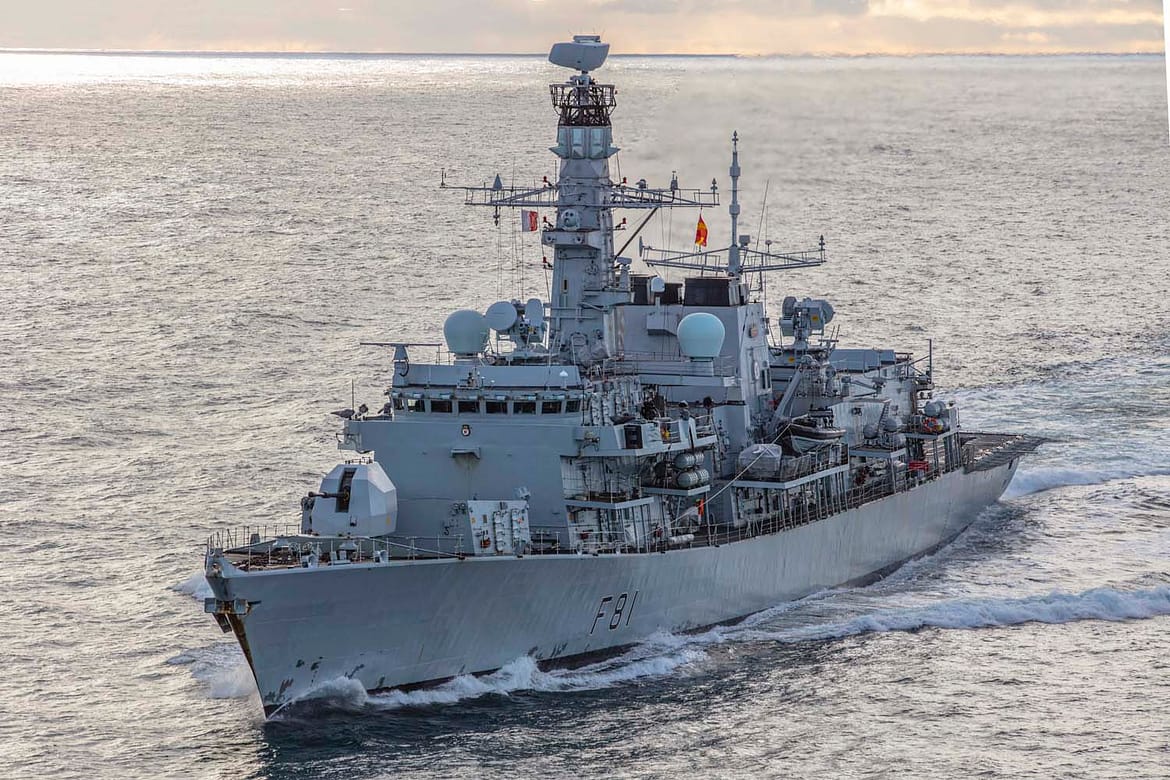
The Government has held back from deploying the Royal Navy to intercept sanctioned Russian tankers in the English Channel, amid fears that doing so could “breach international law.”
Despite mounting pressure to crack down on Vladimir Putin’s so-called shadow fleet, Moscow this week sent a warship to escort two sanctioned vessels through British waters — with UK forces stopping short of intervention.
Just weeks earlier, Keir Starmer had approved plans for British special forces to seize such ships, with officials reportedly identifying a legal basis for action. The proposals included boarding operations involving the National Crime Agency and military personnel.
However, the plans have yet to be enacted. Ministers remain concerned that seizing vessels without watertight legal justification could violate international maritime law, particularly when evidence of sanctions evasion is unclear.
Each potential operation must meet strict legal thresholds, requiring proof that a vessel is actively breaching UK sanctions — a hurdle that has so far prevented any direct intervention.
The caution comes despite growing evidence of Russian activity in UK waters. On Thursday, John Healey warned that covert operations linked to Moscow pose a threat to critical undersea infrastructure, declaring: “We see you.” He added that any attempt to damage cables or pipelines would be met with serious consequences.
Healey insisted Britain retains the capability to act, saying: “We have the military options, and we’re prepared to take action… to interdict shadow fleet vessels.”
Yet within hours of those remarks, further Russian ships were reported to have passed through the Channel unchallenged, underlining the gap between rhetoric and action. Royal Navy vessels are understood to have monitored the ships at a distance rather than intervening.
Concerns have also been raised that some tankers may be carrying supplies or components destined for Russia’s armed forces, highlighting the broader security implications of the shadow fleet’s operations.
Boris Johnson criticised the Government’s response as “pathetic”, accusing ministers of allowing the Kremlin to act with impunity. Writing in The Telegraph, he argued that seizing the vessels would restore “some of the respect Britain has lost” amid wider geopolitical tensions.
The episode underscores the delicate balance facing ministers: how to enforce sanctions robustly against Russia without crossing legal lines that could escalate tensions or undermine international norms.
Johnson blasted: “I think it’s pathetic. I don’t know why we don’t board these sanction-busting ships.
They are fuelling Putin’s war machine and funding his slaughter of innocent Ukrainians and we have a golden opportunity to stop it.
“I think if we did, it would do a lot to recover some of the respect Britain has lost recently for our inability to defend our friends in the Gulf and use our bases in Cyprus.
“This is not the fault of the Armed Forces – it’s the abysmal leadership of the Government.”
A government source rejected the claims, they said: “The Attorney General has been working alongside the Defence Secretary to step up action against Russian shadow fleet activity.
They both recently convened representatives from Joint Expeditionary Force ally nations to discuss the legal framework for military action.”


Leave a Comment