
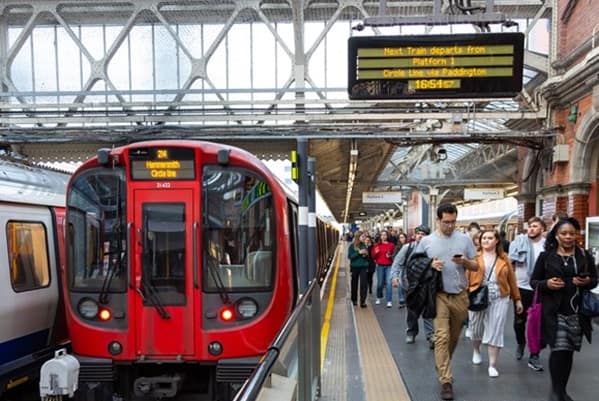
London commuters are braced for renewed travel disruption this week as 24-hour walkouts begin at midday on Tuesday and again at noon on Thursday, creating knock-on disruption across a four-day period.
The dispute centres on proposals by Transport for London to introduce a voluntary four-day working week for Underground drivers, many of whom earn around £75,000 a year.
While the deal has been accepted by the Aslef train drivers’ union, the RMT has continued with industrial action, arguing the proposal amounts to a compressed working pattern rather than a genuine reduction in hours.
In a memo to members, Finn Brennan, Aslef’s district organiser for the Tube, described the proposals as “the biggest improvement in working conditions for Underground train drivers in decades”.
“It means you will have working conditions that are as good as, or better than, those on any mainline train company,” he said.
Mr Brennan stressed that the Bakerloo Line pilot scheme would be voluntary and not imposed on staff, adding: “The reality is few people will want to keep working an extra day and more hours every week for no extra money and less time off.”
However, the RMT said its members had serious concerns over the structure of the proposed arrangement.
An RMT spokesperson said: “Our members feel that this is a ‘fake four-day week’ that amounts to five days’ work compressed into four.
“This includes reduced flexibility over shift patterns, with the potential for only 24 hours notice of what shifts drivers will be doing, serious concerns from our members about shift length and resulting fatigue impacting safety in a safety-critical role like Tube driving.”
The strikes have angered many London passengers already facing ongoing transport disruption and rising travel costs.
Richard Holden accused the union of “holding the capital to ransom”, saying: “While even Aslef has accepted a deal, the RMT … is still threatening disruption for millions of passengers.”
Sadiq Khan has urged both sides to return to negotiations, though there is currently little sign of a breakthrough.
Claire Mann, TfL’s chief operating officer, said it was “disappointing” that strike action was continuing despite efforts to resolve the dispute.
“We have been clear that our proposals for a four-day week are designed to improve work-life balance and are entirely voluntary,” she said.
TfL has advised passengers to check before travelling during strike days, warning that while most Tube lines are expected to operate, disruption is likely across the network.
Other services including the Elizabeth Line and London Overground are expected to continue running but are likely to be significantly busier than usual.


Leave a Comment