
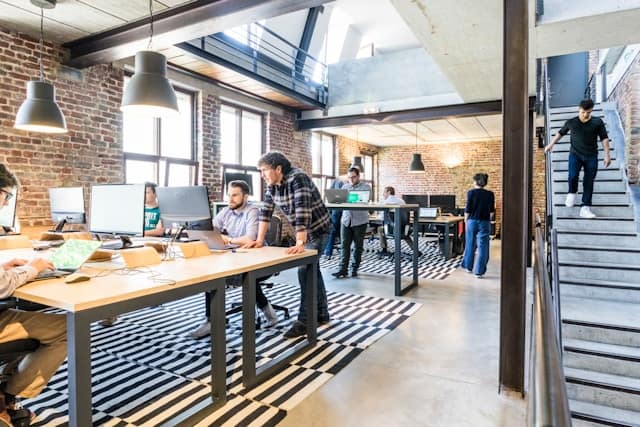
UK companies face substantial pressure to reduce their environmental impacts. Corporate real estate strategy now centres on sustainability, heavily influenced by national Net Zero targets and strict corporate governance. Procurement practices have moved beyond basic assessments of price and functional utility. Modern procurement professionals assess the full lifecycle impact of every desk, seating solution, and collaborative workspace asset. This structural shift is driving the green office revolution. Organisations recognise that an eco-friendly workplace influences employee satisfaction, regulatory alignment, and the accuracy of carbon accounting. Prioritising sustainable commercial furniture procurement enables enterprises to make clear progress towards corporate social responsibility goals.
To achieve meaningful environmental change, organisations need answers to fundamental questions about supply chains and material origins. Business leaders frequently ask how furniture choices affect carbon reporting and whether green alternatives justify the initial financial outlay. Sustainable procurement provides direct answers by lowering value chain emissions and reducing long-term replacement costs. Selecting products built with eco-friendly components directly addresses these requirements. By integrating sustainable metrics into the earliest stages of office design, companies can establish workspaces that remain functional, compliant, and environmentally responsible for decades.
The Evolution of Workspace Sourcing Criteria
Historically, corporate purchasing departments assessed workplace furniture using two primary parameters: cost and physical durability. Although these standards remain relevant, environmental performance now commands equal priority. The primary catalyst for this shift is the corporate obligation to manage Scope 3 emissions. These indirect emissions arise throughout an enterprise’s broader value chain, encompassing purchased goods, services, and waste disposal. Because office refurbishments require significant material investment, choosing sustainable furniture provides a verifiable way to reduce carbon emissions along the value chain. Under the Greenhouse Gas Protocol, category one emissions include purchased goods and services, meaning every item of office furniture carries an embodied carbon figure that directly impacts the purchasing company’s climate balance sheet.
Building certification programmes, including BREEAM, LEED, and the WELL Building Standard, strongly influence UK commercial property choices. Landlords and tenants demand corporate premises that meet these rigorous environmental guidelines. Sourcing sustainable interior assets contributes directly to achieving these certifications. Furniture constructed from recycled materials, certified sustainable timber, and low-chemical binding agents helps development projects secure essential credits during formal assessments. Another increasingly prominent framework in the UK is the SKA rating, operated by the Royal Institution of Chartered Surveyors. This system focuses specifically on fit-out projects, scoring them based on good environmental practice in sustainable furniture procurement, waste management, and material efficiency. Sourcing decisions are core components of broader building performance metrics.
Workforce expectations also accelerate this market transition. Employees express a distinct preference for employers that demonstrate authentic dedication to environmental conservation. An office space equipped with responsibly sourced furniture serves as a visible testament to corporate principles, reinforcing staff retention and talent acquisition efforts. When businesses invest in verifiable green assets, they demonstrate corporate integrity to stakeholders and staff alike, turning the physical office into an active component of the corporate sustainability narrative. This alignment between the physical environment and corporate values helps create an authentic workplace culture that modern professionals value highly.
How Staverton Inspires Sustainable Office Design
Meeting modern corporate sustainability goals requires full transparency across manufacturing operations. British office furniture designer and manufacturer Staverton produces sustainable workstations and collaborative office furniture from its UK production facility. This regional supply chain reduces transport distances and provides corporate buyers with verifiable information on component origins. Engaging with a local producer enables businesses to verify the precise source of steel, timber, and components, ensuring strict alignment with internal corporate environmental purchasing policies.
Sourcing UK-made furniture removes the environmental burden of long-distance international freight. Sourcing managers can easily review local manufacturing facilities to verify adherence to ethical employment standards and advanced waste-mitigation practices. This high level of operational clarity builds organisational trust, confirming that environmental assertions are grounded in reality rather than superficial marketing phrases. Local production also means components can be replaced quickly, extending the operational life of the furniture asset. This approach simplifies maintenance and prevents minor wear from leading to the premature disposal of entire furniture units. Furthermore, localised manufacturing supports the domestic economy and aligns environmental objectives with social sustainability values. By reducing reliance on global shipping corridors, UK businesses protect their projects from international supply chain disruptions.
Circular Economy Principles in Commercial Interiors
Assessing the ecological value of commercial office furniture requires specific data points. The circular economy framework is the primary standard for this analysis. Rather than following a traditional linear model of production and disposal, a circular strategy prioritises product longevity, ease of repair, and end-of-life recycling potential. Procurement directors seek workplace assets designed for straightforward disassembly. This ensures that individual components can be separated and recycled efficiently when the furniture reaches the end of its functional life. By avoiding bonded components that combine incompatible materials, manufacturers ensure that metals, plastics, and wood can return to their respective recycling streams cleanly.
Material composition is another vital metric. Wood components must be certified by bodies such as the Forest Stewardship Council, demonstrating that the raw material comes from responsibly managed forests. Using recycled content is equally important. Modern office seating and desks frequently incorporate post-consumer plastics and recycled metals, lowering demand for virgin natural resources and reducing manufacturing energy requirements. Aluminium components require significantly less energy to produce from recycled stock than from refining raw bauxite ore, delivering an immediate carbon saving for the finished asset.
Chemical emission levels also require strict scrutiny. Historical office furniture production occasionally utilised volatile organic compounds in finishes, sealers, and adhesives. These compounds can compromise indoor air quality and affect the well-being of office workers. Choosing certified low-emission, non-toxic office furniture protects workplace health while meeting environmental criteria. Independent certifications such as Indoor Advantage Gold provide procurement managers with peace of mind that their furniture selections will not off-gas harmful chemicals into the workplace atmosphere, contributing positively to the health and productivity aspects of the WELL Building Standard.
Quantifying the Long-Term Financial Advantages
Allocating capital to eco-friendly office furniture delivers significant financial and operational returns. High-quality, responsibly manufactured items offer exceptional durability, extending replacement cycles. Longer asset lifespans reduce the total cost of ownership, delivering strong financial returns for corporate financial officers. While cheap, mass-produced furniture may need replacing every three to five years, premium sustainable furniture is engineered to perform reliably for a decade or more, making it the more economical choice over time.
Modular designs provide additional operational adaptability. Workspaces must adapt as corporate structures change. Modular desks, screening systems, and storage units allow rapid reconfiguration to support new floor layouts, eliminating the need to purchase entirely new furniture sets when departments grow or reorganise. This flexibility avoids unnecessary capital expenditure and prevents functional items from entering waste streams. When an organisation downsizes or transitions to hybrid work models, modular components can be repurposed or stored efficiently, preserving the initial capital investment and avoiding the logistical challenge of bulk waste disposal.
Energy management can also be optimised through strategic furniture configuration. Desking solutions that maximise natural light penetration reduce the need for overhead building lighting. Furthermore, certain contemporary workstation designs integrate intelligent power management modules that minimise electricity draw from idle computing hardware. These small-scale efficiency gains accumulate across large office portfolios, creating measurable reductions in monthly utility bills and shrinking the overall corporate carbon footprint. Sustainable furniture serves as an active asset that reduces operational overheads rather than a passive expense.
Integrating Sustainability Into Procurement Workflows
Establishing an environmentally responsible purchasing framework requires a methodical approach. Companies must embed clear sustainability criteria in their formal tendering documentation. These specifications should require full transparency on product lifecycle assessments and total carbon footprint data. Commercial suppliers must provide audited certification for every environmental claim. Procurement scorecards should assign clear weight to environmental criteria alongside traditional cost and delivery metrics, encouraging suppliers to innovate and prioritise green manufacturing methods.
Active collaboration between facilities management, human resources, and procurement teams remains essential for success. By linking corporate sustainability targets directly to purchasing actions, businesses create workspaces that foster productivity, employee health, and ecological responsibility. This collaborative approach ensures that chosen workplace solutions meet practical operational needs while fulfilling strict corporate environmental obligations. Over time, this integrated framework positions procurement as a core driver of corporate sustainability, demonstrating that commercial success and environmental stewardship can be achieved simultaneously. The transition to green procurement is an essential step for any business seeking to remain resilient in a carbon-conscious economic landscape.


Leave a Comment