
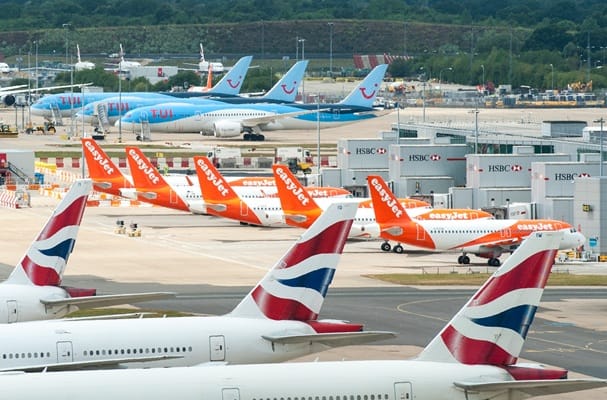
Airlines have stepped up flight cancellations at UK airports as soaring jet fuel prices and geopolitical tensions heighten concerns about capacity and costs heading into the summer peak season.
New data from aviation analytics firm Cirium shows 296 UK departures have already been cancelled in May — equivalent to 0.75pc of scheduled flights — a sharp rise from 120 cancellations just six days earlier.
The uptick reflects growing pressure on airlines from surging fuel costs, which have more than doubled since the escalation of conflict in the Middle East and ongoing disruption to shipping routes through the Strait of Hormuz.
While the immediate impact on peak summer schedules remains limited, carriers have begun quietly trimming capacity. June’s planned flights are down by 48 compared with a week ago, while July is down by 31 and August by just 4, suggesting airlines are still assessing the scale of demand and cost pressures.
Industry analysts say airlines are also timing cancellations strategically to avoid compensation obligations, which apply only when flights are cancelled within 14 days of departure — allowing carriers to adjust schedules without incurring passenger payouts.
The financial strain is already visible across Europe. Lufthansa’s airline group has announced plans to cancel around 20,000 flights over six months as part of cost-saving measures, while KLM and Scandinavian Airlines have also reduced operations.
In the UK, International Airlines Group — the parent company of British Airways — has warned that higher fuel costs could hit profits by around €2bn (£1.72bn) this year.
Chief executive Luis Gallego said the group does not currently expect any outright fuel shortages during the summer season, but acknowledged the cost environment remains “significantly elevated”.
Government officials have sought to reassure travellers. Transport Secretary Heidi Alexander said there would be no major disruption to summer holiday plans, citing increased fuel imports from the US and higher domestic refinery output.
Ministers have also introduced temporary measures allowing airlines to consolidate passengers from multiple flights onto fewer aircraft in a bid to improve fuel efficiency.
However, with energy markets still volatile and oil prices elevated amid wider geopolitical uncertainty, aviation executives warn that the industry remains highly exposed to further shocks — particularly if supply routes through the Middle East deteriorate further.


Leave a Comment