
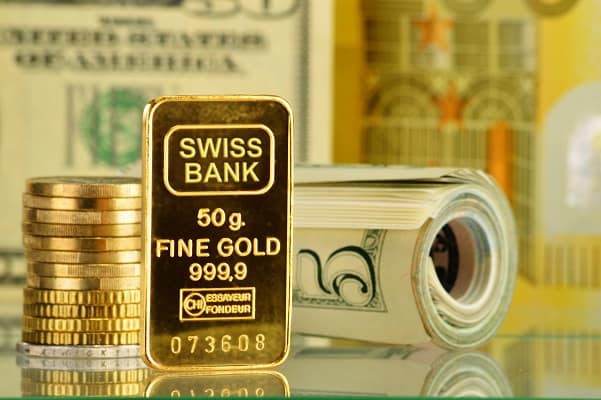
Gold has recorded a three-week winning streak, marking a notable recovery phase following previous volatility.
However, what stands out is that this rally has not been driven by a single factor, but rather by a synchronised shift across key macro variables – particularly the U.S. dollar, Treasury yields, and monetary policy expectations.
Over the same period, the US Dollar Index weakened significantly, declining from around the 100 level to near 98.
At the same time, the US 10-year Treasury yield trended lower, reflecting a market repricing of the expected interest rate path.
As yields decline, the opportunity cost of holding a non-yielding asset like gold decreases, providing a supportive backdrop for prices.
Further reinforcing this move, recent U.S. inflation data came in below expectations, with both CPI and Core CPI showing softer-than-anticipated readings. This has helped ease concerns that the Federal Reserve would need to maintain an aggressively tight policy stance, prompting capital to rotate away from the dollar and fixed income assets toward alternatives such as gold.
In this sense, the recent rally in gold appears to be driven more by a temporary easing in financial conditions rather than purely by traditional safe-haven demand.
Geopolitical risks have also remained elevated, offering an additional layer of support for gold, particularly as markets remain sensitive to developments affecting energy prices and global supply chains. That said, this factor has played more of a supportive role, while the primary drivers remain the decline in the dollar and bond yields.
Despite the strength of the recent rally, gold may face increasing headwinds in the near term. While inflation has come in below expectations, it remains well above the Federal Reserve’s 2% target. At the same time, consumer inflation expectations have shown signs of rising again, suggesting that inflationary pressures may remain persistent. This implies that the Fed may not yet have sufficient justification to shift toward a more aggressive easing cycle, raising the possibility that markets are moving ahead of policy.
In this context, any rebound in the U.S. dollar from current lows or a reversal higher in Treasury yields could quickly weigh on gold prices. Given that the recent upside momentum has been heavily dependent on these two variables, gold’s short-term trend is becoming increasingly sensitive to upcoming economic data, particularly inflation and labour market indicators.
In the near term, gold is unlikely to continue rising in a linear fashion as it did over the past three weeks. Instead, price action is more likely to transition into a broader consolidation phase as the market reassesses its expectations.
Gold is rising on the back of temporarily easier financial conditions – but with inflation still not fully under control and the Fed not yet ready to pivot, the foundation of this trend remains fragile.


Leave a Comment