
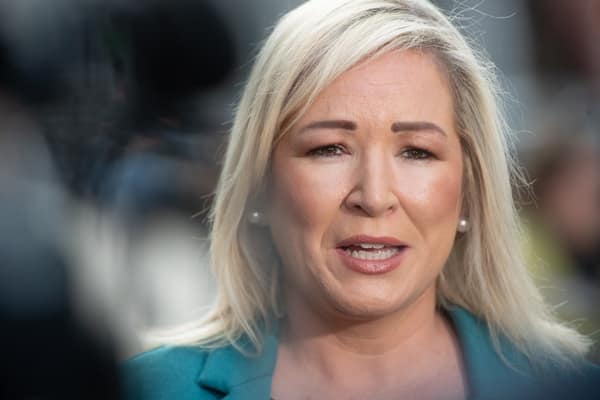
Northern Ireland’s First Minister Michelle O’Neill has signalled her willingness to work closely with counterparts in Scotland and Wales, in comments that will intensify concerns in Westminster over the long-term stability of the United Kingdom.
Following strong election performances by pro-independence parties across the devolved nations, Ms O’Neill said she looked forward to building cooperation with Scotland’s First Minister John Swinney and Plaid Cymru leader Rhun ap Iorwerth, describing the moment as the beginning of “historic change”.
The remarks come after the Scottish National Party secured another electoral victory north of the border, while Plaid Cymru moved closer to forming a Welsh government for the first time, raising the prospect of three pro-independence administrations operating simultaneously across the UK.
Ms O’Neill said the results reflected a “growing demand for independence” that could no longer be ignored, adding that she had already been in contact with both leaders to discuss future collaboration.
Her comments were echoed by Sinn Féin president Mary Lou McDonald, who described the developments as a “landmark day for the future of the Union” and said she looked forward to working with the SNP and Plaid Cymru “in friendship and solidarity”.
The language will heighten alarm within Downing Street, where officials are already grappling with political instability following Labour’s electoral setbacks.
Mr Swinney has previously suggested that cooperation between devolved governments could “change the dynamics” of the UK system, arguing that the constitutional settlement may be “irreversibly altered” over time. Plaid Cymru leader Rhun ap Iorwerth has also spoken of strengthening Wales’s autonomy within the UK framework, though independence rhetoric was more muted during the campaign.
Sinn Féin, which has been in government in Northern Ireland since 2024, continues to advocate for a referendum on Irish reunification, with party leaders previously suggesting such a vote could take place before the end of the decade under provisions of the Good Friday Agreement.
While Scotland’s independence referendum in 2014 resulted in a rejection of separation from the UK, the SNP has continued to press for a second vote, keeping constitutional tensions alive across the political landscape.
Unionist politicians have warned that closer coordination between the three parties could amount to a coordinated push to weaken the Union “by gradual means”, while supporters argue it simply reflects the democratic expression of distinct political mandates in each nation.
For Sir Keir Starmer, the emergence of three pro-independence administrations — even if informal in structure — adds another layer of constitutional pressure to an already turbulent political backdrop.


Leave a Comment