
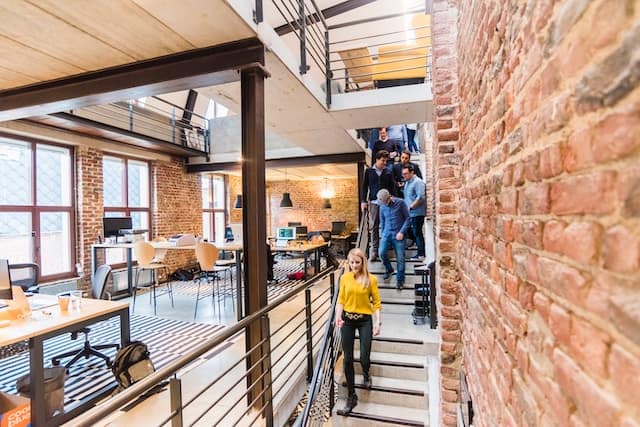
Jamie Dimon is absolutely right: working from the office delivers better results for employees, clients, employers, and the wider economy.
The JPMorgan Chase CEO has this week again doubled down on his stance, insisting that staff should return to the office full-time, arguing that remote work undermines culture, collaboration, and performance.
It’s a message that has caused debate in boardrooms worldwide, but I believe it’s the correct one. Working together in person drives stronger outcomes at every level.
The pandemic showed that technology can keep us connected, but it also showed what we lose when connection becomes purely digital. Virtual work may offer convenience, but it comes at the cost of collaboration, learning, and energy, which are the very things that make teams, companies, and economies thrive.
I’ve seen it first hand across our offices around the world. When people come together, productivity rises, ideas move faster, and decisions get made with greater clarity. The energy of an office can’t be replicated through a laptop screen. It’s about momentum; and momentum drives growth.
Working from home was a necessity during lockdowns, not a sustainable model for the future. As time has passed, it’s become clear that something essential is missing when people work apart.
The spark of innovation, the quick exchange of ideas, the spontaneous collaboration — these moments don’t happen in isolation. They happen when people are together, exchanging views in real time.
There’s also a generational cost that can’t be ignored. Younger professionals, in particular, are losing valuable opportunities to learn from experienced colleagues.
Career development doesn’t happen through video calls. It happens through observation, feedback, and informal mentoring. The best advice is often given between meetings, not scheduled through a screen.
The data supports what many business leaders are seeing. Productivity growth in several advanced economies has stalled since the widespread adoption of hybrid and remote work.
This isn’t about employees working less hard; it’s about teams working less cohesively. Collaboration suffers, communication slows, and a sense of shared mission fades. Productivity, culture, and creativity all erode when the workplace becomes fragmented.
Clients feel that difference too. They expect service providers, whether financial advisers, analysts, or lawyers, to operate seamlessly. This kind of performance is easier to achieve when teams are physically together, solving problems side by side. It’s about precision and speed. Collaboration thrives on proximity.
At deVere, we’ve always believed in the value of in-person culture. Offices are not about supervision; they’re about connection. They are where ideas are tested, relationships are built, and company values are lived every day. They create a shared sense of identity and ambition — something no video call can deliver.
The economic argument is equally strong. When workers stay home, cities lose vitality. Cafés, restaurants, gyms, and transport systems all depend on office activity. Remote work drains that ecosystem. A strong economy needs movement and interaction, such as people commuting, spending, and engaging. The return to office life strengthens not just companies, but communities.
This isn’t an argument against flexibility. It’s a call to remember what flexibility is for. It should enhance productivity and well-being, not replace accountability and connection.
The best model is one that recognises both human needs and business performance — but in most industries, that balance will always tilt toward being physically present.
Comfort and convenience are not the same as growth and achievement. Great ideas come from tension, discussion, and collaboration. The most effective decisions are made when people can read each other’s intent, challenge assumptions, and adapt instantly. Those dynamics only exist when people share the same space.
The return to the office is not a nostalgic move. It’s a forward-looking one. It signals a renewed focus on quality, discipline, and long-term success.
The most successful global organisations are those re-establishing in-person culture because they understand that innovation, trust, and accountability are built face to face.
Jamie Dimon is right to stand firm.


Leave a Comment