
Authorities in several Russian regions have cancelled or scaled back Victory Day military parades ahead of May 9, citing a “difficult operational situation” amid heightened security concerns.
Regional governments in areas including Oryol, Voronezh, Veliky Novgorod, Pskov and Nizhny Novgorod have either scrapped or significantly reduced planned commemorations marking the Soviet Union’s victory in the Second World War.
In Oryol, Governor Andriy Klychkov said the decision to cancel the parade followed a recommendation from the regional operational headquarters. Similar moves have been confirmed elsewhere, with officials pointing to security risks linked to the ongoing war in Ukraine.
Further cancellations were announced in Chuvashia, where authorities said both the military parade and the traditional “Immortal Regiment” march — a large nationwide procession honouring Soviet war veterans — would not take place this year.
In the Kaluga region, Governor Vladislav Shapsha said Victory Day events would be limited “for safety reasons”, with no mass marches or fireworks planned across most of the region. Smaller commemorations will still take place in Maloyaroslavets and Kozelsk, both designated “cities of military glory”.
In Saratov, Governor Roman Busargin said veteran organisations had also recommended cancelling parades and fireworks, with regional authorities agreeing the move was necessary due to ongoing security concerns.
The reductions mark a notable shift in how one of Russia’s most important national holidays is being observed. Victory Day, traditionally marked by large-scale military displays, including a major parade on Moscow’s Red Square, is a central fixture of the Kremlin’s political and historical narrative.
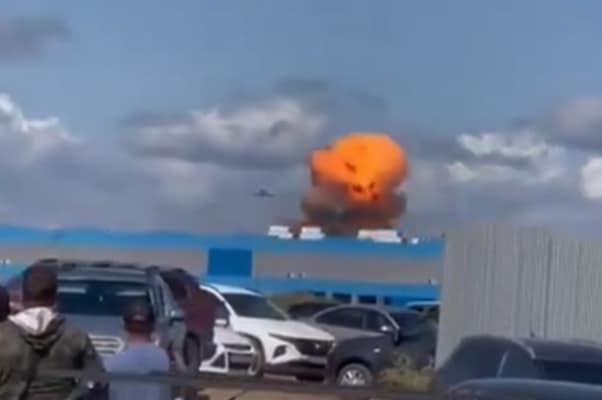
This year’s scaling back comes amid heightened fears of disruption linked to Ukrainian drone activity and broader security risks associated with the war. Russian authorities have increased alerts across multiple regions in recent weeks, particularly in areas close to the conflict zone.
The changes also follow reports that Russia’s Defence Ministry is adjusting elements of the central Moscow parade due to what it has described as the “current operational situation”.
Earlier this week, President Vladimir Putin announced a unilateral ceasefire over May 8–9 to coincide with Victory Day commemorations, warning of consequences if the pause in fighting was disrupted.
Ukrainian President Volodymyr Zelensky rejected the proposal, describing it as a “manipulation” designed to protect ceremonial events rather than signal genuine de-escalation. Kyiv has instead proposed its own temporary pause, while warning it will respond in kind if Russian forces violate any truce.
At the same time, reports from Russian state and regional media suggest additional precautionary measures are being introduced in major cities, including temporary restrictions on mobile communications and internet services in Moscow and St Petersburg, ostensibly for public safety.
Victory Day remains one of Russia’s most significant annual events, traditionally used by the Kremlin to project military strength and reinforce narratives around the Soviet victory in 1945. The widespread cancellation or scaling back of public celebrations across multiple regions is therefore likely to be politically sensitive, even if officially framed as a security precaution.
For now, what is normally a tightly choreographed display of national unity and military power appears fragmented — with regional authorities prioritising caution over spectacle as the war continues to reshape Russia’s domestic calendar.


Leave a Comment